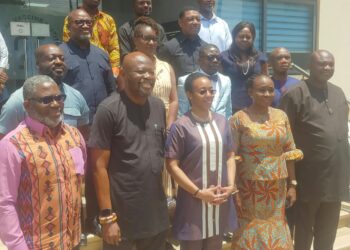







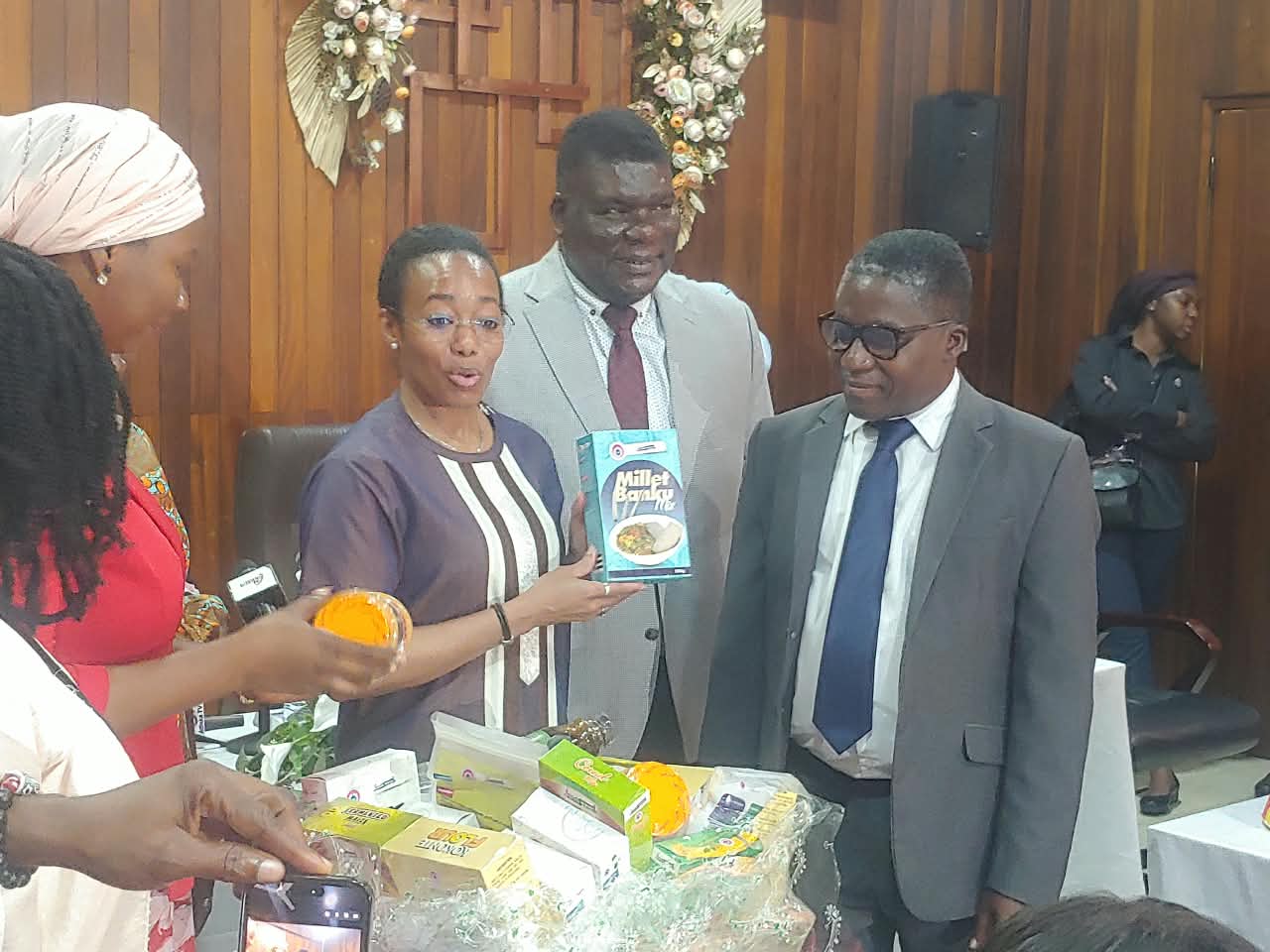
The Minister for Environment, Science and Technology, Hon. Dr. Zanetor Agyeman-Rawlings, has undertaken a familiarization visit to the Council for Scientific and Industrial Research (CSIR) and the Electrical and Electronic Waste Management Fund (E-Waste) Secretariat.
The visit formed part of efforts to familiarise herself with the operations, programmes and challenges confronting institutions under the Ministry.
At the CSIR, the Minister reaffirmed the government’s commitment to supporting the institution to improve working conditions, retain scientific talent, and commercialise research and innovations.
She underscored the critical role of scientific research and innovation in Ghana’s national development, noting that the government’s support for the sector aligns with its broader vision of transforming the country through science, technology and innovation.The Minister acknowledged concerns over the retention of scientists and called for a review of their conditions of service within the broader economic framework.


She emphasised the need for greater commercialisation of research outcomes to generate revenue that could contribute to improving the conditions of researchers and strengthening the institution.
According to the Minister, the government’s approach is aimed at creating an environment that will encourage experienced scientists to remain in the country while inspiring more young people to pursue careers in science and research. She said the ultimate objective is to build a strong scientific community capable of providing innovative solutions to Ghana’s developmental challenges.
The Minister also encouraged the CSIR leadership and staff to maintain open and solution-oriented communication on challenges confronting the institution.
She stressed that while the government provides policy direction and support, scientists and researchers must contribute their expertise and practical solutions to national development.
During the visit to the E-Waste Secretariat, the Minister also engaged with officials on the management of electronic waste and the role of the institution in addressing environmental challenges associated with discarded electrical and electronic equipment.vThe familiarization visit is expected to strengthen collaboration between the Ministry and its agencies and provide a clearer understanding of their operational needs, ongoing programmes and opportunities for improvement.
The Minister also underscored the importance of strengthening collaboration between government, research institutions, industry and other development partners to ensure that scientific discoveries move beyond the laboratory and address real-world challenges.
She noted that Ghana possesses significant scientific expertise and resources, but greater efforts are needed to connect research outcomes to industry and national development priorities.
At the E-Waste Secretariat, the Minister was briefed on ongoing initiatives aimed at improving the management and recycling of electrical and electronic waste, as well as efforts to promote environmentally sustainable practices.
She emphasised the need for innovative approaches to e-waste management, particularly those that can create jobs, protect public health and reduce the environmental impact of electronic waste.
The Minister further encouraged the institutions to strengthen public education and awareness so that citizens understand the importance of responsible waste disposal and the role of science and technology in addressing environmental challenges.
She assured the leadership of the institutions of government’s commitment to creating an enabling environment for scientific research, innovation and technological development.
The familiarization visit formed part of efforts by the Ministry to engage key scientific and research institutions, understand their challenges and identify opportunities for stronger collaboration towards national development.