






The Minister for Environment, Science and Technology, Hon. Dr. Zanetor Agyeman-Rawlings, has warned that Ghana risks being overwhelmed by a new wave of electronic waste emanating from the growing use of electric vehicles (EVs), solar panels and other green technologies if proactive measures are not taken.
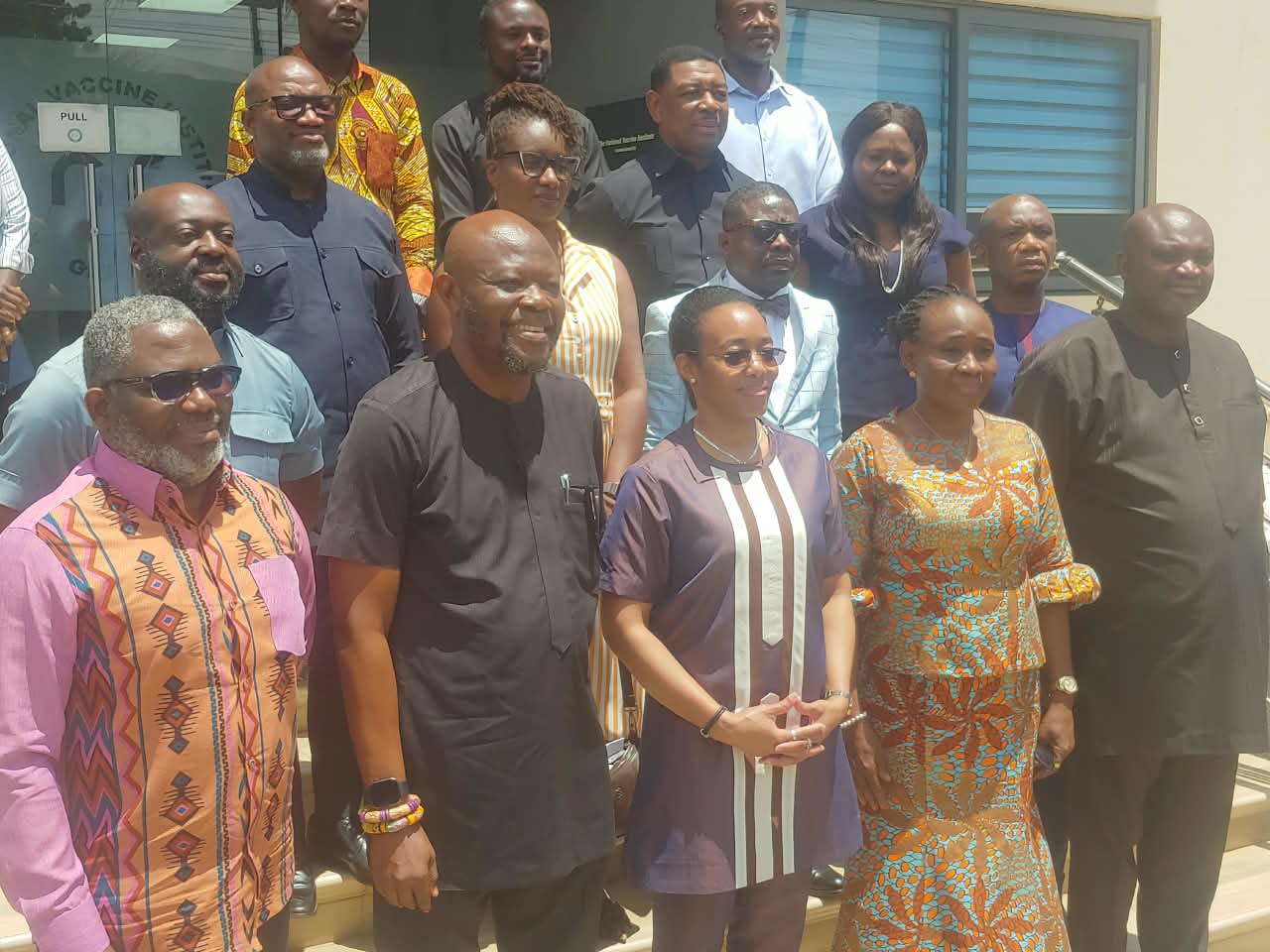
The Minister gave the warning during a familiarization visit to the Council for Scientific and Industrial Research (CSIR) and the Electrical and Electronic Waste Management Fund (E-Waste Secretariat) in Accra.
The visit forms part of her ongoing tour of agencies under the Ministry to acquaint herself with their operations, achievements, challenges and to align their mandates with government’s development agenda.
At CSIR: Commitment to Scientists and Storytelling
At the CSIR, management briefed the Minister on the Council’s research activities, innovations, commercialization efforts and its critical role in driving national development through science, technology and innovation. Discussions also focused on funding constraints, infrastructure deficits and the urgent need to retain scientists.
Addressing staff and management, Dr. Agyeman-Rawlings commended CSIR for its contributions to national development and stressed the need for effective public communication of its work.
“I think it also creates a platform for the media to share the story of CSIR and continue to do so, so the public actually understands what you do and why you’re here,” she said.
On staff welfare and retention, the Minister called for a broader, collaborative approach, including commercialization of research outputs to generate more funds to improve conditions of service.
“You can commercialize what you do and we can make a case where you’re retaining more of what you get. You can decide on how to improve your conditions, so it’s a collaborative effort and I think that will happen as we engage more,” she noted.
She assured staff of her commitment to working closely with the Council to build a formidable scientific workforce for national transformation.
“This is just supposed to be the intro, but I’m looking forward to engaging more with you so we can understand what we can do better, what we can do differently, so that we can let you stay and have more young scientists join the bandwagon, so that we can really build an army of scientists who can transform this country,” she stated.
“I believe that this aligns really well with His Excellency the President’s vision and I am committed, one hundred percent committed, to working with you to make this happen.”
The Minister also underscored the importance of hard work, dedication and a solution-oriented mindset.


“For me, it’s about the importance of hard work. My parents, you know how they worked, laziness was not permitted… Hard work is something I understand, dedication to country is something I understand and I believe we’re all here because we share those values,” she said.
“Where you have issues, let’s not be shy or concerned about being vocal about where there are issues… But when you do have a challenge, please include a solution.”
At E-Waste Secretariat: New Threat From Green Technology
At the E-Waste Secretariat, the Minister said the agency has become extremely critical in view of the global green transition.
She pointed out that while the shift to electric vehicles and renewable energy is laudable, their end-of-life components present a serious environmental threat if not properly managed.
“We are seeing a surge in the use of electric vehicles, we are seeing a surge in the use of solar panels and renewable technology which presents a whole new challenge in terms of waste,” Dr. Agyeman-Rawlings stated.
“Because the materials that are left after the lifespan of these various types of technology, if we are not preemptive in terms of provision of the relevant technology to either recycle or have the necessary agreements in place to ensure we can export to countries that have that capacity, we are going to end up with a new form of waste that will definitely be beyond us.”
The Minister subsequently tasked the Secretariat to develop a comprehensive strategy to guide government policy and prevent a future crisis.
“I would like to put that at your doorstep. Come up with your strategy on how we can address this so that we can actually put together policy and how to perhaps make it more efficient,” she directed.
She cautioned against over-reliance on landfill sites, noting that even recently commissioned ones have limited capacity, and stressed that hazardous e-waste cannot be disposed of in landfills.
“There are certain types of waste you can’t dispose of in landfills and we must be very intentional about how we address the segregation of waste whether it’s at the office or domestic level or industrial to ensure that we don’t become a dumping site,” she warned, citing risks to groundwater, soil, air quality and public health.
She also called for urgent measures to decongest e-waste holding centres, which she said are intended as temporary transit points and not permanent storage facilities.
The Minister assured both institutions of her Ministry’s support in strengthening their mandates to deliver on their core objectives for sustainable environmental management and national development.
By: Emmanuel Anyigba