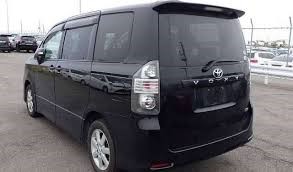







The National Road Safety Authority (NRSA) has officially banned the commercial use of converted Toyota Voxy vehicles, citing safety risks and structural inadequacies that make them unfit for passenger transport on Ghanaian roads. The directive follows growing public concern over accidents involving the popular minivan.
The decision was informed by a technical committee’s investigation, which presented its findings on Wednesday, April 8, 2026.
Godwin Kafui Ayetor, Chairman of the Toyota Voxy Technical Working Group, highlighted that the vehicles were never designed for commercial purposes and that local conversions have compounded the risks.
Engineering and Conversion Risks
According to Toyota Tsusho Corporation, the Voxy and Noah models are manufactured exclusively for Japan’s domestic market and are not produced in left-hand drive. The company has consistently refused to authorize RHD-to-LHD conversions at its plants due to safety concerns.
Despite this, about 90% of conversions in Ghana are carried out locally, often by informal artisans. Investigations revealed major modifications, including the removal of dashboards, splicing of wiring harnesses, and structural changes that compromise the vehicles’ integrity. Many conversion workshops operate without formal standards, supervision, or certification, putting passengers at significant risk. None of the facilities visited were registered with NRSA, as required by law.
Commercial Unsuitability
The investigation further confirmed that only models such as the Toyota HiAce, GranAce, and Coaster are designed for commercial transport. With a ground clearance of 150mm—well below the 185mm of the HiAce—the Voxy is unsuitable for long-distance travel on Ghanaian roads. Drivers often install longer struts and larger tyres after conversion to compensate for the clearance deficit, further compromising safety.
While registration data shows that only 34% of Voxy vehicles are listed for commercial use, field observations indicate widespread use of privately registered vehicles for passenger transport.


Regulatory Gaps
The committee’s report also highlighted systemic regulatory lapses. Despite Section 58 of the Customs Act, 2015 (Act 891) prohibiting RHD imports without Ministerial approval, over 7,257 such vehicles have entered the country. The Ghana Standards Authority has not fully enforced GS 4510:2022, which could have prevented unauthorized imports, while the DVLA continues to register converted vehicles without enhanced inspection.
Crash statistics reveal a worrying trend. Nationally, crashes increased by 9.3% in 2025, with a fatality rate of 20 per 100 crashes—the highest in five years. While Voxy-related crashes account for less than 1% nationally, certain regions report disproportionate impacts: Bono Region (14.6%), North East Region (12.7%), and Western Central Region (11%). Investigations suggest that unrealistic sales targets and inexperienced drivers contribute to these accidents.
Recommendations and Next Steps
The NRSA’s report recommends immediate enforcement of existing laws to curb RHD imports and sanction owners of privately registered vehicles used commercially. Voxy vehicles currently registered for commercial use should be restricted to intra-city travel, with a public advisory issued warning of their risks.
Medium- and long-term measures include implementing pre-shipment conformity assessments, establishing strict licensing and training for commercial drivers, creating national standards for vehicle conversions, registering certified workshops, and introducing speed limiters for commercial vehicles.
The NRSA emphasized that these measures aim to protect passengers, ensure road safety compliance, and prevent further accidents involving converted Toyota Voxy vehicles.