






The Bank of Ghana has spent approximately GH₵17 billion on liquidity management operations as part of a broader economic stabilisation programme aimed at reducing inflation and restoring confidence in the country’s economy.
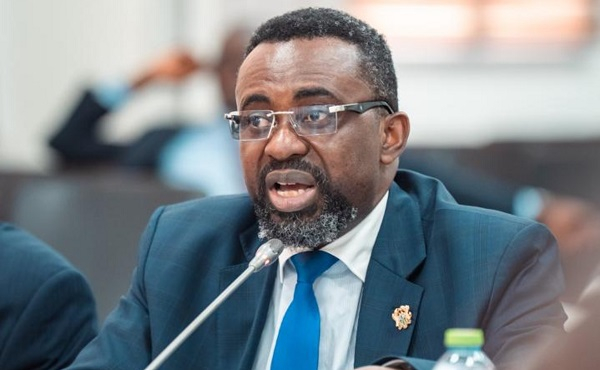
Governor of the central bank, Johnson Pandit Asiama, disclosed this while briefing the Parliamentary Committee on Economy and Development on Monday, March 9. He explained that the intervention was necessary to tighten monetary conditions and accelerate the reduction of inflation.
According to the Governor, when he assumed office, inflation remained high and existing monetary conditions were not strong enough to return price levels to a stable range within a reasonable period.
He noted that policymakers were confronted with excess structural liquidity in the banking system, which weakened the effectiveness of monetary policy and allowed inflationary pressures to persist.
To address the challenge, the central bank intensified its open market operations—an instrument widely used by central banks to absorb surplus funds from the financial system. Through this mechanism, excess liquidity is withdrawn from banks while interest is paid on the funds, thereby reducing the volume of money circulating within the economy.
Dr. Asiama said the operations generated interest costs of about GH₵17 billion but stressed that the expense must be viewed against the broader economic gains achieved.


“The financial effects that will be reflected in the Bank’s accounts are the accounting counterpart of the stabilisation benefits now being realised across the Ghanaian economy,” he told Members of Parliament.
He indicated that the policy measures have contributed to one of the sharpest disinflation periods in Ghana’s recent economic history. Inflation declined significantly from 23.8 percent in December 2024 to 3.3 percent in February 2026, providing relief to households and strengthening purchasing power.
The Governor added that the stabilisation efforts have also helped steady the exchange rate and improve overall financial conditions in the economy. Interest rates have started easing, making borrowing more affordable for businesses and households while supporting economic activity.
Ghana’s external buffers have also strengthened during the period. Gross international reserves have risen to about US$13.8 billion, representing roughly 5.7 months of import cover and enhancing the country’s capacity to withstand external shocks.
Dr. Asiama said the ongoing stabilisation programme has played a critical role in rebuilding confidence in financial markets and the broader economy.
“For ordinary Ghanaians, the most important signal of recovery is simple,” he said. “Prices are stabilising, the cedi is steadier, and the economy is moving back toward normal.”
He further assured that the Bank of Ghana remains focused on maintaining price stability while supporting conditions needed for sustainable economic growth.