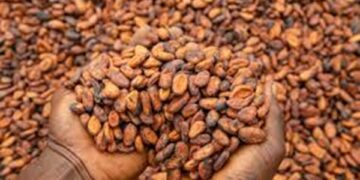








The Ghana Cocoa Board (COCOBOD) has announced a major shift in its financing strategy, revealing that it will not seek a syndicated loan to fund cocoa purchases for the 2025/2026 crop season.
This decision, according to COCOBOD, is largely influenced by a continuing global shortage of cocoa beans, which has significantly affected the supply chain and market dynamics.
The development marks the second consecutive year the Board has opted out of syndicated borrowing—a long-standing financing mechanism used to support cocoa purchases in Ghana.
Speaking on Citi FM on Monday, August 4, COCOBOD’s Head of Public Affairs, Jerome Kwaku Sam, clarified the rationale behind the move.
“We’re not doing syndication. To be very honest, last year [2024], we didn’t do syndication, and this year [2025], we’re not doing syndication. What has necessitated us not to do syndication is that we’re experiencing a global shortage of the cocoa bean,” he stated.
The global cocoa supply crisis, triggered by adverse weather conditions, diseases, and declining yields in key producing countries, has led to reduced volumes available for export and purchase—making the usual large-scale financing less viable.
Mr. Sam further explained that the Board’s decision also aligns with efforts to cut down on operational expenses in light of the challenging market.


“We’re not doing syndication whereby we’re going to incur additional expenses and what have you. That is out of the system or table for now,” he emphasised.
This comes in the wake of Finance Minister Dr. Cassiel Ato Forson’s recent announcement of a new producer price for cocoa—a move expected to offer relief to local farmers.
With COCOBOD shifting away from syndicated loans, attention now turns to how the institution will navigate procurement and support systems for farmers in a tightened cocoa market.