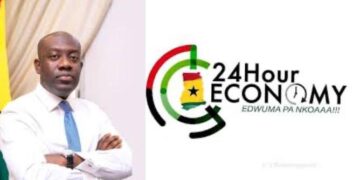







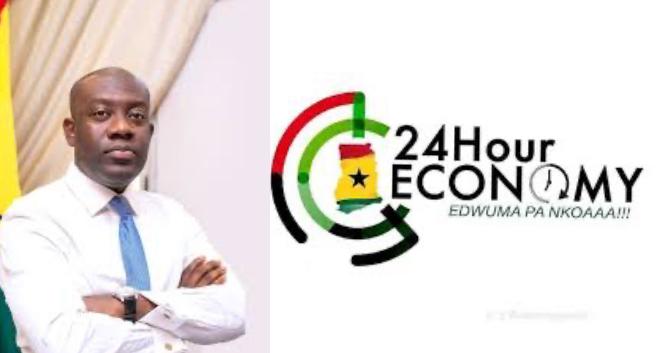
The Ranking Member on Parliament’s Economy and Development Committee, Kojo Oppong Nkrumah, has questioned the feasibility of government’s much-touted 24-hour economy, arguing that recent macroeconomic decisions have weakened demand and stripped the economy of the liquidity needed to sustain round-the-clock production.
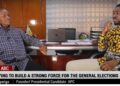
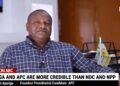
Speaking in an exclusive interview with ABC News GH, the MP for Ofoase Ayirebi accused government of artificially forcing down inflation through excessive monetary sterilisation, warning that the approach undermines purchasing power and long-term economic activity.
“The problem is that this government has sterilised about GH¢60 billion from the economy,” he stated. “Whenever you say it, they want to obfuscate or hide it.”
He cited the 2026 Budget Statement, insisting the data is publicly available and officially acknowledged by the Bank of Ghana.
“One of them was challenging us to prove it. I told them to go to page 284 of the 2026 Budget. It is there, black and white. The Bank of Ghana reported it,” he said.
According to Mr Oppong Nkrumah, this scale of sterilisation is unprecedented in recent history and has far-reaching consequences.


“This is the first time in so long that we have sterilised this extensively,” he noted.
He explained that while sterilisation can mechanically reduce inflation figures, it does so by suppressing demand rather than lowering the real cost of production.
“What sterilisation does is that it artificially brings down inflation. The cost of production won’t go down, but when you sterilise the money out of the equation, people won’t have money—the purchasing power,” he explained.
He argued that government then uses the resulting demand slump to claim inflation has eased.
“Then the government can measure and say inflation has come down,” he added.
Mr Oppong Nkrumah warned that this policy direction directly contradicts the fundamentals required to run a 24-hour economy, which depends on strong consumer demand, liquidity, and continuous industrial activity.
“When you sterilise GH¢60 billion out of the economy and there is no money for demand, how are you going to generate that demand that will then perpetuate a 24-hour economy?” he questioned.
He concluded that under the current economic conditions, government will face serious difficulty implementing its flagship policy.
“So under the current circumstances with what they are doing, they will struggle to operate a 24-hour economy,” Mr Oppong Nkrumah stressed.
The comments add to growing public debate over the sustainability of government’s economic strategy and whether headline inflation gains reflect real relief for households and businesses—or merely statistical adjustments driven by tight monetary controls.