






Government has announced a sweeping financial rescue plan for the Ghana Cocoa Board (COCOBOD), including the absorption of its GH¢5.8 billion legacy debt and the immediate settlement of arrears owed to cocoa farmers.
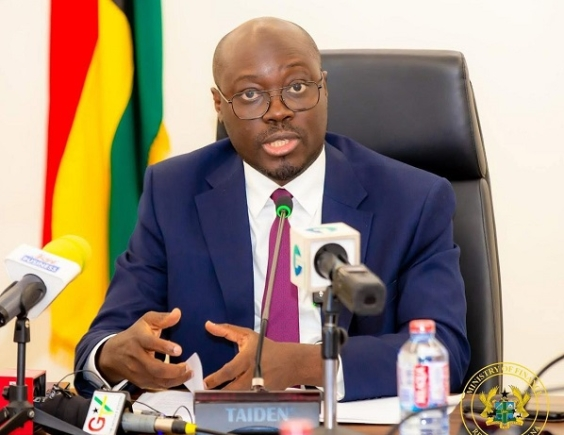
Addressing the media on Thursday, February 12, after an emergency Cabinet meeting, Finance Minister Cassiel Ato Forson disclosed that Cabinet had directed COCOBOD to begin paying all affected farmers without delay.
“Cabinet has directed the office of the Attorney General to commission concurrent forensic audit and criminal investigation,” Dr. Forson announced, as part of broader measures to restore financial discipline at the cocoa regulator.
Debt Absorption and Road Liabilities Transfer
Under the new arrangement, Cabinet has instructed the Ministry of Finance to seek parliamentary approval to absorb COCOBOD’s legacy debt of approximately GH¢5.8 billion. The amount includes GH¢3.7 billion owed to the Finance Ministry and GH¢1.38 billion owed to the Bank of Ghana.
Additionally, GH¢4.35 billion in cocoa road liabilities will be transferred to the Ministry of Roads and Highways and the Finance Ministry to ease the burden on COCOBOD’s balance sheet.
According to the Finance Minister, the intervention is expected to “restore positive equity and boost confidence” in COCOBOD, which has struggled under mounting debt and liquidity constraints.


Production Shortfall and $1bn Loss
Dr. Forson attributed the cocoa sector’s financial crisis partly to a weak financing model adopted after the collapse of the traditional syndicated loan system. He said COCOBOD’s financial health deteriorated sharply between 2022 and 2024, resulting in loan defaults, delayed financing arrangements, and heavy losses linked to rollover contracts.
For the 2023/2024 cocoa season, COCOBOD projected production of 800,000 tonnes but managed only 432,145 tonnes — a shortfall of more than 45 per cent.
“This resulted in a huge rollover contract of about 333,767 tonnes… and a loss of over US$1 billion,” he stated.
The Minister further revealed that COCOBOD defaulted on a US$70 million bridge loan from the Finance Ministry in 2024, compounding its already fragile financial position.
Wide-Ranging Reforms Approved
Beyond the debt absorption, Cabinet has approved extensive reforms aimed at stabilising the cocoa sector and preventing a recurrence of the crisis.
These include the introduction of a new COCOBOD Bill to guarantee at least 70 per cent of gross Free-On-Board (FOB) value to farmers, the implementation of an automatic producer price adjustment mechanism, and the adoption of a new financing model anchored on domestic cocoa bonds.
Government also plans to revive indigenous licensed buying companies, restructure the Produce Buying Company (PBC), and revitalise the state-owned Cocoa Processing Company (CPC).
To ensure accountability, Cabinet has ordered a forensic audit and criminal investigation into COCOBOD’s operations over the past eight years. Dr. Forson said wasteful spending and non-core expenditures would be curtailed under the new legislative framework.
The emergency measures come amid growing concerns over the sustainability of Ghana’s cocoa sector, which remains a critical pillar of the national economy and a major source of livelihood for hundreds of thousands of farmers.