






Government has upheld 1,539 public sector recruitments, appointments and promotions made before December 7, 2024, while recommending the revocation of 541 others found to have breached established procedures during the transition period.
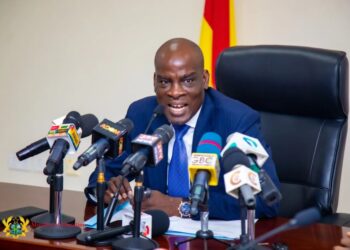
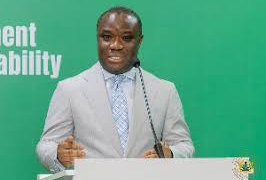
Addressing the media at the Government Accountability Series, Presidential Spokesperson Felix Kwakye Ofosu, explained that the decision follows the work of a committee set up to investigate appointments and recruitments made after the December 7, 2024 general elections.
According to the Government, concerns were first raised at the initial meeting of the Joint Transition Team on December 17, 2024, over alleged rushed and unlawful recruitments into public institutions, as well as substantial payments made to contractors and other creditors in the immediate aftermath of the elections.
The incoming administration said it had left the meeting with the understanding that all ongoing recruitments, promotions and significant statutory payments would be subjected to joint review. However, it later accused the outgoing government of disregarding this understanding.
On February 10, 2025, the Chief of Staff issued a directive revoking all appointments and recruitments deemed to have been made unlawfully after December 7, 2024. Subsequently, reports emerged that some individuals who had been lawfully employed before the cut-off date, or whose recruitment processes had begun before the elections but were not concluded, had also been affected.


To address these concerns and ensure fairness, a committee chaired by Nana Oye Bampoe Addo, Deputy Chief of Staff, was established to investigate all affected cases. Other members included Dr. Prince Edward Darah of the Public Service Commission, Ms. Roda Gavor of the Ministry of Labour, Jobs and Employment, Mr. Bernard Adjei representing Organised Labour, and Mr. C.W. Ayiku from the Office of the President.
The committee was tasked to determine whether prescribed procedures for recruitment and promotion were followed, establish when processes commenced and ended, categorise compliant and non-compliant cases, and provide case-by-case recommendations.
A checklist of ten indicators was developed to assess compliance, including evidence of vacancy declarations, advertisements, approved schemes of service, technical and financial clearances, interview reports, appointment and acceptance letters, and payslips where necessary. The committee set a pass mark of 80 per cent for procedural compliance.
Between March 21 and April 30, 2025, the committee reviewed 43 reports from institutions and individual petitioners. Thirty-six institutions appeared before the committee, including the Ghana Revenue Authority, Ghana Ports and Harbours Authority, National Health Insurance Authority, Electoral Commission, Volta River Authority and the University of Energy and Natural Resources, among others.
At the end of its work, the committee reported that 28 of the 36 institutions had commenced their recruitment processes before December 7, 2024. Nineteen institutions had already revoked certain appointments in response to the Chief of Staff’s directive, while 17 others sought guidance from the President’s Office.
In total, 2,080 recruitments, appointments and promotions were examined. Of these, 879 had been revoked by the institutions themselves, while 1,201 had not been revoked.
Following its assessment, the committee recommended that 1,539 appointments be upheld, having complied with prescribed procedures and having received appointment letters before December 7, 2024. However, it recommended that 541 appointments be revoked because their recruitment processes concluded after the cut-off date and failed to meet the 80 per cent compliance threshold.
The Government noted that the committee’s recommendation to revoke 541 appointments was lower than the 879 already revoked by institutions, explaining that special consideration was given to vulnerable groups, including persons with disabilities, particularly within the Ghana Education Service.
Officials stressed that the revocations were not politically motivated and did not constitute a witch-hunt. Rather, they described the exercise as a necessary step to uphold the rule of law and ensure accountability in public sector recruitment.
According to the Government, the affected appointments were made in clear breach of established regulatory frameworks and transition directives. It maintained that the review process was conducted without malice and was aimed solely at ensuring adherence to due process in the management of public sector employment.