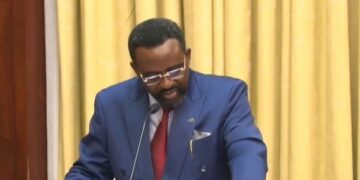







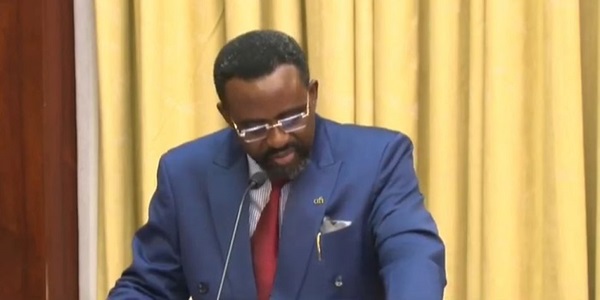
President John Dramani Mahama has officially sworn in Dr. Johnson Pandit Kwasi Asiama as the new Governor of the Bank of Ghana (BoG) alongside Dr. Zakaria Mumuni as the First Deputy Governor.
The swearing-in ceremony took place at the Jubilee House on February 25, 2025, where both officials took the oath of office and received their instruments of appointment.
President Mahama, in his address, expressed confidence in the new leadership of the central bank, emphasizing that their appointment was a critical step toward restoring trust in the nation’s economic governance.
In his remarks, the President highlighted the pressing need for stability in Ghana’s financial sector, calling on the new BoG leadership to take decisive action.
“The central bank plays a pivotal role in our economic recovery, and I trust that under your leadership, we will see bold steps taken to curb inflation, strengthen the financial system, and restore investor confidence,” Mahama stated.
He urged the new governors to work in close collaboration with government agencies, international financial institutions, and private sector players to implement sustainable economic policies.
The appointment comes at a crucial time as Ghana battles rising inflation, currency instability, and banking sector weaknesses.
With concerns over fiscal management and monetary policy effectiveness, the new BoG leadership is expected to implement immediate reforms.
Analysts believe that strong, independent leadership at the BoG is necessary to steer Ghana’s economy in the right direction.
While stakeholders welcome the appointments, they stress that accountability, policy consistency, and financial discipline must be top priorities for the new central bank governors.
“Six Steps to Economic Stability” – BoG Governor Outlines 6 Bold Reforms
Newly sworn-in Governor of the Bank of Ghana (BoG), Dr. Johnson Asiama, has wasted no time in outlining an ambitious six-point strategy aimed at stabilizing Ghana’s economy, controlling inflation, and strengthening financial institutions.
Speaking at the presidency after his swearing-in, Dr. Asiama stressed the urgency of tackling the country’s economic challenges, including rising debt, exchange rate fluctuations, and weak banking regulations.
“The path we have embarked on is about restoring public trust, rebuilding confidence, and ensuring that Ghana’s economy is stable, innovative, and ready for the future,” he declared.


The six key areas he outlined include monetary policy reforms, exchange rate stabilization, stronger banking sector regulations, financial inclusion through digital banking, improved policy coordination with government agencies, and restoring the financial position of the BoG.
Among the notable reforms, Dr. Asiama announced plans to introduce a new foreign exchange law to replace the outdated Foreign Exchange Act 2006 (Act 723), expand Ghana’s participation in the Pan-African Payment and Settlement System (PAPSS), and enforce stricter banking regulations to manage non-performing loans.
Dr. Asiama also emphasized the need to modernize Ghana’s financial sector by promoting digital banking and expanding financial services to underserved communities.
He assured the public that the BoG’s policies would be transparent, data-driven, and responsive to emerging economic challenges.
His reforms, if effectively implemented, are expected to improve investor confidence, reduce inflationary pressures, and create a more resilient financial system.
However, economic analysts caution that these measures will require strong enforcement, political will, and institutional cooperation to yield lasting results.