






In 2026, amid growing concerns about the financial stability of the state’s hospitals, I sort to investigate in-depth issues facing hospitals and make recommendations to ensure the long-term health of these critical safety net institutions.
Ghana hospitals are not alone in facing serious, quickly shifting challenges. While managed care reduces admissions and lengths of stay for relatively healthy patients, the average hospital patient has more numerous and more complex health problems.
Hospitals are slowly recovering from a period of financial difficulty over recent years due to the burden of Covid-19 and other global challenges including equipment cost, staffing cost, cost of water and electricity for hospitals. Full access to specialized services for men health, women health and children must be carefully looked at.
Ghana’s hospitals face serious challenges including significant specialized health care workforce shortages due to exist to European and American Hospitals, reduced National Health Insurance rates, shortfalls, increasing pressure from government and private payers to both improve quality and reduce costs, increasing pharmacy costs, continuing tight capital markets, new regulation of electronic transmissions of information and privacy restrictions, fragmented data systems reporting to multiple state agencies, growing numbers of uninsured patients seeking care, increased demand on emergency departments, a severe lack of capacity in the state’s mental health treatment system, increasing malpractice and other liability costs.
As the government budgets move from local and foreign indebtedness to more debt, the ability to support hospitals will be difficult. In response to this information, we must make a series of recommendations to strengthen hospitals in the areas of workforce, quality of care, financial & organizational issues, and access to care.
Many private hospitals have already closed, and others are said to be in danger of closing. How do we increase our hospital bed capacity to 3 beds/1000 residents. Ashiaman, Madina, Dome Kwabenya, Adenta, Amasaman and Anyaa Sowutuom plus La need bed capacity that Ridge or Korle-Bu cannot handle at the moment. This means we need this ratio of 3 beds per 1000 people within Greater Accra, Ashanti Region, Central Region, Northern Region and Eastern Region where the population of people are greatest.
The government spends about 1, 478Gh per person on hospital care in Ghana and this amount has been rising each year. People who need to see their doctor early before crisis are part of the burden on emergency room. Many cases would not have become an emergency if the person had been seen earlier or sort care much earlier.
Are people visiting the emergency room more than outpatient consultation and if so, why? Why wait till you have a severe hypertensive or diabetic issue before you visit hospital? Delayed pelvic scan for many pregnant women with ectopic pregnancy become major emergencies when determined late and many die on the way to emergency room.
We must do more health promotion to reduce or prevent emergencies in the country; we need all stakeholders including religious men and women who advice patients to seek hospital care only when all efforts of prayers have failed or not worked.
All women who miss their menses must be advised to take a scan, all men and women above 25 years must be encouraged to have regular blood pressure checks etc. The need to wear helmets, seatbelt and to carefully look at speed limits, road warning signs must all be done to reduce accidents which become emergencies.
Based on some fiscal data from 2000, most government hospitals are financially strong compared to before the introduction of NHIS. However, some may be classified as moderately distressed or significantly distressed. As a healthcare professional I believe that hospitals need to achieve higher margins to be able to reinvest in facilities and new technologies.
Our hospitals are having greater difficulty in attracting capital. As of October 2020, the hospitals borrow at a far higher interest rates for longer terms. Difficulty in borrowing money and investing in facilities will place hospitals at a competitive disadvantage and affect their ability to serve residents. Regional Hospitals and the few teaching hospital or acute care hospitals will become overburdened each year as this goes on.
Insurance companies that insure cars and motorbikes must be seen to be doing more for healthcare facilities or professionals especially upgrade to x ray or imaging machines that support accident centres in the country. Data including billing and discharge records must be used for health planning and hospital monitoring.
The uninsured are much more likely to go without needed health care, receive fewer preventive services, and less regular care for chronic conditions. They tend to delay care until problems worsen and are more likely to access care in a hospital emergency room. Once admitted to a hospital, uninsured patients are more likely to die there.
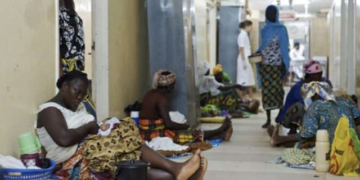
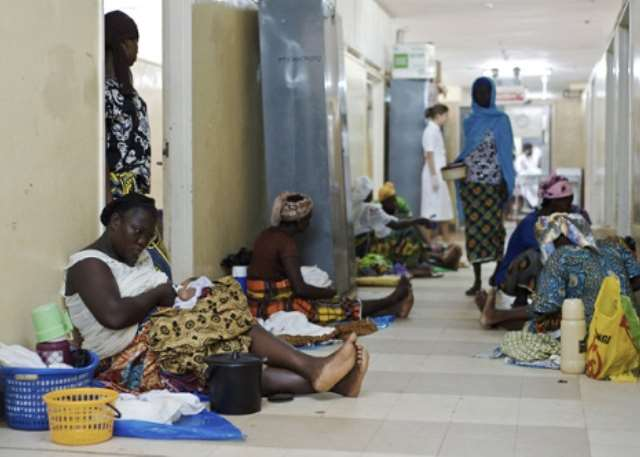
Nationally, one third of emergency rooms are so crowded that they must periodically divert ambulances to other hospitals. Ghana emergency rooms were cited for failing to comply with a policy requiring them to provide emergency care to all patients regardless of ability to pay. Acute care emergency rooms are routinely holding patients for days who need acute psychiatric care or hospice care, because no beds are available.
Patients who do not need acute psychiatric care or critical care or stroke patients are being held because there is no appropriate place for discharge. Some are still at emergency because of lack of fund for laboratory test, or payment for discharge home or to transfer to the ward. Social services must also up their work so as to reduce the over stay by patients who need not occupy hospital emergency wards/ beds.
We need funding to upgrade the preparedness of hospitals and collaborating entities to respond to major emergencies like stampedes and road traffic accidents, etc. We need program for development of regional plans to improve the capacity of hospitals and emergency rooms, emergency medical services and outpatient systems.
Workforce Issues Ghana faces serious employment gaps in its health care workforce, including nursing, pharmacy, radiology, and diagnostic imaging, laboratory science, and others. The skilled nursing shortage is most severe for Ghana currently. Morale is very low, and the vast majority (78%) of potential leavers believe the situation is getting worse. Almost half of all nurses would pursue a different career if they were just starting out. The number one issue among nurses is staffing or placement with financial clearance from Ministry of Finance.
The nursing shortage is not simply a customer service or comfort issue for patients; it can mean the difference between life and death. In a study of over 6 million discharge records, researchers found that patients in hospitals with lower nurse to patient ratios were more likely to suffer cardiac arrest, shock, urinary tract infections, hospital acquired pneumonia, and stomach and intestinal bleeding. Patients in highly staffed hospitals had shorter average stays. Surgical patients in the highest staffed hospitals were less likely to die from surgical complications.
Hospital patients can also hire private nurses to attend to their personal needs whiles on admission to improve their clinical outcomes. Nurse staffing level standards or requirements for hospitals have not been met. The number of beds managed per nurse must be looked at to help improve medical outcomes and quality of care. We have a few polices and laws to improve conditions of service for nurses, physicians and health personnel which have not be properly funded.
We must work to reduce death at hospitals due to lack of bed spaces or needed medical attention. Some of these deaths maybe more than death from road traffic accident, breast cancer or even AIDS. About one in 100 lives maybe dying due to medical errors, or lack of adequate nursing care. Medical errors include improper transfusions, surgical injuries and wrong-site surgery, suicides, restraint-related injuries, falls, burns, pressure ulcers, mistaken patient identities and medication errors, such as a patient receiving the wrong drug or an overdose of the correct drug. Medication errors caused preventable injuries to hospital patients at a rate of about 10 per week at each of two large teaching hospitals; one in five were life threatening.
The causes of medical errors are varied including language barriers system fragmentation and complexity, and staff shortages. Of even greater concern is a study showing that while hospitals are doing a better job of reporting medication errors, they continue to make the same mistakes repeatedly.


We should focus on programs and where appropriate develop legislation to address: (a) labour shortages issues (b) increasing pharmacy cost (c) cost and availability of malpractice and other insurances (d) study the sources of capital funding and the effect of rating on hospitals and their cost implications. The shortfall in NHIS Levy and what is released or Ministry of Health funding must be carefully addressed at cabinet. We must coordinate better the wide array of services and reduce fragmentation and duplication within Ghana Health Services. Develop future utilization projections for NHIS services based on an actuarial analysis of the eligible population in Ghana.
Our health industry should be supported to do more preventative care than treatment of emergencies. Explore development of nonhospital alternative systems for people to access appropriate care in community settings. Explore development of nonhospital alternatives for people experiencing mental health crises to access service. Provide more community-based services, particularly mobile emergency crisis services, for people experiencing chronic health crises, like diabetes mellitus, hypertension, and kidney failure.
We must pay the true cost of health services to providers and explore ways to improve the amount of revenue generated by NHIS and more important how much is released to NHIS from the consolidated fund. In all of this the conditions of service for health work force must be carefully looked at and improved. Seek out and take full advantage of all existing sources of educational assistance for students in nursing and allied health programs in Ghana, and where none exists, secure additional resources to make education more accessible and manageable.
It is essential that today’s students, particularly non-traditional students, have adequate support services in place to enable them to complete their healthcare education program. We must expand eligibility criteria for existing healthcare workers who wish to further their education whiles on the job.
Collaborate with public and private sectors to develop new/creative solutions to meet defined financial needs: – Identify and take advantage of all financial resources available (grants, scholarships, loan forgiveness) for non-traditional students pursuing nursing or allied health education who have minimal financial resources for education. Expand eligibility criteria for existing state assistance to such students where possible. Ascertain availability of access to childcare and transportation for health workforce.
Provide additional resources for hospitals to ensure they are able to attract and retain qualified healthcare workers by providing competitive salaries, adequate staffing levels, and thorough training and orientation programs. Training and orientation programs must be expanded to ensure a successful transition from education to practice (hospitals must have resources to maintain trainees in such orientation or “residency” programs rather than incorporating them into the regular staffing schedule).
Address the lack of diversity in healthcare professions by actively recruiting and providing development and outreach programs to target populations, particularly to those for whom a healthcare career would be perceived as well paid and upwardly mobile. Remove remaining barriers to effective, comprehensive, articulated healthcare education.
The healthcare industry, both labor and management, should work together to continue researching and analysing current staffing practices and identify functions performed by licensed staff that do not require the level or ability of a licensed practitioner (e.g., preparing and maintaining staffing schedules, filing documents, arranging for ancillary services such as blood work and radiology, passing fluids, transporting patients and other similar tasks), and continue exploring alternative staffing models and models of care that take appropriate advantage of skill mix.
When we deploy the needed mix, we can free up bed space at our emergencies or wards and then be able to admit more to our emergencies. When patients have been discharged to a ward from emergency room, what measures have been put in place to ensure efficient transition from emergency to the ward at any department.
I agree that quality improvement is an ongoing process and therefore should be addressed on an ongoing basis. Our goals must be to establish an ongoing healthcare quality improvement program for Ghana and to develop systems that will provide public accountability. We should not take health promotion and preventative work for granted so that we as a country can reduce the emergency room visitations. This write up is just an introduction to what must be seriously considered as we work on improving healthcare delivery and saving lives.
By: Dr. Adomako Kissi
Private Medical Practitioner
Greater Accra Region