






The Students’ Representative Council (SRC) of the University of Media, Arts and Communication (UniMAC) has made a passionate appeal to the government and university management to urgently address severe accommodation deficits and lack of road safety infrastructure affecting its student body.
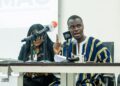
Speaking at the council’s maiden “Meet the Press” forum on Friday, March 27, at the UniMAC South Legon Campus, student leaders argued that current living conditions and external hazards are directly threatening student safety and academic performance. The forum marked the first formal interface between the newly assumed SRC administration and the Ghanaian media.
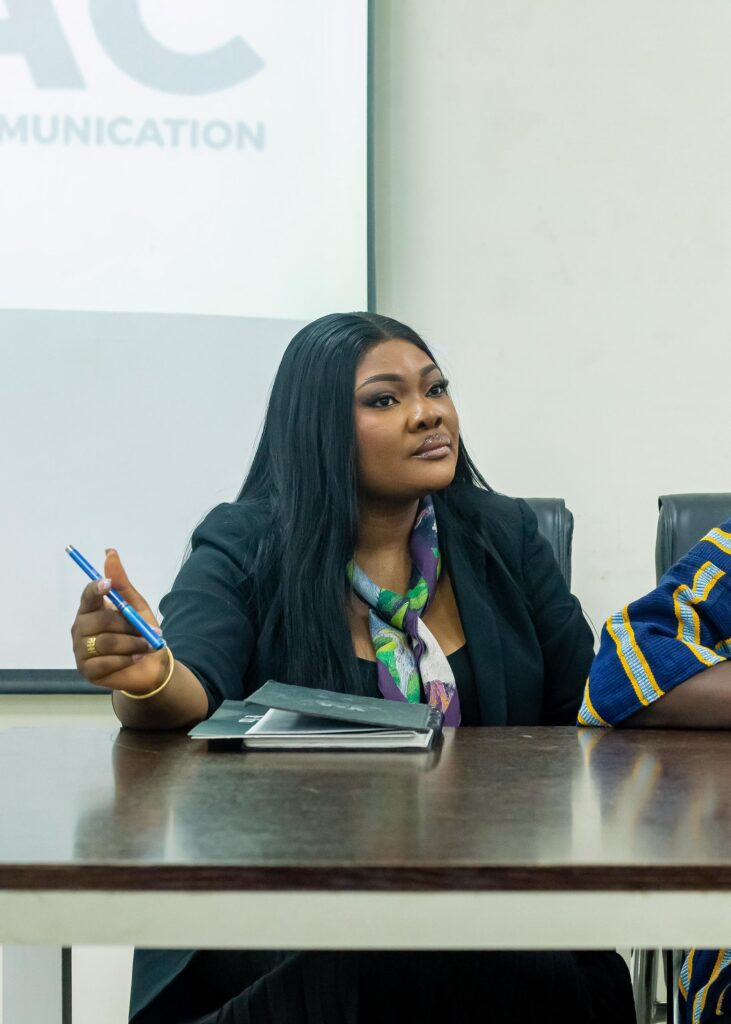
Opening the forum, the SRC Public Relations Officer, Emmanoella Kharyne Yalley noted that the forum was a necessary platform for constructive engagement to address long-standing issues within the community. “At UniMAC, we are not just training communicators; we are building a community that must be heard, protected, and supported,” the PRO stated. She emphasized that because UniMAC trains the nation’s future communicators, building a secure, supported community is paramount.


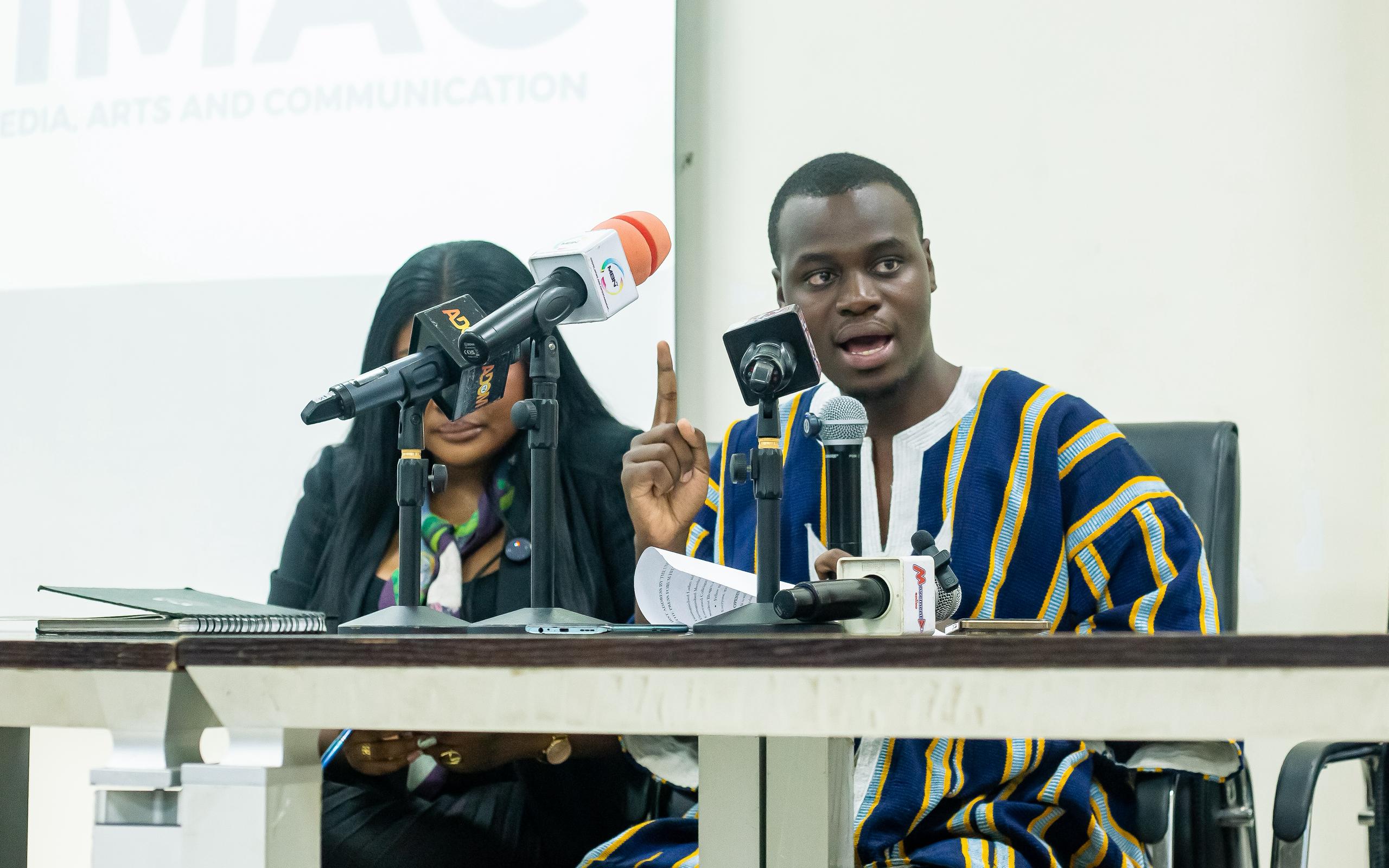
The SRC President, Moses Desire Kuoyo, delivering his address, stressed that student challenges are not isolated inconveniences but rather structural issues that demand coordinated, policy-driven responses.
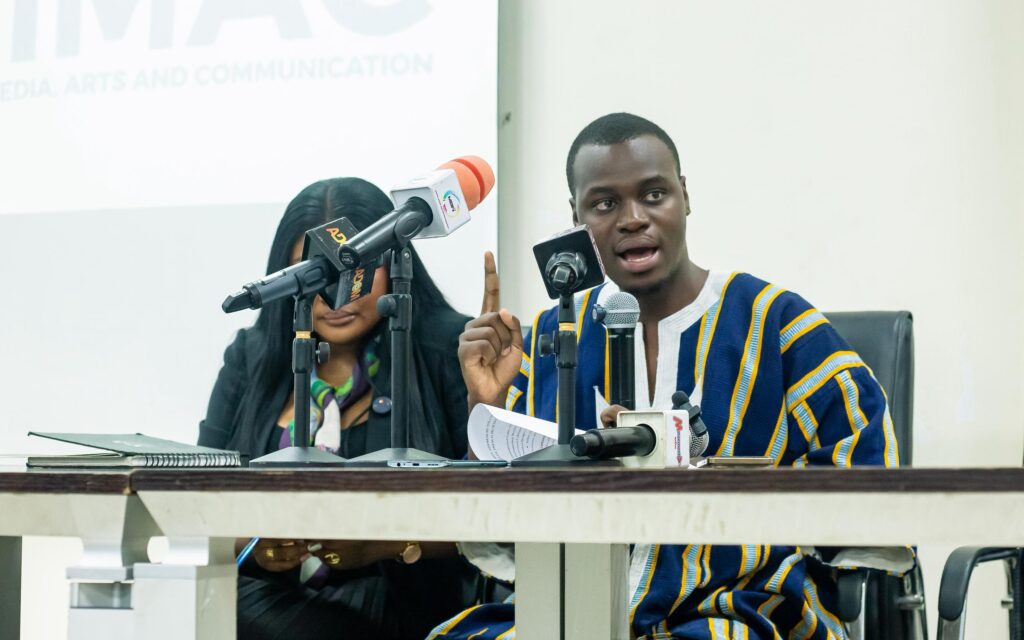
The President drew heavy focus to the tragic passing of Nelson Blay Narkotey, a Level 300 Top-Up Journalism student who was killed in a hit-and-run incident near the South Legon campus. “Nelson’s death was not an isolated occurrence detached from context,” the President stated. “It was linked to an environment where students navigate a high-risk road without adequate pedestrian infrastructure.” To prevent future tragedies, the President proposed a three-pronged policy response:
- The immediate construction of a pedestrian footbridge near the South Legon campus.
- The installation of traffic-calming measures, such as speed ramps and clear signage.
- Strengthened enforcement through direct collaboration with road safety and law enforcement agencies.
The call for better living conditions was echoed strongly by UniMAC Institute of Journalism Representative, Jeffrey Fiifi Annan, who spoke on behalf of students across all three constituent institutes (Journalism, Languages, and Film and Television). Annan revealed that since his appointment two months ago, accommodation has consistently emerged as the most pressing concern for students.
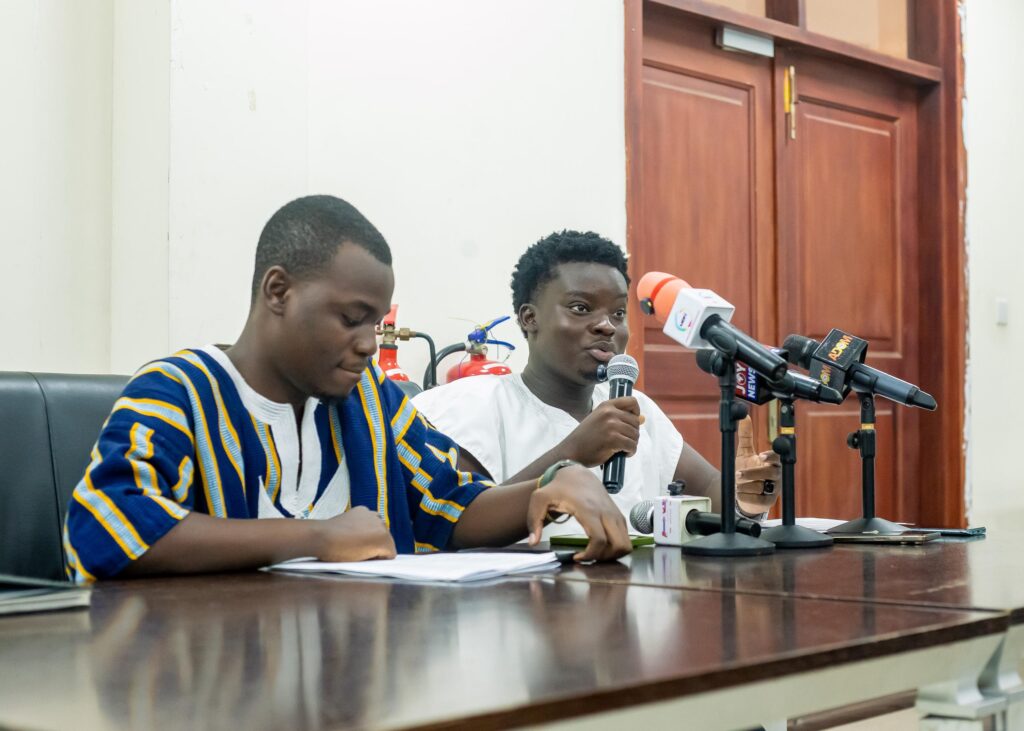
He noted that limited on-campus capacity forces many students into private rentals that are often expensive, far away, and sometimes unsafe. “How can a student give their best to lectures, assignments, and exams when they are constantly worried about where they will sleep or how they will pay the next rent?” Annan questioned.
He added that long, stressful commutes are causing drop-offs in class participation and general student well-being across the Ringway, East Legon, Adabraka, and East Cantonments campuses. Both Annan and the SRC President called on the government to include UniMAC in national housing frameworks. Specifically, the SRC President urged that the government’s upcoming “Bed for All” policy prioritize UniMAC projects to ensure equitable access to education.
While acknowledging the ongoing construction of a 400-bed hostel at the East Legon campus, the student leaders noted that it falls short of the demand across UniMAC’s seven campuses. They urged management to seek partnerships with credible private providers and establish transparent allocation systems to close the gap. Ending the forum, UniMAC Institute of Journalism Representative, Jeffrey Fiifi Annan stressed that “When students speak with one voice, leaders listen, and solutions emerge,” and called on the media to help keep the spotlight on these challenges.