







The Peasant Farmers Association of Ghana (PFAG) has raised concerns over what it describes as inadequate funding for agriculture in the 2027 Budget, warning that critical interventions needed to address challenges facing farmers have been overlooked.
The association says identifiable allocations to agriculture-related ministries and programmes account for only 3.64% of total government expenditure, significantly below the 10% commitment under the Comprehensive Africa Agriculture Development Programme (CAADP), reaffirmed under the Kampala Declaration.
In a press release issued on Thursday, November 26, PFAG also expressed disappointment over a 5.1% reduction in the allocation to the Ministry of Food and Agriculture (MoFA), which has declined from GH¢3.038 billion in 2026 to GH¢2.882 billion in 2027.
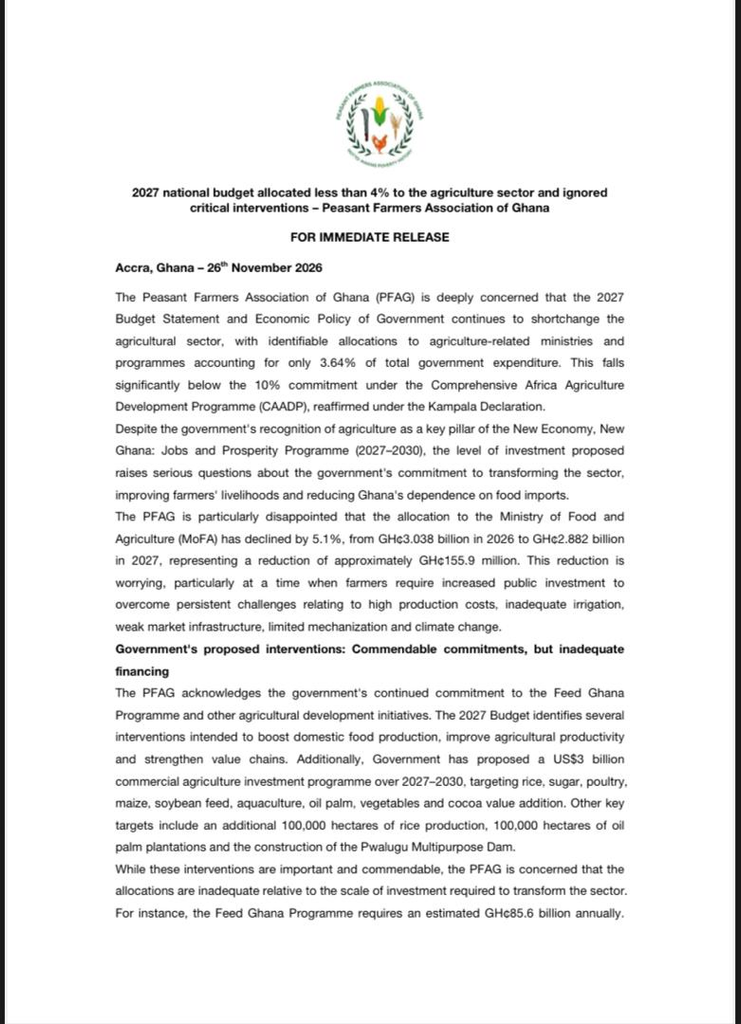
The association says the reduction, representing approximately GH¢155.9 million, comes at a time when farmers require increased public investment to address high production costs, inadequate irrigation, weak market infrastructure, limited mechanisation and climate change.
PFAG further identified the absence of a dedicated Agricultural Development and Emergency Preparedness Fund as a major gap in the budget, warning that the lack of such a facility could leave farmers vulnerable to climate-related shocks, including droughts, floods and pest outbreaks.
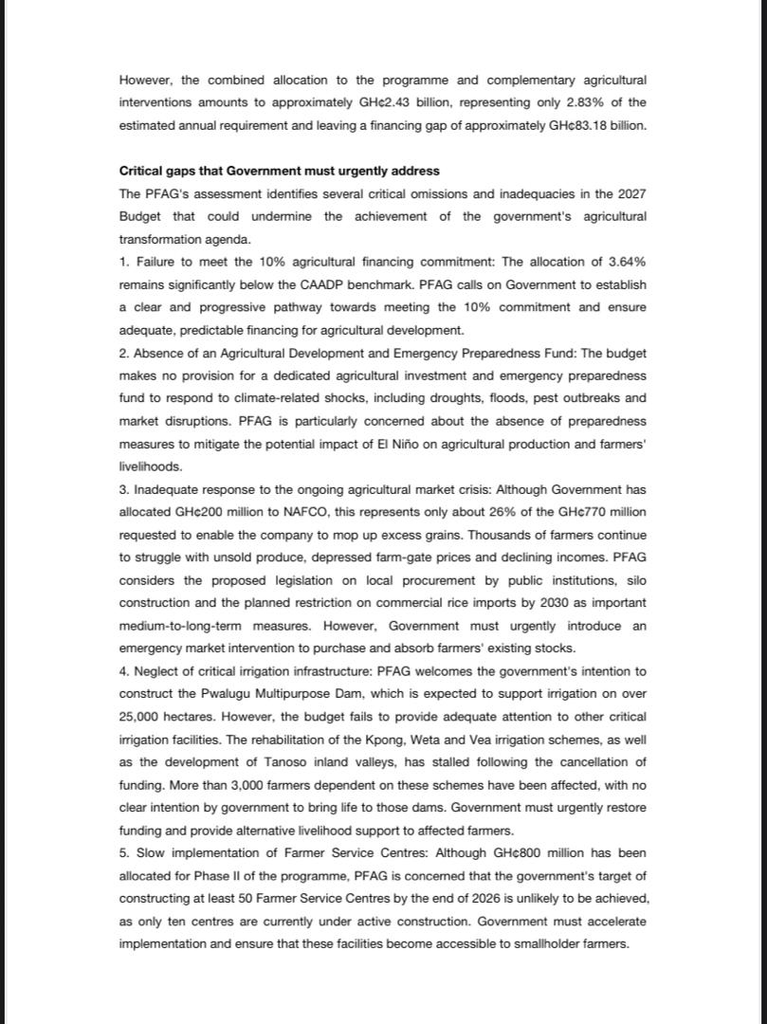
It also expressed concern about the potential impact of El Niño on agricultural production and farmers’ livelihoods.
On the ongoing agricultural market crisis, the association said the GH¢200 million allocated to the National Food Buffer Stock Company (NAFCO) represents only about 26% of the GH¢770 million requested to enable the company to purchase excess grains from farmers.


It noted that thousands of farmers continue to struggle with unsold produce, depressed farm-gate prices and declining incomes, and called for an urgent intervention to absorb existing stocks.
The association also criticised the inadequate attention given to critical irrigation infrastructure, particularly the stalled rehabilitation of the Kpong, Weta and Vea irrigation schemes, as well as the development of Tanoso inland valleys.
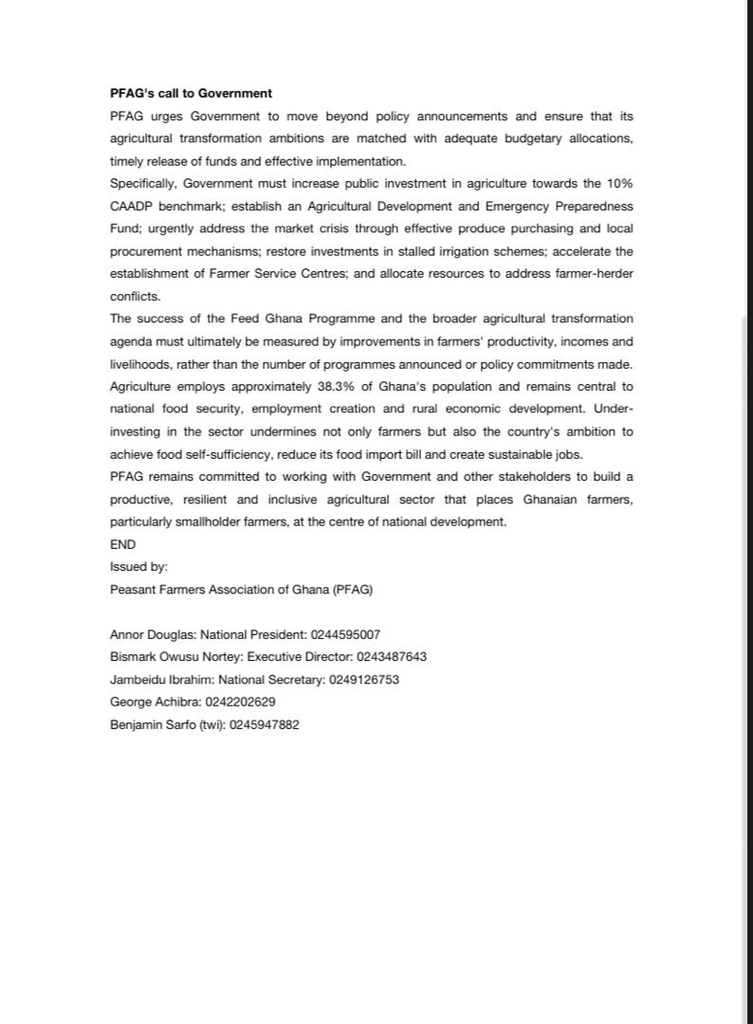
According to PFAG, more than 3,000 farmers who depend on these schemes have been affected following the cancellation of funding, with no clear indication of when the projects will resume.
Although it welcomed the government’s plan to construct the Pwalugu Multipurpose Dam, expected to support irrigation on more than 25,000 hectares, it urged the restoration of funding for the stalled irrigation projects and alternative livelihood support for affected farmers.
PFAG also questioned the pace of the Farmer Service Centres programme, noting that although GH¢800 million has been allocated for Phase II, only 10 centres are currently under active construction against the government’s target of at least 50 by the end of 2026.
The association called on the government to increase agricultural investment towards the 10% CAADP benchmark, establish an emergency preparedness fund, address the market crisis and restore funding for stalled irrigation projects.
It further urged authorities to accelerate the establishment of Farmer Service Centres and allocate resources to address farmer-herder conflicts.
PFAG warned that continued underinvestment in agriculture could undermine Ghana’s ambitions of achieving food self-sufficiency, reducing its food import bill and creating sustainable jobs.