






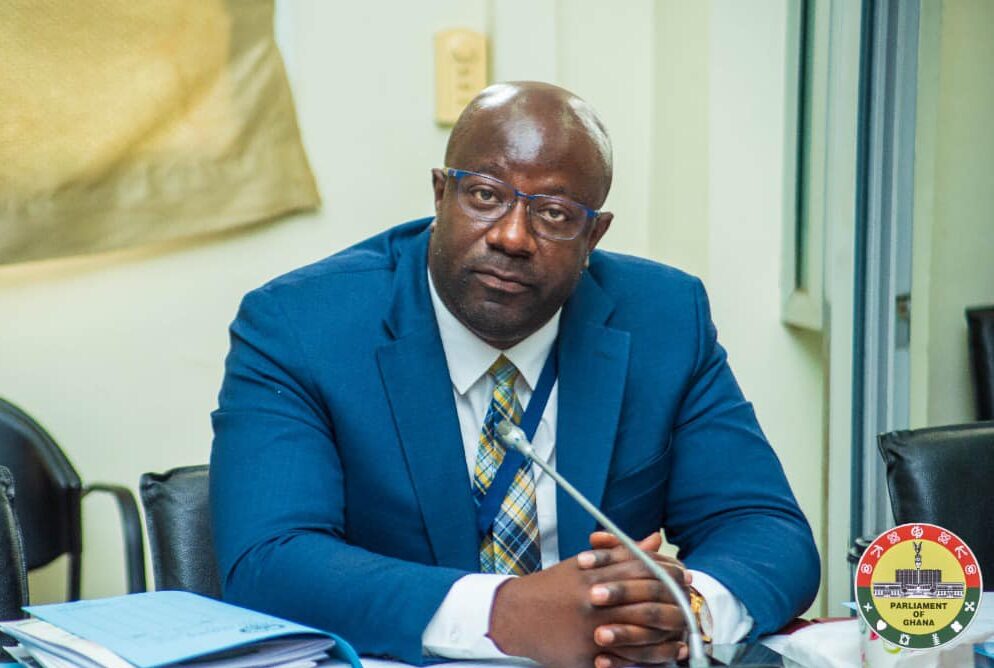
Former Member of Parliament for Anyaa Sowutuom, Dr. Dickson Adomako Kissi, has appealed to the Minister of Health not to scrap the services of Zipline but rather streamline and improve its operations for greater efficiency.
Speaking on ABC In The Morning, Dr. Kissi said the country cannot overlook the crucial role Zipline played during the COVID-19 pandemic, especially in delivering emergency medical supplies, vaccines, and test samples to remote communities.
According to him, while it is important for the ministry to review the cost of running the service, any decision to cancel it completely would be short-sighted.
His comments follow strong revelations by Mr. Akandoh during the Government Accountability Series on Monday, December 1, 2025. The minister disclosed that Zipline, originally contracted to deliver emergency medical supplies to hard-to-reach communities, has largely shifted from its core mandate. According to the ministry’s data, only 12% of the drone service’s activities serve hard-to-reach areas, while just 4% qualify as emergency operations.
This means that 84% of Zipline’s deliveries fall outside the intended emergency and hard-to-reach service categories.
The Health Minister further highlighted that the drones—funded through a multi-million-dollar agreement—are increasingly being used to transport non-emergency items such as condoms, mosquito nets, syringes, adhesive tapes, food and nutrition supplies, and even educational materials including textbooks and uniforms. He questioned why high-cost drone flights should be used for items that could easily be transported through traditional logistics means.
The concerns come at a time when the government reportedly owes Zipline an outstanding GH¢174 million, a debt burden that has already forced the shutdown of three of the company’s operational centres.


But despite these challenges, Dr. Adomako Kissi cautioned against throwing away a system that played a crucial role during the COVID-19 pandemic. He argued that Zipline’s impact—especially in delivering blood, vaccines, laboratory samples, and critical emergency supplies—should not be dismissed because of operational excesses that can be corrected.
He urged Minister Akandoh to renegotiate the terms of the contract rather than terminate the service entirely.
“We can negotiate and relook at the costing and operational expenditure,” Dr. Kissi said, adding that the government must prioritize efficiency while preserving innovations that improved healthcare delivery at critical moments.
His position contrasts sharply with voices like Majority Leader Mahama Ayariga, who has repeatedly called for the cancellation of the Zipline contract, describing the project as a “mismanagement of public funds” that has failed to deliver commensurate value.
Dr. Kissi, however, stressed that with proper restructuring and stricter adherence to the original mandate, Zipline could still serve as an important pillar in Ghana’s healthcare system.