






The Ghana Meteorological Agency (GMet) has cautioned the public to remain alert as the country transitions into what is expected to be a generally weak Harmattan season for the first quarter of 2026, with intermittent dust outbreaks and unusually persistent moisture in parts of the country.
In a Public Weather Advisory for the 2025/2026 Harmattan Season, issued on December 31, 2025, GMet explained that the Harmattan has experienced an unusual delay, with several parts of southern Ghana continuing to record rainfall late into December, a phenomenon described as statistically rare for this time of year.
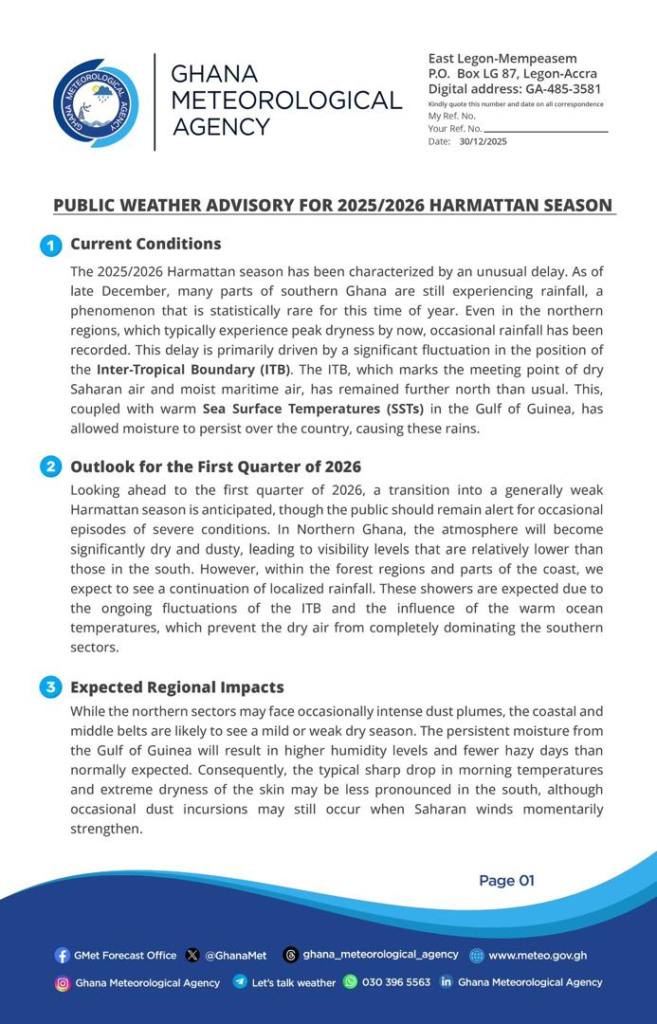
According to the Agency, the delayed onset is largely due to fluctuations in the position of the Inter-Tropical Boundary (ITB), which has remained farther north than usual, allowing moist maritime air from the Gulf of Guinea to persist over the country. This situation has been reinforced by warmer-than-normal sea surface temperatures in the Gulf, preventing the dry Saharan air mass from fully dominating southern Ghana.
“Even in the northern regions, which typically experience peak dryness by this period, occasional rainfall has been recorded,” the advisory noted.
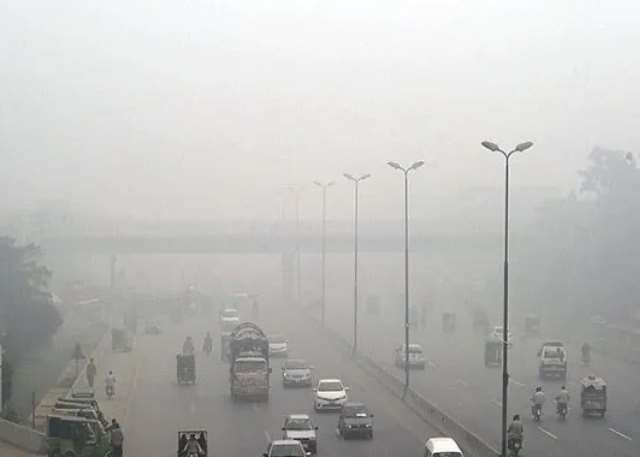
Looking ahead, GMet forecasts that while Harmattan conditions will gradually strengthen in early 2026, the season is expected to remain mild overall. Northern Ghana is likely to experience significantly drier and dustier conditions, with reduced visibility compared to the southern sector.
Meanwhile, forest zones and coastal areas are expected to continue seeing pockets of localized rainfall, driven by ongoing ITB fluctuations and lingering oceanic influence.
The Agency indicated that the northern parts of the country may occasionally be affected by intense dust plumes, while the coastal and middle belts are likely to experience higher humidity levels and fewer hazy days than typically associated with the Harmattan season.
“As a result, the usual sharp drops in morning temperatures and extreme skin dryness may be less pronounced in the south, although brief dust incursions may still occur when Saharan winds intensify,” GMet said.


In light of the varying weather conditions, GMet has urged the public to take precautionary measures, including increasing water intake to prevent dehydration, wearing nose masks during periods of dense dust haze, and exercising caution on roads, especially during early mornings and late nights when visibility may be reduced.
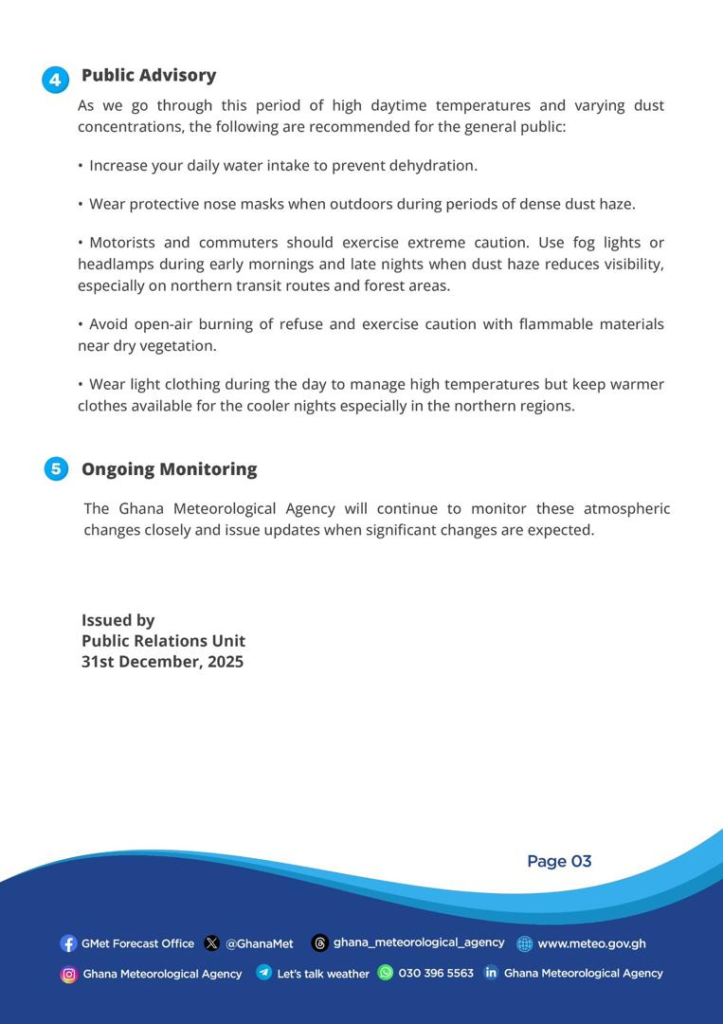
Motorists have also been advised to use fog lights or headlights during dusty conditions, particularly along northern transit routes and forested areas. The Agency further cautioned against open-air burning and urged the public to handle flammable materials carefully in dry vegetation zones.
However, GMet is assuring the public that it will continue to closely monitor atmospheric developments and issue updates as conditions evolve.