






The Deputy Director of Elections for the National Democratic Congress (NDC), Mahdi Gibrill has admitted that President John Dramani Mahama was not given the support he deserved during his first term in office, a situation the party believes contributed significantly to its defeat in the 2016 general elections.
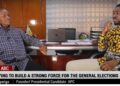
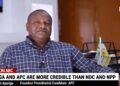
Speaking during a one-on-one interview on ABC In the Morning, Mr Gibrill, stated that internal challenges within the party, coupled with public dissatisfaction and misinformation, contributed significantly to Mahama’s loss after one term in office.
“Ghanaians and the NDC didn’t treat Mahama well in 2016,” Mr Gibrill said. “We believed all this while that we didn’t serve John Mahama right in his first term.”
Mr Gibrill also revealed that the party was unable to effectively defend its record in government ahead of the 2016 polls, allowing negative public perceptions to overshadow the achievements of the Mahama administration.
“We [the NDC] were not able to defend our legacy in 2016,” he stated, noting that the failure to clearly communicate the party’s accomplishments created an opening for political opponents to shape the public narrative.


However, he noted that the party has since undertaken serious introspection, leading to reforms aimed at preventing a repeat of those mistakes. According to him, the NDC is now more deliberate in defending its leadership, communicating its achievements, and strengthening its grassroots structures.
Mr Gibrill further argued that Mahama’s experience and leadership credentials place him far ahead of the New Patriotic Party’s (NPP) current crop of flagbearer aspirants. He described the former president as “ten times more credible than all five NPP flagbearer aspirants,” citing his record in governance and understanding of Ghana’s economic and political challenges.
Beyond personalities, the NDC official stressed that the party is focused on institutional strength rather than overreliance on individual leaders. He revealed that deliberate steps are being taken to build enduring systems that will keep the party competitive even after Mahama exits active politics.
“We are building a system that will support the party even after Mahama leaves,” he said, adding that the party’s election machinery and internal structures are being reorganised to ensure sustainability and continuity.
Mr Gibrill’s remarks reflect a growing narrative within the NDC that lessons from the 2016 defeat have shaped its current strategy, as the party seeks to reassert itself as a credible alternative government in future elections.