






Ghana is set to place the issue of reparatory justice firmly on the global agenda as it prepares to table a landmark draft resolution before the United Nations General Assembly, calling for the formal recognition of the transatlantic slave trade as the gravest crime against humanity.
The resolution, scheduled for debate on March 25, 2026—marked globally as the International Day of Remembrance for the Victims of the Transatlantic Slave Trade—seeks to move beyond symbolic acknowledgment toward concrete accountability for centuries of exploitation and injustice.
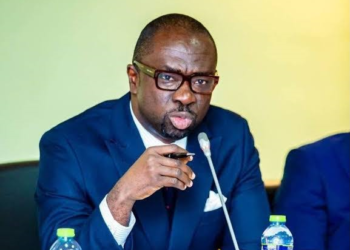
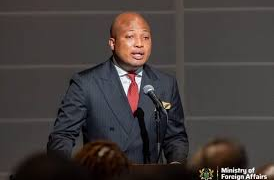
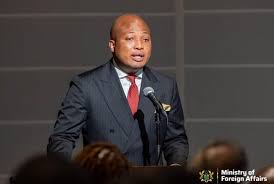
According to Ghana’s Minister for Foreign Affairs, Samuel Okudzeto Ablakwa, the initiative represents a decisive step in reframing the global conversation on slavery from one of historical reflection to legal responsibility and reparatory action.
In September 2025, President John Dramani Mahama, acting in his role as the African Union’s Champion for Advancing the Cause of Justice and Payment of Reparations, formally notified the UN of Ghana’s intent to introduce the resolution titled Declaration of the Trafficking of Enslaved Africans and Racialised Chattel Enslavement of Africans as the Gravest Crime Against Humanity.
The proposal underscores Ghana’s unique historical position as a key site of the transatlantic slave trade. Forts and castles along its coast—including Elmina Castle, Cape Coast Castle, and Fort Christiansborg—served as major holding centres where enslaved Africans were detained before being transported across the Atlantic.
The draft resolution argues that the scale, duration, and systemic nature of the slave trade demand formal recognition as a crime of the highest order under international law. It further asserts that the consequences of slavery remain unresolved, with enduring socio-economic and cultural impacts across Africa and the diaspora.
“Reparatory justice will not be handed to us. Like political independence, it must be asserted, pursued and secured through determination and unity,” President Mahama stated.
Ghana’s position is grounded in international legal frameworks, including provisions that classify enslavement as a crime against humanity and recognise obligations for reparation. The resolution invokes principles such as jus cogens and erga omnes, arguing that the violations committed during the slave trade generate ongoing legal responsibilities for the international community.
The initiative has garnered strong continental backing. The African Union has already declared slavery and colonisation as crimes against humanity and genocide against African peoples, while partnerships with Caribbean states have strengthened the global coalition pushing for reparations.
The resolution calls on UN member states to engage in good-faith dialogue on reparatory measures, including formal apologies, restitution of cultural artefacts, compensation, and guarantees of non-repetition. It also emphasises the need for education, research, and memorialisation efforts to address the legacy of slavery.


Importantly, the proposal frames reparations not as charity, but as a legal obligation rooted in established international law.
As the debate approaches, Ghana is urging the international community to act decisively rather than defer action. The government argues that centuries of delay cannot justify further inaction on what it describes as one of humanity’s most profound injustices.
“This Draft Resolution does not belong to Africa alone. It belongs to the conscience of the international order,” Ablakwa noted, stressing that the outcome of the vote will test the global commitment to justice, human rights, and historical accountability.
With growing international support and a clear legal foundation, Ghana’s move is expected to intensify global discussions on reparations and redefine how the legacy of slavery is addressed within the modern international system.