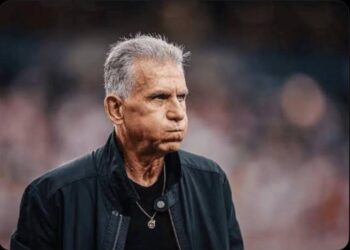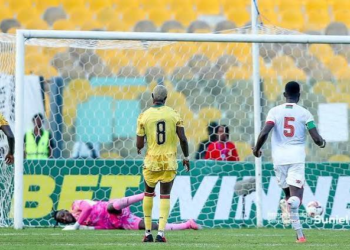







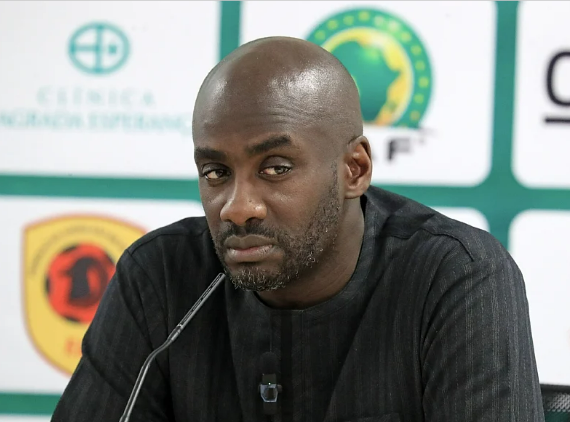
With the clock relentlessly ticking towards the 2026 FIFA World Cup, the Ghana Football Association has made its boldest call yet — dismissing head coach Otto Addo in what appears to be both a reaction to results and an admission of deeper structural concerns within the Black Stars setup.
On the surface, the decision signals urgency. In reality, it raises a more uncomfortable question: problem solved, or More Trouble Ahead?
The announcement came in the early hours of Tuesday, hours after a 2-1 defeat to the Germany national football team in Stuttgart — a result that extended Ghana’s troubling run and underscored a team struggling to find identity. A late winner from Deniz Undav only reinforced a familiar narrative: competitive in moments, but ultimately short when it matters.
A decision driven by time — and pressure
The timing is as telling as the decision itself. With fewer than 100 days to the World Cup across the United States, Canada and Mexico, Ghana now finds itself without a head coach at a moment when stability should be non-negotiable.
Group stage fixtures against Panama, England and Croatia demand clarity, cohesion and conviction — three qualities the Black Stars have struggled to consistently display.
The GFA’s move, therefore, is less a calculated transition and more a high-stakes gamble.
The numbers — and the narrative
On paper, Addo’s second stint did not collapse overnight; it eroded gradually. In 22 matches, he recorded eight wins, five draws and nine defeats — a modest return that only partially explains the growing dissatisfaction.
More telling was the manner of those performances.
Heavy defeats, including a 5-1 loss to Austria, and successive setbacks against Japan, South Korea and Germany exposed recurring issues: defensive fragility, midfield imbalance and a lack of attacking cohesion. Ghana were not just losing — they were being outplayed, often appearing tactically reactive rather than proactive.
Even in games where results were within reach, the team lacked a clear structure, relying more on individual brilliance than collective organisation.
An identity still undefined
Perhaps the most damaging criticism of Addo’s tenure was the absence of a clear footballing identity.
Despite boasting talents such as Mohammed Kudus and Antoine Semenyo, Ghana frequently looked disjointed. Transitions were poorly managed, pressing lacked coordination, and defensive lines were repeatedly exposed against organised opposition.
Experimentation, including frequent squad rotations and late introductions of new players, only deepened the sense of uncertainty at a time when continuity was expected.
The AFCON failure that changed everything
If inconsistent results weakened Addo’s position, failure to qualify for the 2025 Africa Cup of Nations effectively sealed it.


For a nation with Ghana’s football pedigree, missing out on the continental showpiece for the first time in two decades was more than a setback — it was a statement of decline.
From that moment, the debate around Addo shifted from patience to inevitability.
A legacy split down the middle
And yet, the story is not entirely one of failure.
Addo delivered what mattered most on paper — World Cup qualification. In doing so, he restored belief after a turbulent period and briefly united a fractured fan base.
But that achievement ultimately raised expectations he could not sustain.
He leaves as a coach caught between two realities: successful enough to qualify, but not convincing enough to lead.
Problem solved ?
By sacking Addo, the GFA has addressed the most visible pressure point. But whether it has solved the underlying issues is far less certain.
The challenges facing Ghana run deeper than the dugout — from tactical identity to long-term planning and player integration.
Changing the coach may provide a short-term lift. It does not guarantee transformation.
A race against time
The focus now shifts to what comes next. A new head coach must be appointed swiftly — and more importantly, must deliver immediate impact.
There will be little time for experimentation, no room for prolonged transition. Every decision from this point forward carries amplified consequence.
For the Black Stars, this is no longer just about preparation. It is about rescue.
Because as Ghana looks ahead to the World Cup, one question still lingers louder than ever:
Has the problem been solved — or is this a change that changes nothing??