






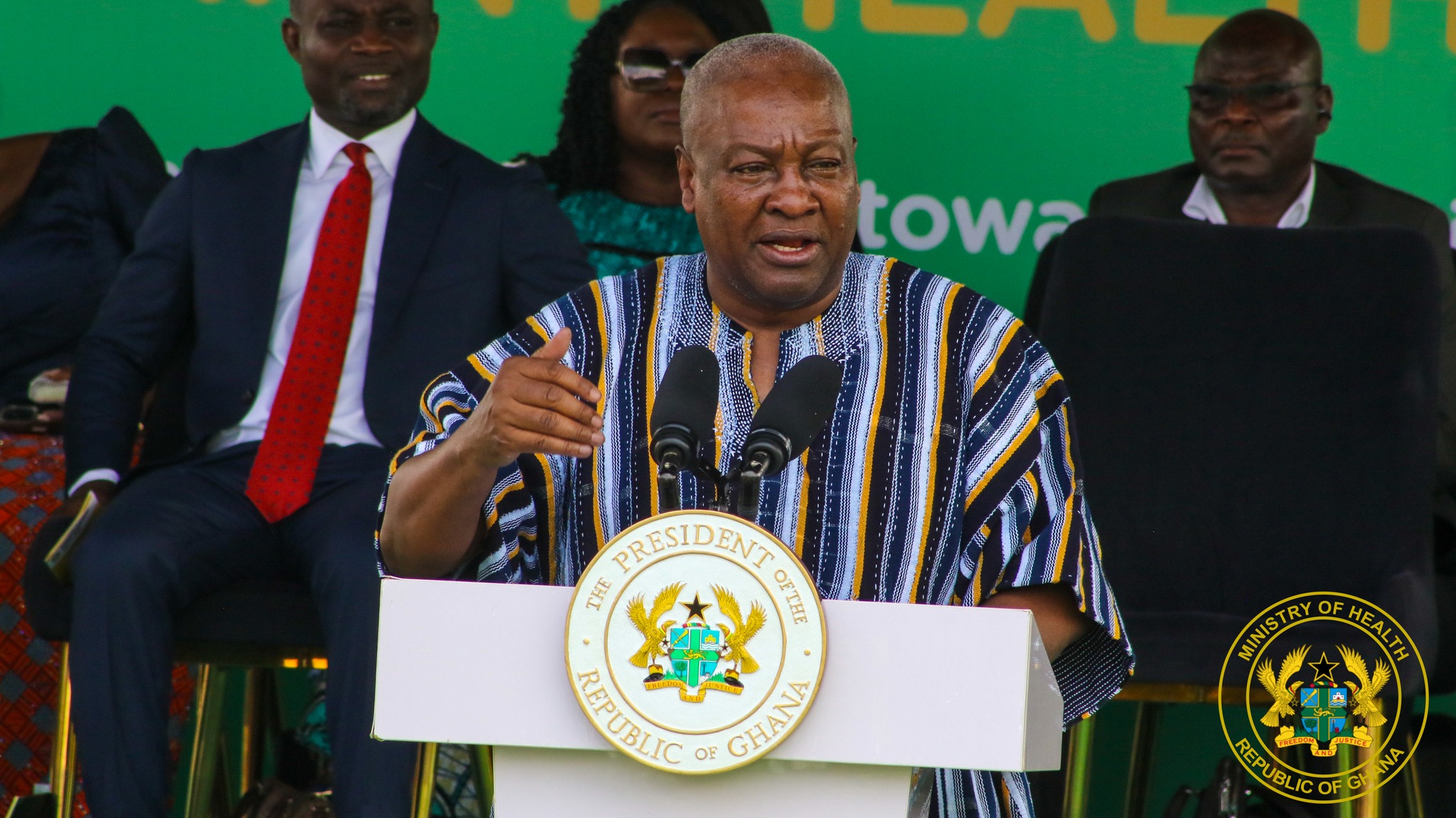
President John Dramani Mahama has officially launched Ghana’s Free Primary Healthcare initiative, positioning it as a major shift in the country’s health system from treatment-focused care to prevention and community-based services.
Speaking at the launch in Accra on Wednesday, April 15, the President underscored that the new policy is designed to work alongside the National Health Insurance Scheme (NHIS), rather than replace it.
“The Free Primary Healthcare complements the National Health Insurance… you go, the screening, everything is free of charge,” he said.
The initiative aims to make basic healthcare services accessible to all Ghanaians at no cost at the primary level, particularly through Community-based Health Planning and Services (CHPS) compounds, health centres, and polyclinics.
Under the programme, citizens will have access to free routine screenings for conditions such as high blood pressure, diabetes, malaria, and cholera, allowing for early detection and management before complications arise.
President Mahama highlighted the increasing burden of lifestyle-related diseases and warned against the risks associated with late diagnosis, stressing that the future of healthcare lies in prevention and sustained engagement at the community level.
He further explained that while primary care services will be free, cases requiring advanced medical attention will be referred to higher-level facilities where the NHIS will continue to provide coverage.


“For instance, if your blood sugar remains high after initial checks, you will be referred to the district level where you can use your NHIS card to receive treatment and medication,” he explained.
Minister for Health, Kwabena Mintah Akandoh, described the rollout as a turning point in Ghana’s healthcare delivery, noting that prevention will now be embedded into everyday health services.
He revealed that trained health workers and volunteers will be deployed to communities, markets, schools, and workplaces to conduct screenings and intensify public health education.
The programme will begin in 150 underserved districts, with plans to expand nationwide by 2028. Mobile clinics and outreach teams are also expected to extend services to hard-to-reach areas, with the broader goal of reducing preventable diseases, lowering healthcare costs, and promoting a healthier population.