






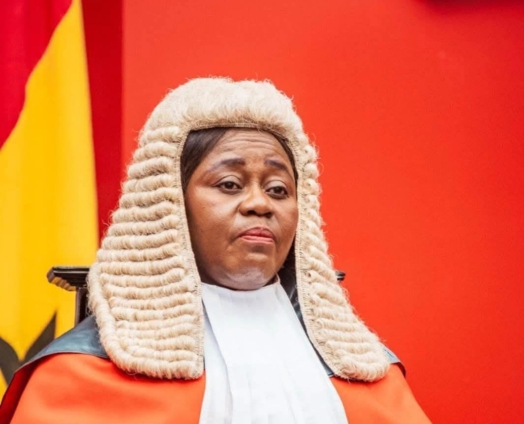
The Supreme Court has dismissed a series of legal challenges contesting the constitutional process that led to the removal of former Chief Justice Gertrude Araba Esaaba Sackey Torkornoo, marking another significant development in one of Ghana’s most closely watched constitutional disputes.
In a unanimous decision, the Court rejected the consolidated suits seeking to invalidate aspects of the removal process conducted under Article 146 of the 1992 Constitution. The ruling effectively upholds the constitutional process that culminated in Justice Torkornoo’s removal from office.
The petitions raised constitutional questions regarding the suspension, investigation and eventual removal of the former Chief Justice. However, the Supreme Court found no legal basis to grant the reliefs sought by the applicants.
The judgment is expected to influence future interpretations of the constitutional provisions governing the removal of superior court judges and further clarify the scope of judicial review in matters involving proceedings under Article 146.
The decision comes shortly after the ECOWAS Court of Justice dismissed claims brought by Justice Torkornoo against the Republic of Ghana. She had alleged violations of her fundamental human rights during the removal process. However, the regional court dismissed all her claims.
The two court decisions represent significant legal setbacks for the former Chief Justice, whose removal sparked widespread public debate over judicial independence, constitutional governance and the separation of powers.
Legal analysts say the Supreme Court’s ruling is likely to reinforce the constitutional procedures governing the removal of heads of the Judiciary while providing greater clarity on one of Ghana’s most significant constitutional disputes in recent years.


The case attracted nationwide attention because of its implications for judicial independence and the balance of power among the three arms of government. Many constitutional experts believe the judgments will serve as important legal precedents for future cases involving high-ranking judicial officers.
As of the time of publication, Justice Torkornoo and her legal team had not publicly responded to the Supreme Court’s decision.
Background
Justice Gertrude Torkornoo was suspended after petitions seeking her removal were submitted under Article 146 of the Constitution. A committee was subsequently constituted to investigate the allegations. Following the committee’s recommendation, the President removed her from office.
The decision prompted a series of legal challenges in both Ghanaian courts and the ECOWAS Court of Justice. The Supreme Court’s latest judgment is widely viewed as another milestone in bringing the legal disputes arising from her removal to a close.
By: Michael Walier | ABC News Ghana
Email: [email protected]