






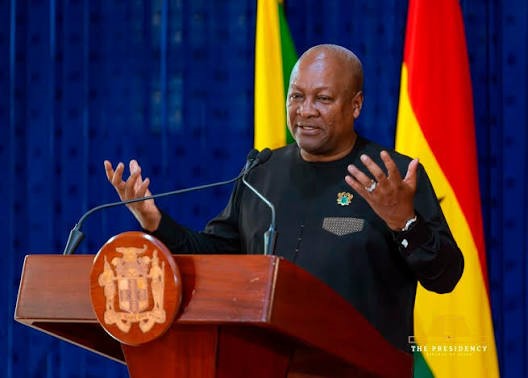
President John Dramani Mahama has rejected claims that the involvement of some Africans in the transatlantic slave trade undermines the case for reparations, insisting that such participation does not diminish the scale or severity of the crime.
Speaking at a high-level dialogue on reparations at the University of the West Indies in Jamaica during his state visit, President Mahama said the responsibility for the centuries-long system of exploitation must be placed on those who conceived, financed and institutionalised the slave trade.
He drew a parallel between the transatlantic slave trade and the Holocaust, arguing that the involvement of some Jewish individuals in Nazi operations did not erase the genocide or reduce its classification as a crime against humanity.
“The Holocaust occurred, and I believe that there was a Holocaust and six million Jews were killed. Some of the most brutal prison guards were Jews. Some of those who went into the communities and showed where Jews were hiding and delivered them to the Nazis to be exterminated were Jews.
“But it doesn’t mean the Holocaust didn’t happen and that the Holocaust wasn’t a crime against humanity,” he stated.
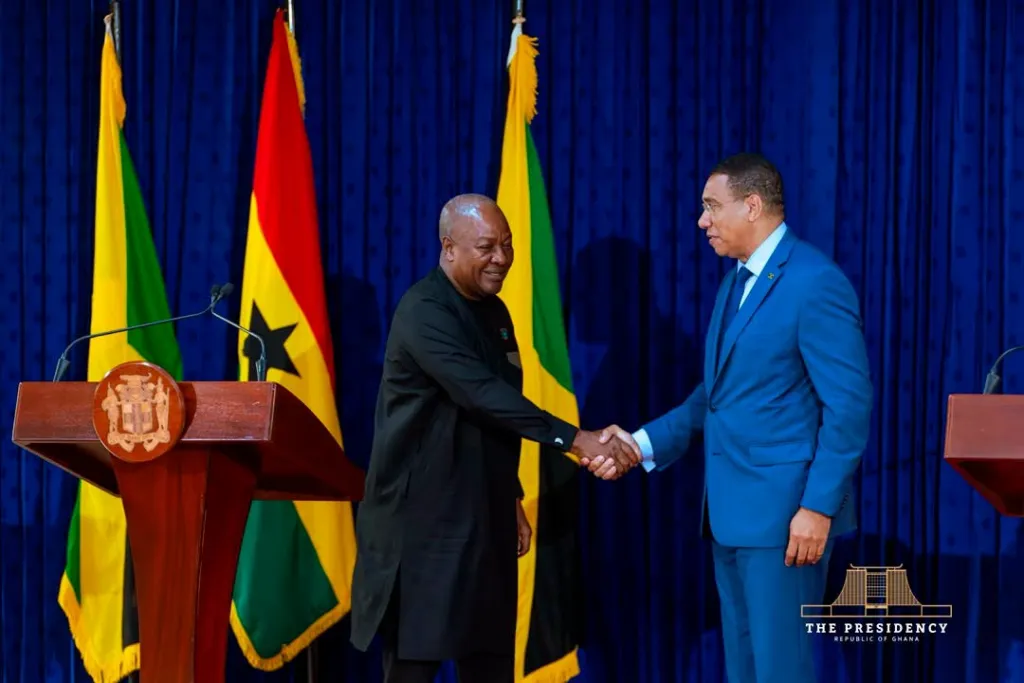
President Mahama said the same principle applied to the transatlantic slave trade, stressing that the involvement of some Africans in the capture and sale of enslaved people did not lessen the gravity of the atrocity.
“So even the argument that Africans were involved in enslaving Africans does not stop it from being the gravest crime against humanity,” he stressed.
He called for a broader examination of the systems that supported the slave trade, including the legal, financial and commercial structures that enabled it to continue for centuries.
“You must look at all the legal underpinnings. You must look at everything that was established to support the slave trade in terms of the insurance of the cargo, the auctions, and all that,” he explained.
The President described the transatlantic slave trade as a highly organised enterprise involving governments, institutions and commercial interests, arguing that its historical reality could not be dismissed because some Africans acted as intermediaries.
“It was a very systematic trade, and so you cannot wish it away just by saying that some agents whom you use as agents to bring you slaves as commodities participated in it, and because they were Africans, then it means that the slave trade didn’t happen.
“No, we reject that,” he stated.
President Mahama further called on African countries to present a truthful account of slavery to younger generations, saying independence had given the continent the opportunity to tell its own story.
“We are now independent. We should be able to tell our children the truth,” he noted.
Reflecting on his early education, he said history lessons often focused more on abolitionists than on the suffering and devastation caused by the slave trade itself.


“When I was growing up in primary school, the abolitionists were put as the most important thing that happened in the slave trade.
“We were taught about the slave trade. The gravity of what happened in the slave trade was never really spelled out. It was the bravery of the abolitionists and how they were the knights in shiny armour who came and stopped it and saved Africans,” he recalled.
While acknowledging the role of abolitionists, President Mahama maintained that the experiences of millions of enslaved Africans must receive equal attention in historical accounts.
“So all these people who were involved in the abolition movement were lionised in our history books. Now we can begin to tell our children the truth,” he stated.
He welcomed renewed international discussions on slavery and reparations, saying a United Nations General Assembly resolution had increased global interest in understanding the history and consequences of the transatlantic slave trade.
“I think that since the resolution was passed on the General Assembly, it’s piqued interest in trying to understand and know what exactly happened,” he observed.
President Mahama concluded that a deeper understanding of the past was necessary for societies to confront historical injustices and build a more informed future.
“I believe that awareness is being created. People are aware of what happened. And it helps for you to know where we have come from, because that informs where we are going,” he said.