






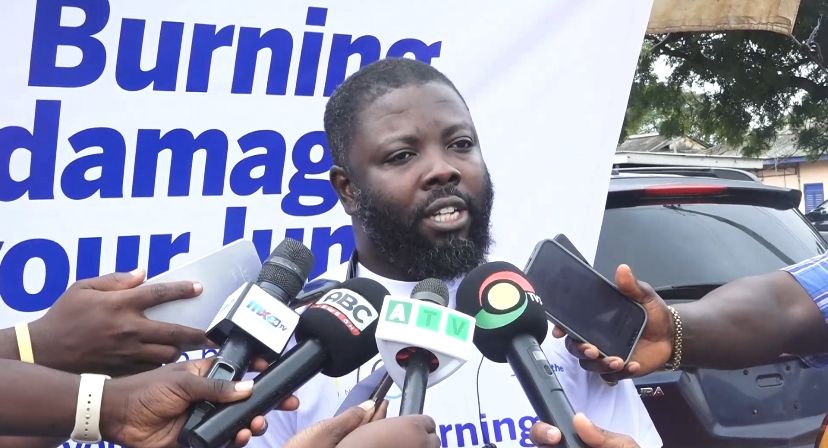
Breathe Cities Portfolio Manager, Dr. Elvis Kyere-Gyeabour, has urged the public to take air pollution seriously, warning that its effects are not limited to people with underlying health conditions but also extend to otherwise healthy individuals.
“So air pollution is definitely not only people who are having underlying conditions but even healthy people so it’s a problem we all need to pay attention to,” he said.
Dr. Kyere-Gyeabour was speaking during a public education engagement at La Township as part of the ‘Healthy Lungs, Healthy Life’ campaign, organised by Infinity 970 with support from Breathe Cities to raise awareness of air pollution exposure and its impact on health.
According to him, available data show that upper respiratory tract infections have become the leading reason for hospital visits in Greater Accra, including among children.
“In the last data we have been able to see, upper respiratory tract infections is now number one for the reason why people go to the hospital in Greater Accra, for Children, it’s also number which means that malaria is no more why children are being taken to the hospital, but polluted air is contributing significantly to how people’s health are being impacted,” he said.
He said the situation underscores the need for greater public awareness and stronger measures to reduce exposure to polluted air.
Dr. Kyere-Gyeabour further disclosed that air pollution levels in Ghana are about five times above the levels recommended by the World Health Organisation (WHO), based on recorded averages.
“Air pollution in Ghana is one that is about 5 times above what WHO recommends based on the averages that have been recorded. The work that we are doing as Breathe Cities is to work with City government so that they can take action, enforce their by-laws and ensure that air pollution levels are low,” he said.
He identified open waste burning and biomass burning as some of the key sources of air pollution in Ghana, particularly in Accra, and urged communities to find alternatives to burning waste.
“One of the key reasons for air pollution or sources of air pollution in the country and in Accra is open waste burning and biomass burning. Community should find ways and means of avoiding burning,” he said.
Dr. Kyere-Gyeabour noted that Ghana has had by-laws prohibiting open burning for almost 20 years and called on residents to help demand cleaner air and discourage practices that put their health and that of others at risk.


“We have had a by-law that prevent burning on our laws for almost 20 years now, we are encouraging community members that if they do not comply, or demand for clean air, it’s their health, their children’s health and the other people they love health who are at risk,” he said.
He also encouraged residents to educate people who engage in open burning about its dangers and the potential health consequences.
Dr. Kyere-Gyeabour said the campaign’s first phase reached about seven million people through television and 2.5 million through radio, but stressed the importance of taking the message directly into communities.
“We are still doing the community engagement because we feel it’s not just the TV and radio campaigns, we also want to interact with them and share the knowledge of how air pollution is affecting their health and the passengers they work with on the day to day basis,” he said.
The campaign is part of efforts by Infinity 970 and Breathe Cities to take air pollution education directly to communities and encourage action to reduce exposure.