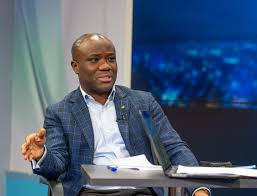







Anti-corruption advocate Edem Senanu has made a renewed and urgent call for the immediate passage of the Conduct of Public Officers Bill, following revelations of worsening financial irregularities in the 2024 Auditor-General’s report, which indicated a 109% surge in public sector financial irregularities.
Speaking on ABC News GH’s Midday News, Senanu described the findings as “extremely worrying,” noting that the country had failed to take decisive action to curb entrenched mismanagement of public resources.
According to the report, public sector financial irregularities surged by 109% — from GH¢8.8 billion in 2023 to GH¢18.4 billion in 2024 — reversing previous improvements in fiscal discipline.
Senanu argued that had the irregularities flagged in 2023 been tackled rigorously through sanctions, enforcement, and public accountability, the 2024 figure would not have doubled.


“It tells us our ways are not working,” he said, emphasizing the need to impose harsher penalties.
“What are the kinds of sanctions currently, and how do we increase the level of sanctions and make them more punitive?” he asked. He further stated that the lack of well-defined penalties contributes to recurring abuses by public officers.
The energy sector alone accounted for GH¢15.8 billion — or 86% — of the total irregularities, with ECG at the center due to procurement violations and tax discrepancies.
Senanu stressed that without clearly defined and enforceable rules, public officials continue to operate without fear of consequence.
“We have not clearly defined sanctions for public officers who get involved in corruption,” he said, adding that passing the Conduct of Public Officers Bill would be a critical step in deterring future abuse of office.
He concluded that unless the bill is enacted and enforced with precision, the cycle of financial waste, weak oversight, and impunity will continue to damage national development.
“Hopefully, if we pass the law, sanctions are well defined, and we begin to apply them systematically, it will serve as a deterrent,” he stated.