![Mahama engages Constitution Review Committee on key reforms [IMAGES]](https://abcnewsgh.com/wp-content/uploads/2025/03/mahama-signs-360x180.jpeg)







![Mahama engages Constitution Review Committee on key reforms [IMAGES]](https://abcnewsgh.com/wp-content/uploads/2025/03/mahama-signs.jpeg)
A security analyst, Dr. Kwesi Biney, has cautioned the government that its proposal to declare galamsey-prone forests and river bodies as security zones could become a temporary spectacle rather than a lasting solution if not backed by a comprehensive implementation strategy.
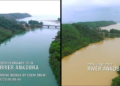
His comments follow recent suggestions that elevating such areas to restricted zones could empower state forces to crack down on illegal mining activities that have devastated major water bodies such as Pra, Ankobra, Birim, and Offin.
According to Dr. Biney, restricting access alone cannot win the war on galamsey unless enforcement is backed by legal clarity, technological surveillance, community cooperation, and strict anti-corruption safeguards.
He warned that the mining syndicates, which often operate with political and security backing, may simply relocate or adapt if the approach focuses solely on force.
“Without balancing hard security action with sustainable alternatives for affected communities, this will only push the menace further underground,” he stressed.
He further advised that while the move may improve international perception and environmental protection efforts, human rights abuses, economic displacement, and extortion by security operatives could undermine public trust if oversight mechanisms are weak. He recommended integrating drones, satellite tracking, community eco-rangers, and fast-track environmental courts as part of a broader national doctrine rather than treating the initiative as a mere crackdown.
Below is Dr. Biney’s full statement:
Here’s a structured security-focused analysis of the declaration of forests and rivers as security zones in the fight against galamsey (illegal mining):
- The Best Modus (Operational Framework)
Declaring forests and rivers as security zones means they are elevated to the status of protected national assets, subject to strict access control and military-police surveillance. The most effective modus should be:
Legal Backing: Executive order or parliamentary act clearly defining the scope, penalties, and agencies responsible.
Joint Security Taskforce: Military, police, and forest/water guards integrated under a single command structure.
Technology-Driven Surveillance: Use of drones, satellite imagery, GPS tracking of heavy equipment, and AI monitoring of water bodies.
Permit System: Only licensed miners, farmers, and researchers gain access under monitored conditions.
Community Watch Integration: Local leaders and trusted residents trained to act as informants and first responders.
- Approach and Implementation Process
Phase 1: Declaration & Legal Framework
Gazette the affected areas as restricted zones.
Define punishments for trespassing, illegal mining, or aiding illegal miners.
Phase 2: Deployment & Enforcement
Establish checkpoints and patrols along entry routes to forests and rivers.
Immediate confiscation of excavators and mining equipment found in restricted areas.
Assign security units to river basins most affected (Pra, Ankobra, Offin, Birim, etc.).
Phase 3: Technology & Intelligence
Satellite/drones for real-time monitoring.
Central database of permits for legal miners.
Tip-off hotlines and anonymous reporting channels.


Phase 4: Community Engagement
Employ locals in forest and river patrol units (“eco-rangers”).
Provide alternative livelihoods (youth in farming, eco-tourism, reforestation).
Sensitization campaigns linking environmental protection to survival.
Phase 5: Sustainability & Review
Quarterly audits of the program’s effectiveness.
Independent civil society oversight to prevent abuse of power.
- Effectiveness Against Galamsey
Strengths:
Restricts access points, making galamsey harder to operate in secrecy.
Deters miners due to higher risk of arrest and equipment loss.
Enhances real-time surveillance and rapid response.
Weaknesses:
Galamsey operators may relocate to new hidden spots.
Without community cooperation, illegal activity may still persist.
- Merits and Demerits
Merits
Preserves water bodies, reduces mercury pollution.
Restores forest reserves, biodiversity, and eco-systems.
Strengthens national security and sovereignty over natural resources.
Creates opportunity for eco-jobs and sustainable mining reforms.
International credibility (climate change commitments, donor support).
Demerits
Risk of human rights abuses (harassment, excessive force by security).
Economic displacement of thousands of galamsey-dependent youth.
Potential corruption within security forces (illegal protection rackets).
Expensive to maintain long-term (surveillance tech, taskforce operations).
Possibility of political interference or selective enforcement.
- Recommendations & Advice
- Balance Enforcement with Inclusion
Combine security force action with livelihood programs for affected communities.
Support small-scale licensed miners with training and technology.
- Zero-Tolerance for Corruption
Independent anti-corruption taskforce to monitor security operations.
Harsh sanctions for security officers colluding with galamsey operators.
- Invest in Tech Surveillance
Drones, satellite imagery, AI monitoring should be institutionalized.
Collaborate with universities and tech firms for innovations.
- Community Partnership Model
Incentivize local watchdog groups to protect forests and rivers.
Introduce community royalties for protection of natural resources.
- Legal & Judicial Backbone
Fast-track special courts for environmental crimes.
Ensure swift prosecution and confiscation of assets from offenders.
Conclusion: Declaring forests and rivers as security zones is a strong deterrent against galamsey, but effectiveness depends on blending hard power (security) with soft power (community and livelihood support). Without this balance, the declaration risks being a short-term show of force rather than a sustainable solution.