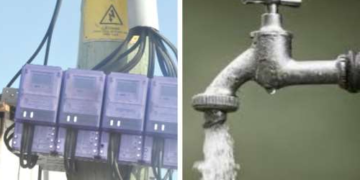







Consumers in Ghana will see a slight reduction in the cost of electricity and water beginning April 1, 2026, following a new tariff review announced by the Public Utilities Regulatory Commission (PURC).
The regulator disclosed that electricity tariffs will decrease by an average of 4.81 percent, while water tariffs will be reduced by 3.06 percent for the second quarter of the year.
According to the commission, the adjustment is part of its routine quarterly tariff review system, which is used to reflect changes in major economic indicators that influence the operational costs of utility service providers.
PURC explained that the latest review considered several factors, including fluctuations in the Ghana cedi against the US dollar, inflation trends, the cost of natural gas used for thermal power generation, and the country’s electricity generation mix.
The commission said the projected exchange rate applied for the review was GH¢11.1931 to one US dollar. This figure was based on a three-month interbank average recorded between December 2025 and February 2026, representing a 6.78 percent decline compared with the rate used in the previous quarter.
Inflation assumptions also showed improvement. PURC applied a three-month average inflation rate of 4.17 percent over the same period, which was significantly lower than the rate used in the last tariff determination.
However, the weighted average cost of natural gas recorded a marginal increase. The regulator indicated that the benchmark rose to 8.0988 dollars per MMBtu, representing a 2.84 percent increase compared with the earlier estimate.


Despite the rise in gas prices, the country’s electricity generation mix remains unchanged for the review period. The commission expects about 20.9 percent of power to be generated from hydro sources, while 79.1 percent will come from thermal plants.
Based on these variables, PURC approved tariff reductions across several electricity consumer categories, including residential users, non-residential customers and special load tariff consumers.
In addition, the commission announced the creation of a new tariff classification for commercial electric vehicle charging stations. The move is intended to support the country’s gradual transition toward cleaner energy and the adoption of sustainable transport technologies.
PURC emphasised that the quarterly tariff review mechanism is designed to balance the financial sustainability of utility providers with the need to protect consumers from excessive tariff increases.