







The Acting Deputy Executive Director of the Complementary Education Agency, Dziewornu Boli, has expressed concern about the growing culture of vote buying in Ghana’s electoral process, warning that it poses a significant threat to the country’s multi-party democracy.
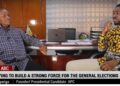
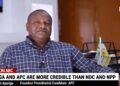
Speaking on ABC In The Morning on Wednesday, February 11, 2026, Mr. Boli lamented what he described as the deep entrenchment of money politics in elections, arguing that voter behaviour has increasingly become transactional.
“Our multi party democracy has reached a stage where if you don’t give money they won’t vote for you,” he said, stressing that the practice has become disturbingly normalised within the political system.
According to Mr. Boli, vote buying is no longer an isolated or hidden act but has gradually evolved into an accepted feature of Ghana’s body politic. “Let’s not pretend, it is something that has become part of our body politics,” he remarked.
Drawing from personal experience, the educationist revealed that he once contested an election but lost because he refused to engage in inducements on voting day. “I contested for an election and lost because on the election day, I didn’t share what my opponents were sharing,” he disclosed.


Mr. Boli further criticised the imbalance in Ghana’s political landscape, where he believes competence and innovative ideas are often sidelined in favour of financial power. “We are in a generation where those who have ideas don’t have power, and those who don’t have ideas have power,” he observed.
He was quick to clarify that the phenomenon cuts across political divides and should not be blamed on any single party. “This is not an NDC problem, it’s not an NPP problem,” he stated, describing vote buying as a systemic challenge confronting Ghana’s democracy as a whole.
Expressing his personal disapproval, Mr. Boli said he was deeply disturbed by what he has witnessed over the years. “I’m against what I have seen. It’s appalling and we need to condemn it,” he said, calling for a collective national effort to confront and reject the practice.