






The Deutsche Gesellschaft für Internationale Zusammenarbeit (GIZ) has intensified its engagement with civil society actors through a sensitisation programme focused on human rights, gender equality and sexual and gender-based violence (SGBV).
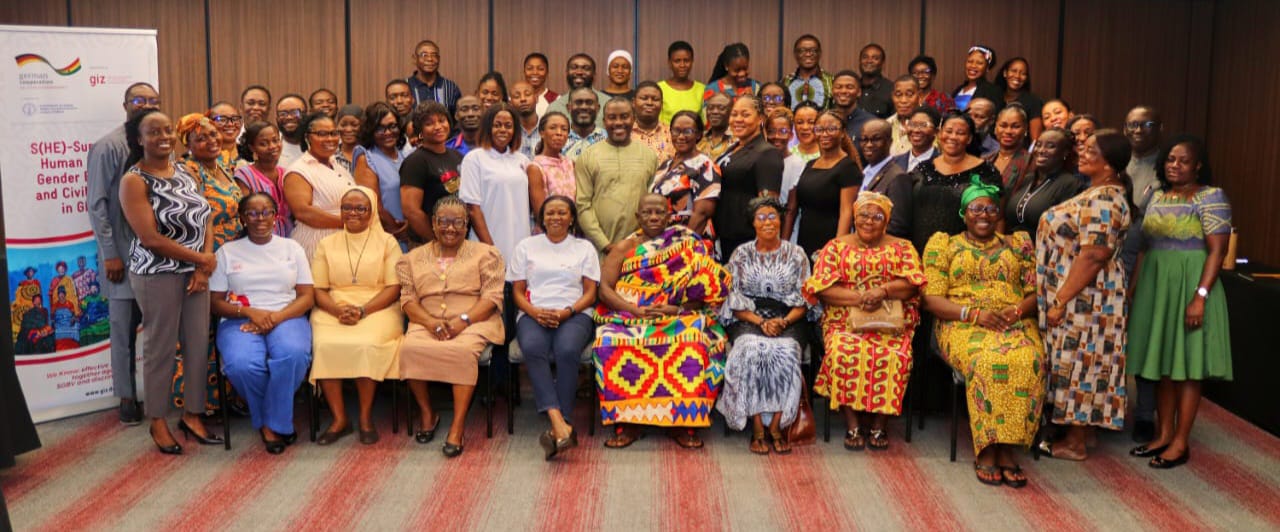
The four day workshop held in Kumasi brought together participants for discussions aimed at strengthening their understanding of key human rights and gender related issues and equipping them with knowledge that could support their work within communities and institutions.
The Kumasi engagement was organised in two sessions with the first group participating on Monday and Tuesday followed by a second group on Wednesday and Thursday.
The training was facilitated by professionals from the Commission on Human Rights and Administrative Justice (CHRAJ) and the National Commission for Civic Education (NCCE).
The CHRAJ facilitation team included Joy Debrah, Ambrose Cori and Elias Mane while the NCCE team comprised Flora Mudey, Juliet Simpey and Abdul Fatawu Mahama.
Throughout the workshop participants were taken through a number of key areas, including gender, human rights, discrimination, women’s rights and sexual and gender based violence.
The sessions on gender examined the concept of gender and the distinction between sex and gender while discussions also considered the Ghanaian way of life and the influence of social and gender norms on people’s roles, expectations and opportunities.
Participants also explored human rights including the meaning and scope of fundamental rights the responsibilities of the state in protecting and promoting human rights and the relationship between culture and women’s rights.
Attention was further drawn to discrimination and the importance of identifying and addressing practices that undermine equality and the enjoyment of fundamental human rights.


Another major area of the training was sexual and gender-based violence.
Participants discussed the meaning, causes and effects of SGBV as well as the legal and institutional frameworks relevant to prevention, protection and response.
The discussions emphasised the importance of awareness and prevention as well as the need for appropriate responses to sexual and gender-based violence within communities and institutions.
The workshop concluded with an evaluation and closing remarks, giving participants the opportunity to reflect on the knowledge and lessons gained during the four-day engagement.
The Kumasi programme forms part of GIZ’s broader engagements in Ghana aimed at supporting human rights, gender equality and civil society initiatives.
Through its work with government institutions, civil society organisations the private sector and other partners, GIZ supports a range of development and international cooperation programmes in the country.
The sensitisation programme is expected to provide participants with greater awareness and understanding of issues surrounding human rights, gender equality and sexual and gender-based violence while strengthening their ability to engage with these issues in their respective areas of work.
By: Michael Walier