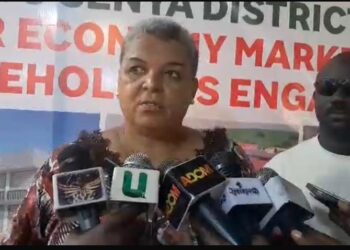







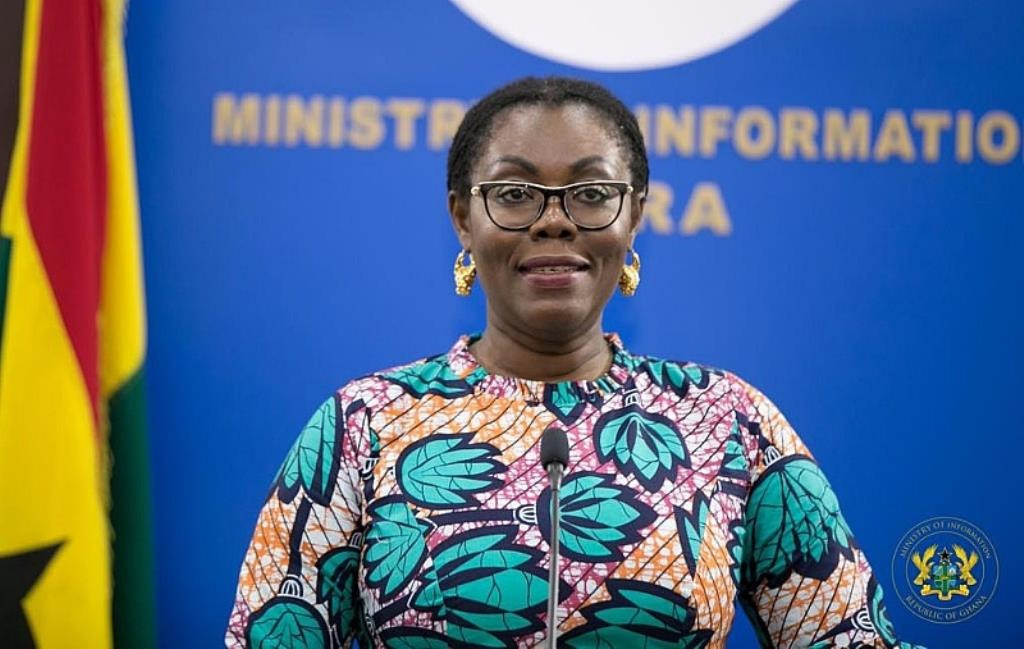
Former Minister for Communications and Digitalisation, Ursula Owusu-Ekuful, has strongly defended the integrity of the 2022–2023 SIM card registration exercise, rejecting what she describes as false narratives and misrepresentations of her work by President John Dramani Mahama’s administration.
In a detailed statement issued on March 20, 2026, the former minister said the SIM registration exercise, though not without challenges, established a structured and legally compliant system that significantly strengthened Ghana’s digital identification framework. According to her, nearly 30 million SIM cards were successfully linked to Ghana Cards, marking what she described as a major milestone in national data integration.
Mrs. Owusu-Ekuful noted that she had initially refrained from responding to criticisms following her exit from office, but felt compelled to speak after President Mahama reiterated what she termed as “falsehoods” during a recent tour of the Bono Region.
She argued that the exercise was necessary to correct deficiencies in the earlier SIM registration conducted between 2010 and 2011, which she said lacked a credible validation system due to the absence of a reliable national identification database.
“That earlier process did not have any proper validation system due to the lack of any mass identification document… Honestly, who could confidently say whether those manual verifications were right or wrong?” she questioned.
Detailing the improvements under her tenure, Mrs. Owusu-Ekuful explained that the 2022–2023 process introduced a two-stage verification system, including validation of Ghana Card details with the National Identification Authority (NIA) and biometric data capture involving facial and fingerprint recognition.
She maintained that every active SIM card in Ghana is now linked to a Ghana Card, describing this as “an incontrovertible fact.” She further revealed that a 2025 audit showed over 80 per cent of facial biometric data captured matched records held by the NIA, underscoring the effectiveness of the exercise.
Addressing reports of tensions between institutions, she clarified that any challenges encountered were technical rather than personal, and insisted that the system created remains robust and reliable.


The former minister also criticised the government for, in her view, attempting to downplay the achievements of the exercise while adopting similar methods.
“You cannot lie about a process, dismiss it in public, and then turn around and do the same thing again,” she stated. “If the previous method was so wrong, why are you repeating the same methodology, the same structure, and the same approach?”
She further emphasised that governance is a continuous process and urged the current administration to build on existing systems rather than disregard them for political reasons.
“The previous exercise was not perfect, but it created a foundation… The Ghanaian people deserve honesty. They deserve consistency,” she said.
In a strongly worded conclusion delivered in Twi, she cautioned against efforts to undermine her legacy, stating: “Wo nyi m’ayɛ a, mɛnsɛi me din!!” — translated as, “If you cannot praise me, do not tarnish my reputation.”
Mrs. Owusu-Ekuful also highlighted broader gains from the exercise, including increased uptake of the Ghana Card, improved transparency in SIM ownership, and the establishment of a secure and centralised SIM registry hosted by the National Electronic Transactions Authority (NITA).