







The Ministry of the Interior has unveiled a policy proposal that could allow prisoners in Ghana to reduce their sentences by up to 25 per cent through productive work, as part of broader reforms aimed at decongesting prisons and promoting rehabilitation.
The proposal, contained in the Community Service Bill currently before Parliament, introduces a sentence-reduction incentive for inmates who actively engage in approved industrial, vocational and agricultural activities while in custody.
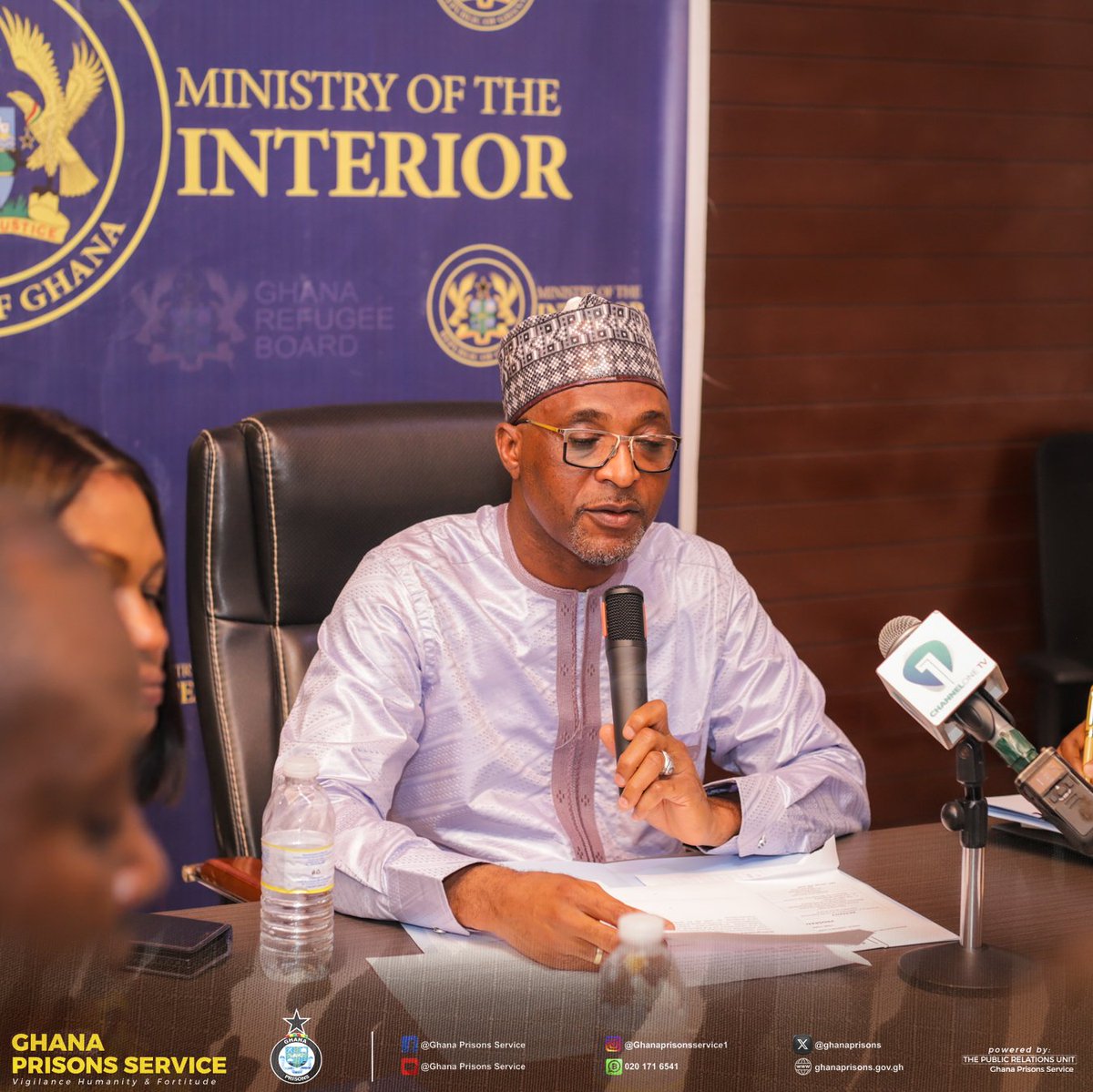
Speaking at a Memorandum of Understanding (MoU) signing ceremony on Wednesday, January 14, 2026, the Minister for the Interior, Muntaka Mohammed Mubarak, explained that the initiative is designed to reward discipline, good conduct and productivity among inmates.
According to the minister, prisoners who work consistently within prison-based industries for one year and demonstrate good behaviour would qualify for a three-month reduction in their sentence.
“We intend, through the Community Service Bill that has been laid before Parliament, to ensure that if an inmate comports himself and works within the prison industries for one year, his sentence will be reduced by three months,” Mr Mubarak said. “Instead of serving one full year, you will serve nine months.”
The proposed incentive effectively translates into a 25 per cent reduction in prison time for each year of productive labour, provided inmates meet the required standards of discipline and performance.


The policy forms part of a wider strategy to tackle overcrowding within Ghana’s prisons, which are estimated to be operating at more than 150 per cent capacity. Facilities originally designed to house a few hundred inmates now accommodate several times that number, placing strain on resources and management.
Beyond easing congestion, the Interior Ministry believes the initiative will help reduce reoffending by equipping inmates with practical skills that can support their reintegration into society after release. Areas targeted under the programme include carpentry, tailoring, masonry and agribusiness, among others.
The bill also proposes the expansion of non-custodial sentencing options for minor offences, a move expected to further reduce the pressure on the country’s 44 prison establishments.
Legal and criminal justice experts have welcomed the proposal, describing it as a shift from a purely punitive system to one that prioritises reform and restoration. They argue that linking sentence reduction to work and behaviour gives inmates a clear incentive to reform, while the state benefits from lower incarceration costs and a more skilled workforce.
Mr Mubarak noted that the success of the initiative depends on the passage of the Community Service Bill by Parliament. Once approved, the Ghana Prisons Service will be required to establish strict monitoring and evaluation mechanisms to track inmate productivity and ensure the system is applied fairly and transparently.
Through this reform, Ghana’s correctional facilities stand to become places that foster rehabilitation, equip inmates with marketable skills, and prepare them for life after release.