






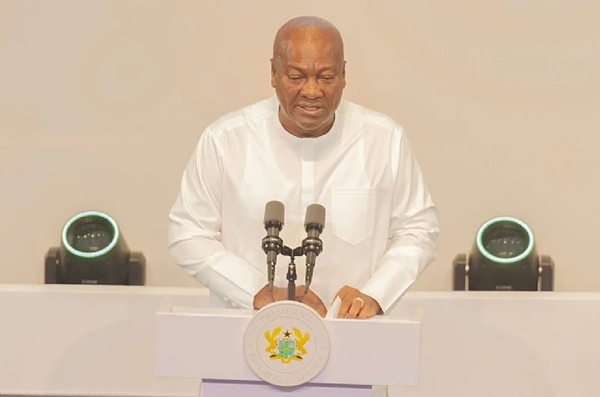
President John Mahama has officially lifted the temporary ban on state land transactions, announcing a new era of reforms and accountability in Ghana’s land administration system.
The temporary suspension, imposed on January 10, 2025, was aimed at enabling a comprehensive review of how public lands are managed. Addressing the inauguration of the reconstituted National Lands Commission on Tuesday, September 2, President Mahama explained that the pause “yielded valuable insights into the weaknesses of our current system and the urgent reforms required.”
According to the President, the lifting of the ban comes with stricter rules. “Today, with the inauguration of the new commission and the adoption of robust accountability measures, I am pleased to announce that the ban on land transactions has been lifted,” he declared. He emphasised that allocations, leases, and sales of state lands must now comply with transparent procedures, integrate digital verification systems, and undergo tighter oversight.
Mahama dismissed any suggestion that the move was a return to old practices, stressing instead that it marked “the beginning of a more disciplined era in land management.” He positioned the reforms as a political reset, one designed to address years of public mistrust and ensure that state assets are shielded from abuse.


He outlined four core pillars underpinning the government’s reset: restoring public confidence through transparency, fairness, and justice; reversing illegal land transactions by reclaiming encroached lands; digitising, modernising, and decentralising land services for accessibility; and harmonising statutory and customary land systems to promote equity.
The President underscored that these reforms were not mere rhetoric but a deliberate strategy to protect Ghana’s most critical assets from corruption and mismanagement. The reconstituted National Lands Commission, he added, would serve as the custodian of this new political vision, tasked with enforcing discipline, fairness, and accountability.
By lifting the suspension with these conditions, Mahama framed the decision as both a governance milestone and a political commitment to responsible stewardship of public property.