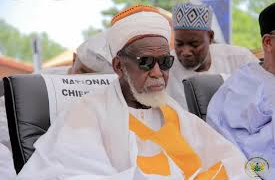







The National Chief Imam, Sheikh Dr. Osmanu Nuhu Sharubutu, has called on Muslims and all Ghanaians to take urgent and collective action to protect the environment, describing environmental stewardship as both a moral and spiritual obligation.
In his Eid-ul-Fitr message to mark the end of Ramadan on Friday, March 20, 2026, the revered Islamic leader emphasised the need for responsible living under the theme, “Our Earth, Our Future.” He urged citizens to reflect deeply on their relationship with the environment and their duty to preserve it for future generations.
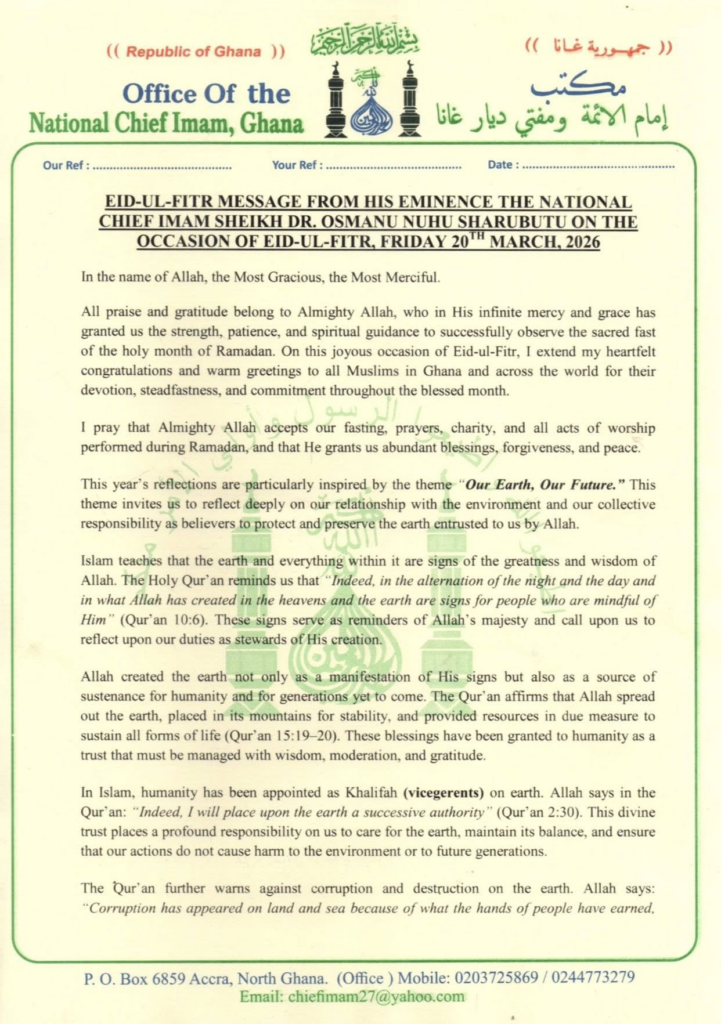
The Chief Imam expressed gratitude to Allah for granting Muslims the strength and guidance to complete the holy month of fasting, while commending the faithful for their devotion, patience, and charity throughout Ramadan.
He stressed that Islamic teachings place a strong responsibility on humanity to act as stewards of the earth, noting that natural resources are a divine trust that must be managed with wisdom, moderation, and gratitude.
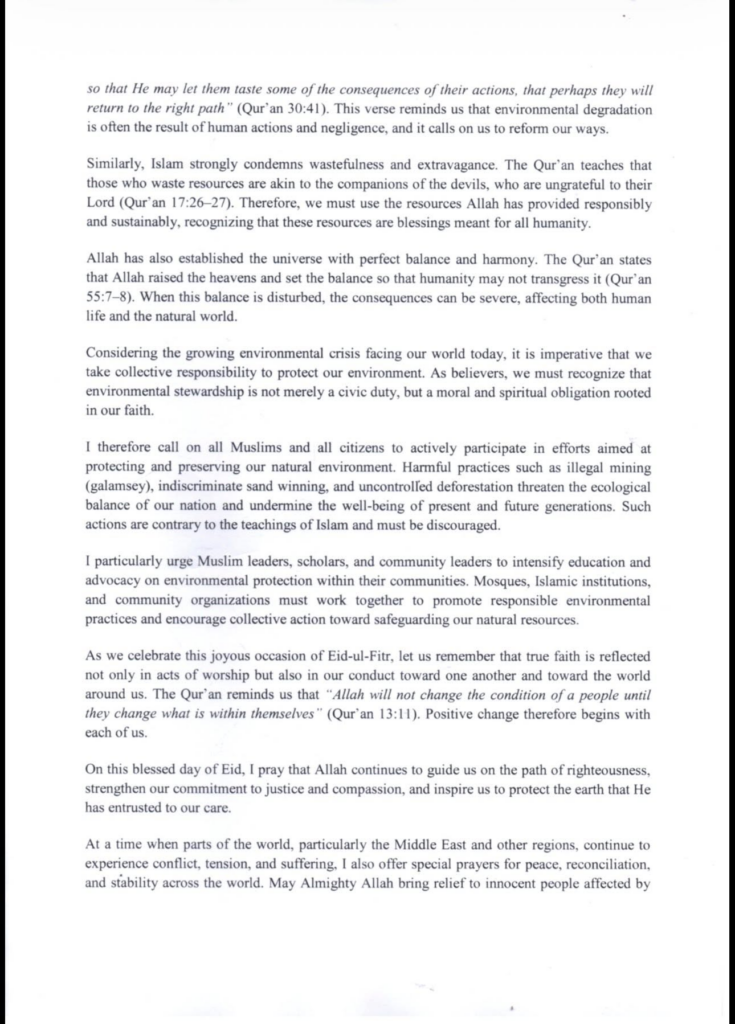
Citing verses from the Qur’an, Sheikh Sharubutu warned against environmental destruction, attributing many of the world’s ecological challenges to human actions such as negligence and exploitation. He condemned harmful practices including illegal mining (galamsey), indiscriminate sand winning, and deforestation, which he said continue to threaten Ghana’s ecological balance and the well-being of its people.
“Environmental degradation is often the result of human actions and calls for a change in behaviour,” he noted, urging individuals and communities to adopt sustainable practices and avoid wastefulness and extravagance.
The Chief Imam also called on Muslim leaders, scholars, and institutions to intensify public education and advocacy on environmental protection. He encouraged mosques and community organisations to work together to promote responsible environmental practices and collective action.
Beyond environmental concerns, Sheikh Sharubutu used the occasion to advocate for peace and unity, particularly in regions affected by conflict. The Chief Imam further offered prayers for peace and stability in regions experiencing conflict and hardship, particularly in parts of the Middle East and other areas affected by violence and humanitarian crises. He offered prayers for stability and relief for innocent people experiencing hardship across the world.


He further reminded Muslims that true faith is reflected not only in acts of worship but also in conduct towards others and the environment, urging all to embody values of justice, compassion, and responsibility.
“As we celebrate Eid, let us commit to positive change, beginning with ourselves,” he said, adding that sustainable living and moral responsibility are essential to building a better future.
The Eid-ul-Fitr celebration marks the end of Ramadan, a period of fasting, prayer, and reflection observed by Muslims worldwide.