






Ghana’s power sector could face steep tariff hikes in 2025 as major utility providers press for adjustments to sustain operations and recover rising costs.
At a public hearing before the Public Utilities Regulatory Commission (PURC) on September 9, three of the country’s biggest players – the Volta River Authority (VRA), Northern Electricity Distribution Company (NEDCO), and the Electricity Company of Ghana (ECG) – tabled proposals that, if approved, could significantly increase electricity bills for households and businesses.
The Volta River Authority is seeking a 59 percent increase in its Bulk Generation Charge (BGC), raising the tariff from 45.0892 pesewas per kilowatt-hour to 71.8862 pesewas.
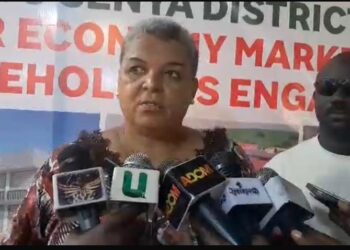
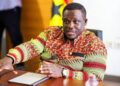
Senior Economic Analyst at VRA, Evans Somuah Mensah, told the hearing that the upward review is necessary to sustain a reliable electricity supply and to cover mounting operational costs.
He stressed that without such an adjustment, the Authority’s ability to generate and supply stable power to distribution companies could be undermined.
For its part, the Northern Electricity Distribution Company is proposing a 171 percent increase in its electricity tariffs for 2025.


The company wants to raise its Distribution Service Charge from 56.47 pesewas per kilowatt-hour to 153.03 pesewas, citing the burden of escalating operational costs across its service areas in the northern part of the country.
The Electricity Company of Ghana has submitted one of the steepest proposals, demanding a 224 percent increase in its Distribution Service Charge over the 2025–2029 regulatory period. ECG is also seeking to raise its Distribution Service Charge to 55.76 pesewas per kilowatt-hour.
The company projects annual revenue needs of GHS 9.1 billion over the next five years, pointing to inflationary pressures, forex volatility, interest rate fluctuations, and the need for cost recovery on infrastructure investments as key justifications.
Enclave Power Company, a private utility serving industrial enclaves, has also filed for tariff increases, proposing 147.18 pesewas per kilowatt-hour – the highest among the distribution utilities.
Alongside ECG and NEDCO, it argued that the requested hikes are crucial to maintain operations in the face of rising cost structures.
If approved by PURC, the combined effect of these hikes could significantly raise the cost of electricity for both households and businesses. Analysts warn that while utilities make a strong case for cost recovery, the proposals risk deepening the national debate over affordability, economic competitiveness, and the sustainability of Ghana’s power sector.