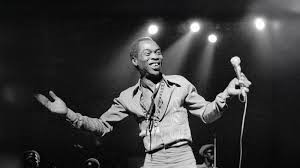







Nigerian Afrobeat pioneer Fela Anikulapo Kuti is set to be honoured with a Lifetime Achievement Award at the 2026 Grammy Awards.
The posthumous recognition comes nearly three decades after Fela’s death in 1997 at the age of 58 and is widely seen as a historic moment for African music and culture on the world stage.
Reacting to the announcement, Fela’s son and bandleader of Egypt 80, Seun Kuti, described the honour as both overdue and deeply meaningful.
“Fela has lived in the hearts of the people for such a long time. Now the Grammys have acknowledged that, and it feels like a double victory,” he said in an interview with the BBC. “It helps bring balance to the story of who Fela was and what he stood for.”
Fela’s longtime friend and former manager, Rikki Stein, also welcomed the recognition, describing it as “better late than never,” while noting that Africa’s contributions to global music had historically been overlooked.
Following the worldwide rise of Afrobeats — a modern genre that draws inspiration from Fela’s original Afrobeat sound — the Grammys introduced the Best African Music Performance category in 2024, a move many see as part of a broader shift toward recognising African artistry. Nigerian superstar Burna Boy is also nominated this year in the Best Global Music Album category.
While other African artists have achieved Grammy wins and nominations, Fela Kuti’s award marks the first time an African musician will receive the prestigious Lifetime Achievement Award, which has previously been bestowed on global icons such as Bing Crosby, Carlos Santana, Chaka Khan and Paul Simon.
Family members, friends and former collaborators are expected to attend the ceremony to receive the award on Fela’s behalf.
Beyond music, Fela Kuti’s influence was deeply political and cultural. Widely regarded as the architect of Afrobeat, he fused West African rhythms with jazz, funk, highlife and politically charged lyrics, using music as a tool for resistance against corruption, military oppression and social injustice in Nigeria.
His outspoken activism frequently put him at odds with Nigeria’s military governments, culminating in the notorious 1977 raid on his Kalakuta Republic compound following the release of Zombie, a song mocking military brutality. The attack left the compound destroyed and led to the death of his mother, Funmilayo Ransome-Kuti, a prominent feminist and activist.
Rather than retreat, Fela responded with defiance, transforming personal grief into protest through music and performance. Across a career spanning more than 30 years, he released over 50 albums and built a legacy that blended art, ideology and activism.


His musical evolution was also shaped by Ghana, where highlife — pioneered by legends such as E.T. Mensah, Ebo Taylor and Pat Thomas — influenced his early sound. That West African foundation became central to Afrobeat’s rhythmic and melodic identity, underscoring Fela’s pan-African vision.
Today, Fela Kuti’s influence continues to resonate across generations and genres, with artists such as Burna Boy, Kendrick Lamar and Idris Elba citing him as a major inspiration. His music remains a symbol of cultural pride, resistance and artistic freedom.
The Lifetime Achievement Award, according to those closest to him, affirms not just Fela’s musical genius, but his lifelong commitment to liberation, consciousness and African self-expression.
The 68th Grammy Awards will take place on Sunday, February 1, 2026. Comedian Trevor Noah returns as host for the sixth straight year. American rapper Kendrick Lamar leads this year’s nominations with nine nods, including in the major categories of Record of the Year, Song of the Year and Album of the Year — the third time he has achieved simultaneous nominations across all three.