






The New Patriotic Party (NPP) has rejected a proposal to extend Ghana’s presidential term from four years to five, arguing that the existing four-year mandate is essential to maintaining democratic accountability.
The party’s position puts it at odds with the government and the Constitutional Review Committee (CRC), which recommended the extension as part of a broader package of proposed constitutional reforms.
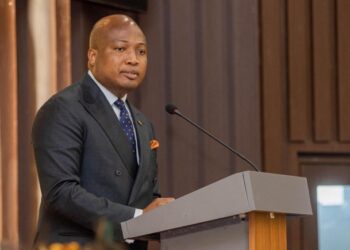
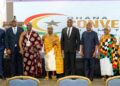
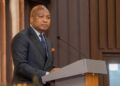
Speaking at a press conference on Thursday, September 17, 2026, the Member of Parliament for Gushegu, Sulemana Tampuli Alhassan, said the NPP supports the retention of the existing four-year mandate.
“The CRC recommended that the presidential term be extended from 4 to 5 years. Now, we have taken a different position from the position of government and the CRC. We do not support the extension, and we support the retention of the existing 4 years.
“And our justifications are that a four-year mandate promotes democratic accountability by allowing citizens to regularly assess the performance of a government and renew or withdraw their mandates. Challenges relating to policy implementation, transition and the formation of government should be addressed through greater efficiency and timely decision-making, rather than by extension. Again, extending the term weakens the principle of regular accountability.”
The CRC, chaired by Professor H. Kwasi Prempeh, proposed the five-year presidential term in its final report, which was submitted to President John Dramani Mahama in December 2025.
The government subsequently accepted the recommendation in July 2026, together with a proposal to extend Parliament’s tenure from four years to five years.
Government has argued that the current four-year electoral cycle gives administrations limited time to develop, implement and evaluate policies before another election.


The NPP, however, maintains that difficulties associated with policy implementation, transitions and the formation of government should not be addressed by lengthening the presidential mandate.
According to the party, improving efficiency and ensuring timely decision-making would provide a more appropriate response to those challenges while preserving the regular electoral checks that allow citizens to evaluate their elected governments.