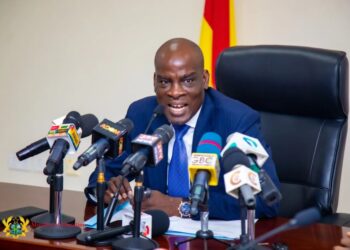








Chairperson of Parliament’s Education Committee, Peter Nortsu-Kotoe, has commended the Ghana Tertiary Education Commission (GTEC) for ordering the reversal of recent fee adjustments at the University of Ghana (UG), describing the move as timely and in the best interest of students.
Speaking in an interview on ABC’s In The Morning, Mr. Nortsu-Kotoe said GTEC’s intervention reflects its commitment to ensuring that public universities comply with laid-down procedures and protect students from undue financial burden.
“GTEC has to be commended for the step it has taken,” he said.
Beyond academic fees, the Member of Parliament for Akatsi North raised concerns about the high cost of residential accommodation on and around university campuses. He observed that owners of private and affiliated residential facilities are exploiting the limited availability of student accommodation to charge exorbitant fees.
“Owners of residential facilities are taking advantage of the lack of enough residential facilities to charge exorbitant fees,” Mr. Nortsu-Kotoe noted, calling for broader policy interventions to address accommodation challenges in tertiary institutions.
On the broader issue of funding tertiary education, the lawmaker underscored the need for a more targeted and efficient scholarship system to support needy but deserving students.
“We need to streamline the scholarship opportunities so that students who really need it have access to it,” he stated.
Mr. Nortsu-Kotoe also urged tertiary institutions to rethink their financial models, advising universities to adopt a more business-oriented approach to ensure sustainability.


“Universities in the country must see themselves as a business entity and not solely depend on government funding,” he said, while emphasizing that such an approach should not compromise academic quality or accessibility.
The comments come amid ongoing national discussions about rising costs in tertiary education, student welfare, and the need for sustainable funding for public universities.
With GTEC’s directive been widely welcomed by the public, many view it as a decisive step toward protecting students and ensuring fairness in the administration of university fees.