






Stakeholders in Ghana’s quarrying and construction industries are urging government and quarry operators to consider modern rock breaking technologies as alternatives to conventional explosives amid concerns over the effects of blasting on communities located near quarry sites.
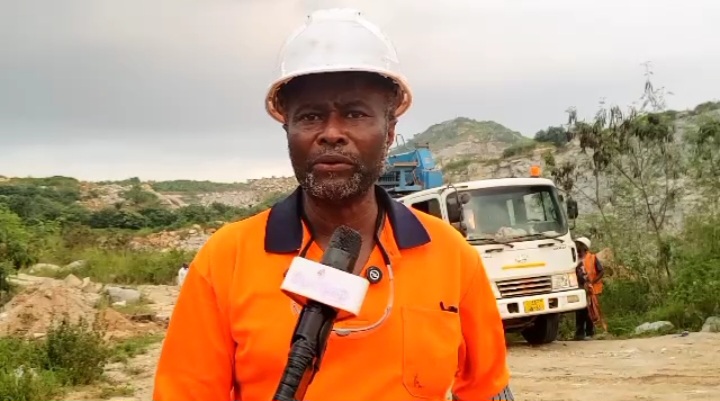
The call follows a demonstration of a Gas Expansion Rock Breaking System, a technology being promoted by mining and construction expert Engineer Andy Augustus Agyemang Amoah, at the ESM Quarry site at Buoho in the Ashanti Region.
Engineer Amoah who is leading the initiative said the technology, developed in China was being introduced to address some of the long standing challenges associated with the use of conventional explosives in quarrying.
According to him, explosives have traditionally been used to break rocks but the practice can generate significant noise and vibrations and create risks from flying rocks, particularly for communities and structures located close to quarry sites.
He said the new system provides a different approach to rock breaking and uses a specially designed tank for the containment of liquid oxygen.
Engineer Amoah explained that, compared with conventional explosives the system is intended to provide easier storage and transportation while reducing some of the risks associated with explosive materials.
He also claimed that the technology could reduce rock breaking costs by about 30 percent compared with conventional blasting.
“For many years, quarry companies have relied on explosives to break rocks and this has had effects on neighbouring communities. We now have this new technology from China which can help address some of these challenges,” he said.»
Engineer Amoah disclosed that demonstrations and experimental applications of the technology had been conducted at other locations with engagements involving relevant industry stakeholders and the Minerals Commission.
He cited tests conducted at the Bibiani Mines and the Bogoso-Prestea mining area, a location known as Bondae as part of efforts to assess the technology’s application.
Quarry Owner Commends Technology


The owner of the ESM Quarry site at Buoho, Mr. Ebenezer Yaw Sarpong, who hosted the first demonstration, said he was impressed by the outcome of the exercise.
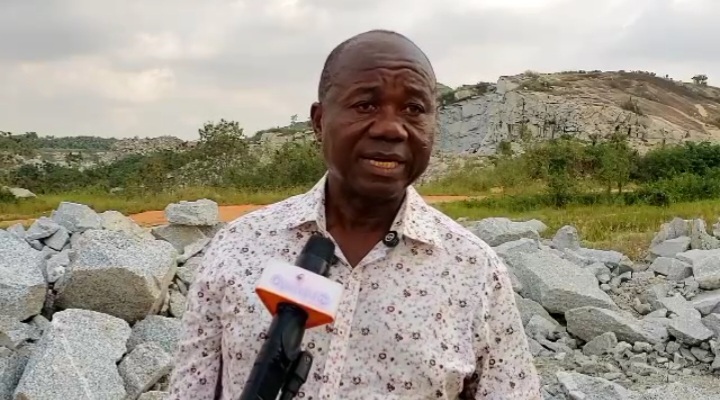
Mr. Sarpong said he personally remained about 50 metres from the point of the demonstration and did not observe flying rocks or significant vibration.
“I initiated the first blast. I didn’t go far, I was about 50 metres away. There were no flying rocks, no vibration and the cost was also lower. All you hear is that the rocks have been broken,” he said.
He believes the technology could provide quarry operators with another option for breaking rocks while addressing some of the concerns associated with conventional blasting.
Quarry Association Backs Innovation
The Chairman of the Quarrying Companies Association for the Northern Sector, Mr Adututu Gyamfi also welcomed the introduction of the technology.
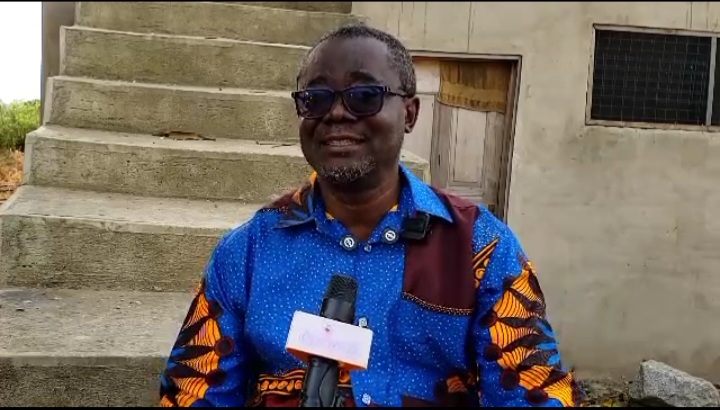
He said conventional explosives could pose risks through flying rocks, noise and vibrations, particularly when quarrying activities are carried out close to communities.
Mr. Gyamfi said the demonstration suggested that the new technology could significantly reduce some of these risks.
“With the conventional explosives, there are flying rocks and other dangers. With this new technology, there are no flying rocks, the sound is very minimal and there is no vibration,” he said.
He called on government to support further development and adoption of the technology, saying it could contribute to improved safety standards in Ghana’s quarrying industry.
Operators Call for Government Support
Quarry operators who witnessed the demonstration expressed interest in the technology and appealed to government to consider measures that could make modern rock breaking equipment more accessible to local operators.
Among the proposals are financial support, import incentives and other forms of assistance to enable quarry companies to invest in alternative rock breaking technologies.
For Engineer Amoah, the initiative represents an opportunity to modernise Ghana’s quarrying sector while responding to concerns raised by communities affected by conventional blasting.
Stakeholders say further technical assessment, regulatory engagement and wider industry testing will be important in determining the technology’s suitability for broader application in Ghana.
By: Michael Walier