






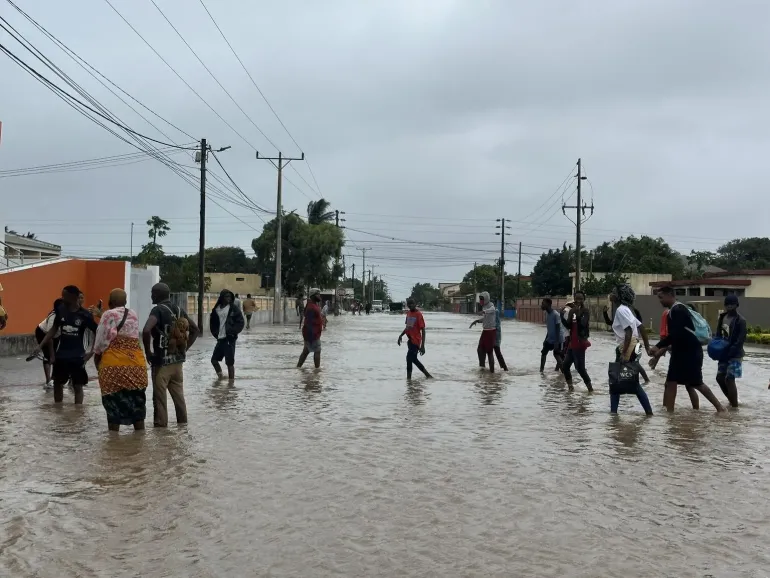
Recurrent climate shocks have once again triggered mass displacement across Mozambique, with severe flooding since the beginning of the year forcing nearly 400,000 people from their homes in the southern and central parts of the country.
According to the United Nations High Commissioner for Refugees (UNHCR), the latest floods have displaced approximately 392,000 people in provinces including Gaza, Maputo and parts of central Mozambique—areas already battered by previous extreme weather events such as tropical storms, cyclones and prolonged droughts.
The crisis comes at a time when Mozambique is still grappling with conflict-induced displacement in the north, where more than 300,000 people were forced to flee in the last quarter of 2025 alone.
Floodwaters rose rapidly across affected communities, leaving families with little or no time to prepare. Many fled without essential belongings, including identity documents. Parents described chaotic escapes to higher ground, during which some children were separated from their families, while older people and persons with disabilities struggled to keep pace.
Preventive measures and a swift, Government-led response—coordinated with humanitarian partners and supported by the private sector—helped avert an even greater loss of life. Despite difficult access conditions, nearly 20,000 people were evacuated by air, water and road, using all available means of transportation.
An estimated 100,000 displaced persons are currently sheltering in about 100 temporary accommodation centres, including schools and public buildings. Overcrowding in these centres is severe, increasing protection risks, particularly for women, children, older people and persons with disabilities.
Many sites, especially in remote areas, lack adequate privacy, lighting and basic services. Women and girls face heightened risks of gender-based violence, sexual exploitation and abuse, while many displaced persons are experiencing psychological distress following repeated displacement linked to major floods in 2000 and 2013.
Meanwhile, thousands remain stranded in hard-to-reach areas cut off by flooded roads and washed-out bridges. Although the heaviest rains have subsided, access challenges continue to hamper humanitarian operations, delaying the delivery of essential assistance.
The destruction of critical infrastructure—including roads, water systems, schools and health facilities—has further aggravated the situation. Several schools and health centres have been damaged or repurposed as temporary shelters, disrupting access to education and healthcare.
With its partners, UNHCR is supporting the Government of Mozambique, particularly in Gaza Province, by deploying mobile protection teams to identify and address urgent risks among the most vulnerable. Efforts are also underway to strengthen prevention and response mechanisms, including mental health and psychosocial support services.


However, the humanitarian response is under severe strain due to funding shortfalls, access constraints and depleted emergency stocks caused by ongoing conflict-related displacement in the north.
“This crisis highlights Mozambique’s extreme vulnerability to the convergence of multiple shocks—from conflict to climate-related disasters,” said UNHCR’s Mozambique Representative, Xavier Creach, at a press briefing at the Palais des Nations in Geneva on Friday, January 30, 2026.
UNHCR estimates that it will require $38.2 million in 2026 to meet rising needs across the country and sustain life-saving protection and basic services for refugees, internally displaced persons and host communities.
With continued rainfall forecast and flood risks remaining high, humanitarian agencies warn that further displacement is likely unless urgent international support is mobilised.