






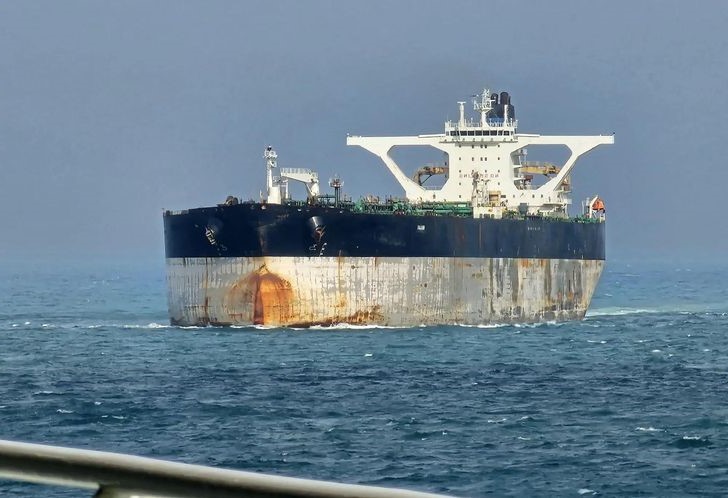
The United States has in separate operations, seized two oil tankers linked to Venezuela in the North Atlantic and the Caribbean Sea.
In a statement on Wednesday, U.S. European Command confirmed the seizure of the merchant vessel Bella 1 for violations of U.S. sanctions. The tanker had been under pursuit since last month after allegedly attempting to evade a U.S.-imposed naval blockade targeting sanctioned oil vessels operating around Venezuela.
Shortly after, U.S. Secretary of Homeland Security Kristi Noem announced in a social media post that American forces had also taken control of another tanker, the Sophia, in the Caribbean Sea. According to Noem, both vessels were either last docked in Venezuela or were en route to the country.
She described the ships as part of a so-called “ghost fleet” — a network of sanctioned vessels accused of transporting oil from Venezuela, Russia and Iran in defiance of Western sanctions, largely to buyers in Asia.
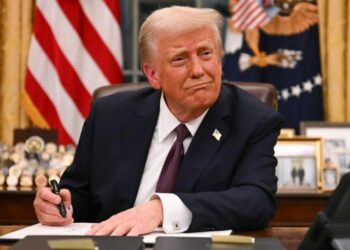
The seizures come as the Trump administration outlined a policy shift that will see sanctions on Venezuelan oil selectively removed. According to the U.S. Energy Department, the move is intended to enable the shipping and sale of Venezuelan oil to markets worldwide under strict U.S. oversight.
President Donald Trump announced that oil sales would begin immediately, with an initial release of between 30 and 50 million barrels. U.S. officials said the programme would continue indefinitely, with proceeds placed in U.S.-controlled accounts at “globally recognised banks.” The funds would then be disbursed to both U.S. and Venezuelan populations at the discretion of the Trump administration.
A U.S. official, speaking on condition of anonymity to The Associated Press, said the Bella 1 was seized by the U.S. military and later handed over to law enforcement authorities. The vessel was sanctioned in 2024 for allegedly smuggling cargo on behalf of a company linked to Lebanese militant group Hezbollah.
In December, the U.S. Coast Guard attempted to board the tanker in the Caribbean as it headed toward Venezuela, which the Trump administration has placed under a naval blockade. The ship reportedly refused boarding and fled across the Atlantic.
During the voyage, the tanker changed its name to Marinera, re-registered under the Russian flag, and the crew reportedly painted a Russian flag on its hull. Maritime tracking data on Wednesday showed the vessel travelling between Scotland and Iceland, while flight tracking sites recorded U.S. military aircraft operating in the area ahead of the seizure.


Russia’s Foreign Ministry said it was “following with concern” developments surrounding the tanker, noting that a U.S. Coast Guard vessel had been tracking it despite its distance from the American coast.
U.S. European Command later confirmed that the Coast Guard cutter Munro tracked the vessel prior to its seizure, acting under a warrant issued by a U.S. federal court. The command said the operation supported President Trump’s directive to target sanctioned vessels deemed a threat to the security and stability of the Western Hemisphere.
Meanwhile, the White House says the twin seizures signal a tougher enforcement phase of U.S. policy toward Venezuela, even as Washington moves to tightly manage the country’s oil exports under selective sanctions relief, with further vessel interdictions expected.