






The United States has formally withdrawn from the World Health Organization (WHO), ending decades of engagement with the United Nations’ global health agency and leaving it without one of its largest financial contributors.
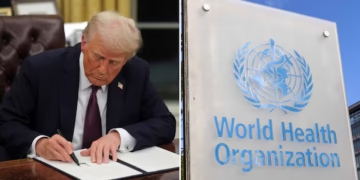
The withdrawal follows an executive order signed by U.S. President Donald Trump a year ago, shortly after the start of his second term in office. The Trump administration justified the move by accusing the WHO of being overly “China-centric” during the Covid-19 pandemic and failing to act independently in the global health crisis.
In a statement, the U.S. Department of Health and Human Services said the decision was based on what it described as the WHO’s “mishandling” of the pandemic, its inability to implement meaningful reforms, and undue political influence from member states.
As part of the withdrawal process, Washington announced the termination of all U.S. government funding to the WHO, the recall of U.S. personnel and contractors from WHO offices in Geneva and around the world, and the suspension or discontinuation of hundreds of engagements with the agency.
“The WHO tarnished and trashed everything that America has done for it,” U.S. Health Secretary Robert F. Kennedy and Secretary of State Marco Rubio said in a joint statement. They accused the organisation of abandoning its core mission and acting against U.S. interests, citing, among other issues, its failure to return the American flag previously based at WHO headquarters in Geneva.
“Going forward, U.S. engagement with the WHO will be limited strictly to effectuate our withdrawal and to safeguard the health and safety of the American people,” the statement added.
The WHO has strongly rejected the U.S. claims. Its Director-General, Dr Tedros Adhanom Ghebreyesus, described the withdrawal as a loss not only for the United States but for the global community. The organisation highlighted its role in combating major global health challenges, including polio, HIV/AIDS, maternal mortality, and tobacco use through international treaties and coordinated public health interventions.
The decision comes amid ongoing global efforts to strengthen preparedness for future pandemics. In the aftermath of Covid-19, WHO member states negotiated a landmark international pandemic treaty aimed at improving prevention, preparedness and response, including fairer sharing of vaccines and treatments. The treaty was adopted in April last year by all WHO member states except the United States.
The U.S. has historically been one of the WHO’s biggest donors, but it failed to pay its assessed contributions for 2024 and 2025. The funding gap has already led to significant job losses at the organisation. WHO legal experts argue that Washington is still obligated to pay outstanding arrears estimated at $260 million (£193 million), a claim the U.S. government has rejected, saying it sees no reason to settle the debt.


U.S. officials said Washington would instead pursue bilateral relationships with other countries to maintain disease surveillance and pathogen-sharing systems, though they were unable to specify which countries are currently involved. They also indicated that future efforts to combat diseases such as polio and HIV would be carried out through partnerships with non-governmental and faith-based organisations, but provided no details on any existing agreements.
When asked about U.S. participation in the annual global influenza vaccine development and information-sharing process, officials said they were uncertain about future involvement.
Following the signing of the withdrawal order, the WHO expressed hope that the United States would reconsider its decision. In a statement, the organisation noted that “the WHO and the USA have saved countless lives and protected Americans and all people from health threats,” adding that renewed engagement would benefit “the health and well-being of millions of people around the globe.”
The U.S. exit from the WHO represents a significant shift in global health cooperation, with potential implications for how future health crises are managed.