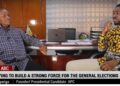








Political scientist and senior lecturer at Kumasi Technical University, Dr. Samuel Afriyie, has said the increasing trend of widows stepping in to contest parliamentary seats following the death of sitting Members of Parliament has become a familiar feature of Ghana’s political landscape.
Speaking on ABC Midday News, Dr. Afriyie noted that the phenomenon is no longer unusual and has recorded varying degrees of success over the years.
According to him, “it has become a norm in our political circles, and it has had success one way or the other,” explaining that the process through which such candidacies emerge often lends credibility to spouses taking over the political space left by their late partners.
He added that the circumstances surrounding the death of a sitting MP and the subsequent by-election tend to create a unique political dynamic that favours bereaved spouses.
Dr. Afriyie further pointed to the role of constituency dynamics in shaping electoral outcomes, particularly in by-elections. He explained that constituencies are broadly classified into safe seats, swing seats and competitive seats, and this classification significantly affects who stands a realistic chance of winning.


“In politics, we have safe seats, swing seats, and seats that can go to any other person,” he said. “When a party considers a constituency as its stronghold, that changes everything.” Using the current situation as an example, he noted that once the dominant party endorses a candidate in a stronghold, victory becomes highly likely. “With a stronghold, immediately you get approval from the party, she can technically become an MP within the shortest possible time,” he added.
Touching on the issue of sympathy votes, Dr. Afriyie stressed that emotional factors play a critical role in by-elections triggered by the death of a sitting MP. He said sympathy votes often tilt the balance in favour of bereaved spouses, giving them a significant advantage over other aspirants.
Addressing concerns about long-serving party loyalists who may feel sidelined in such situations, Dr. Afriyie argued that political contests are not always about fairness but about timing and opportunity. “It’s not about fairness here. We are talking about taking advantage of the situation and the politics of the day,” he said, emphasizing that sympathy votes can be decisive in these contests.
Dr. Afriyie’s comments come amid growing public debate over the increasing number of widows contesting parliamentary by-elections, raising questions about internal party democracy, political opportunity structures and the role of emotional appeal in Ghana’s electoral politics.