






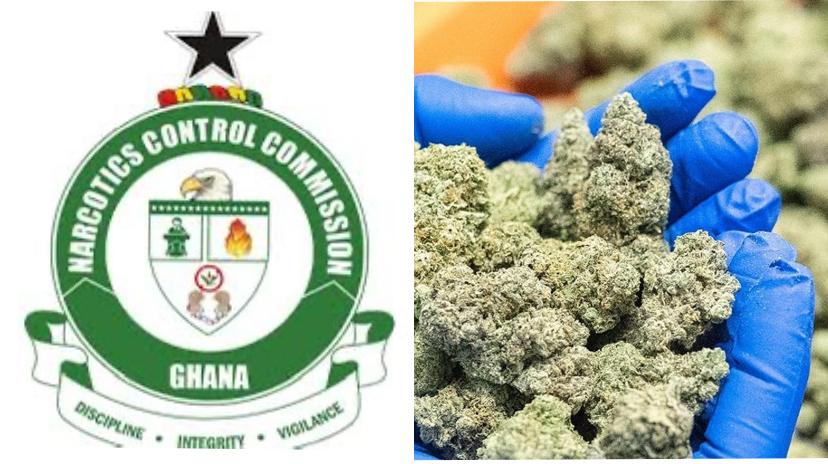
The Narcotics Control Commission (NACOC) is set to roll out a licensing regime for the cultivation of cannabis strictly for medicinal and industrial use in Ghana, following the approval of the necessary regulatory and cost framework by Parliament.
In a press statement dated February 11, 2026, the Commission announced that the move marks a key step toward operationalising controlled cannabis cultivation, processing and usage within the confines of Ghana’s laws.
According to NACOC, the framework permits the cultivation and use of cannabis varieties with tetrahydrocannabinol (THC) content not exceeding 0.3 per cent, and only for approved medical and industrial purposes.
“The Narcotics Control Commission wishes to inform the public that it will soon begin implementing the licensing regime for medicinal and industrial cannabis cultivation in Ghana,” the statement said.
The Commission stressed that licences will be issued exclusively to qualified entities that satisfy stringent regulatory conditions. These include robust security arrangements, effective product traceability systems, adherence to quality assurance standards, and full compliance with all applicable laws and regulations.
NACOC further cautioned prospective applicants to engage directly and solely with the Commission through its Cannabis Regulations Department (CRD), warning against intermediaries or self-styled facilitators.


“The Commission strongly cautions prospective applicants to avoid engaging with any individuals, groups or associations claiming to facilitate licensing,” it noted, adding that only officially approved procedures and guidelines must be followed.
While outlining the new licensing framework, NACOC was quick to reiterate that recreational cannabis use remains illegal in Ghana, and that the policy does not signal a relaxation of the country’s drug control laws.
The Commission also disclosed that it will collaborate closely with key state institutions, including the Ministry of the Interior, the Ghana Standards Authority, and the Food and Drugs Authority, to ensure effective implementation, monitoring and enforcement of the regime.