






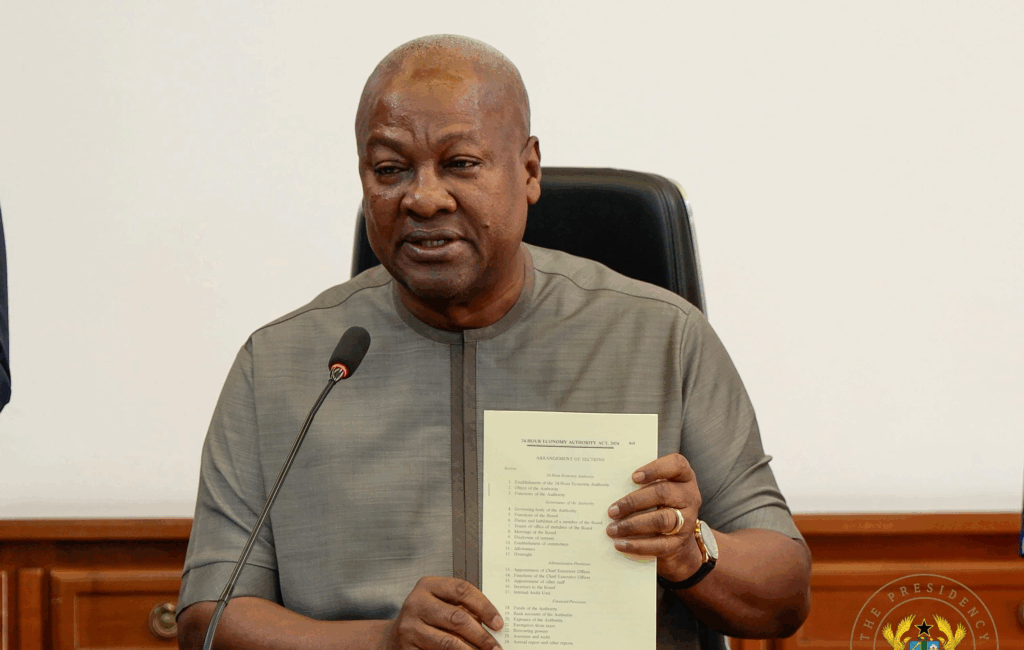
President John Mahama has signed into law the 24-Hour Economy Authority Bill, 2025, paving the way for the formal rollout of one of his administration’s flagship economic transformation policies.
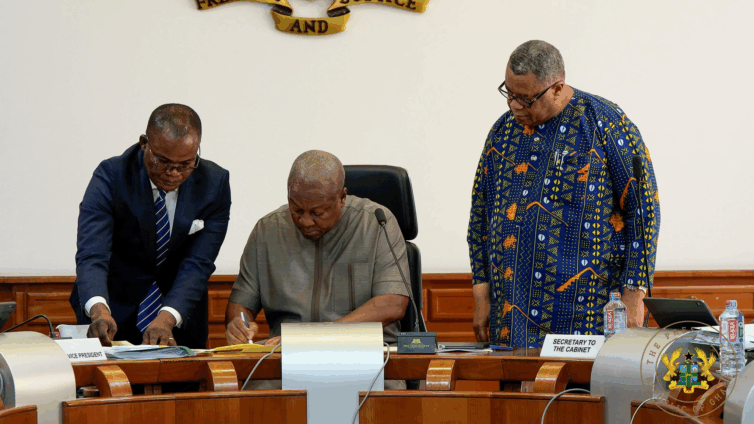
The brief signing ceremony took place on Thursday ahead of the 13th Cabinet meeting, marking a significant step in the government’s drive to operationalise a round-the-clock economy.
Addressing his Cabinet colleagues after appending his signature, President Mahama underscored the importance of the legislation.
“Cabinet colleagues, I just appended my signature to give assent to the 24-hour Authority Bill. This Bill, which Ghanaians have been waiting for, was one of our flagship strategies for economic transformation,” he stated.


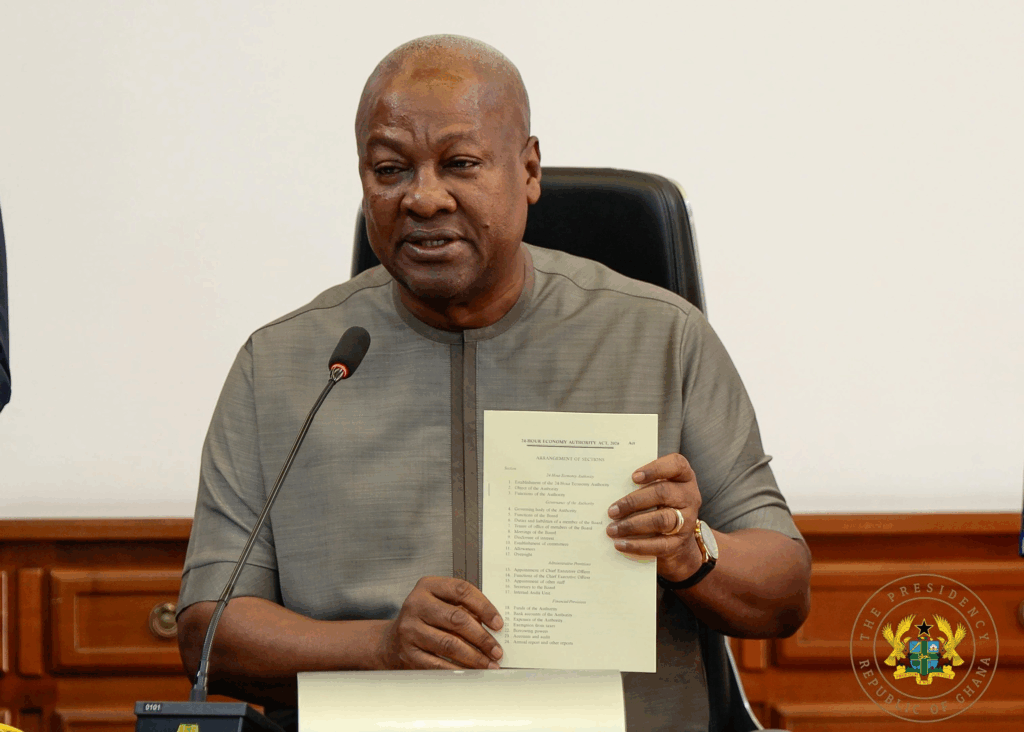
He acknowledged that the process leading to the assent had taken longer than anticipated, explaining that the government had to undertake thorough due diligence to ensure the policy was firmly grounded in law.
With the legal framework now secured, the President stressed the urgency of execution. “Now we must move from strategy to implementation. The business sector is waiting, Ghanaian investors are waiting, foreign investors are waiting,” he said.
“They want to see the package of incentives that we can afford, so that they can invest more and expand productivity and also create more employment for our young people, and so it’s my pleasure to assent to this Bill today,” he added.
Parliament passed the Bill on Friday, February 6, following extended deliberations between the Majority and Minority caucuses. The legislation establishes the 24-Hour Economy Authority as the central coordinating institution responsible for implementing the government’s 24-Hour Economy and Accelerated Export Development Programme.
According to government officials, the programme is designed to tackle persistent structural weaknesses in Ghana’s productive sector. It aims to reduce dependence on the export of low-value raw materials while cutting back on the importation of expensive finished and intermediate goods.
The newly created Authority is expected to mobilise investment, harmonise public and private sector efforts, and ensure that the necessary infrastructure and regulatory systems are put in place to sustain continuous economic activity across the country.
It will also oversee reforms in production systems, supply chains, marketing strategies and workforce development to drive integrated and sustainable national growth.
Originally laid before Parliament in late 2025, the Bill forms a core component of the policy platform of the National Democratic Congress during the 2024 general elections.
With the law now in force, attention shifts to how swiftly the Authority can operationalise the policy and deliver on the administration’s promise to transform Ghana into a fully functional 24-hour economy.