






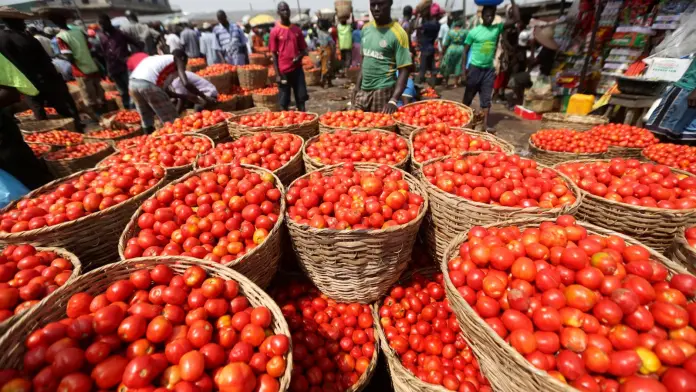
The Peasant Farmers Association of Ghana has described Burkina Faso’s recent ban on tomato exports to Ghana as a “blessing in disguise,” urging government to seize the moment to strengthen local production and reduce reliance on imports.
In a statement issued on March 24, the Association said while it understands government’s diplomatic engagement with Burkinabe authorities, the development presents a critical opportunity to implement sustainable, home-grown solutions to Ghana’s tomato supply challenges.
“This is an opportunity for government to develop home-grown strategies and support farmers to increase production and ensure self-sufficiency,” the statement noted.
PFAG, however, warned that failure to act swiftly could result in severe consequences, including shortages and rising prices. “Failure to do so will result in an acute shortage of tomatoes, leading to drastic price hikes, increased inflationary pressures, and an escalation into a full-blown food security crisis,” the Association cautioned.
Structural challenges persist
According to PFAG, Ghana’s tomato sector continues to struggle with longstanding issues such as overreliance on rain-fed agriculture, high input costs, weak market systems, and significant post-harvest losses.
“These challenges… have created a major disincentive for farmers during the major planting season,” the statement said, adding that past investments in irrigation, storage, and processing have failed to yield meaningful transformation.
The Association also pointed to rising global costs driven by geopolitical tensions, which are increasing expenses for fuel, energy, and agricultural inputs, further discouraging production.
“The agricultural sector is on the brink of a heightened food security crisis, and the sooner we act pragmatically, the better,” PFAG warned.
Call for urgent intervention
PFAG is calling on government to provide “LEADERSHIP, DIRECTION, and a clear STRATEGY” to address the issue across short-, medium-, and long-term timelines.
In the immediate term, the Association is urging urgent support for farmers operating within irrigation zones, including the provision of improved seeds, fertilizers, and mechanisation services.
“The tomato farmers within PFAG are ready and available to work with government in this regard,” it stated, while also calling for an emergency response plan to mitigate any supply disruptions.
Medium- and long-term reforms
For the medium term, PFAG is advocating the establishment of land banks, expansion of irrigation sites, and improved market linkages through cold storage and better coordination with traders and transporters.
In the long term, the Association is pushing for a major expansion of irrigation infrastructure, proposing at least one large irrigation dam per region and a target to increase irrigable land from 10 percent to over 50 percent by 2028.


It also stressed the need to revive and operationalise tomato processing facilities to reduce waste and add value to production.
Warning of looming crisis
PFAG concluded with a stark warning, urging government to act decisively to prevent a broader food security crisis.
“We are heading toward a crisis, and the time to act is now,” the statement emphasized.
The Association also pledged its readiness to partner with government to boost productivity and ensure long-term food security, calling for targeted investment programmes for key agricultural value chains including tomato, rice, maize, cassava, and onion.