






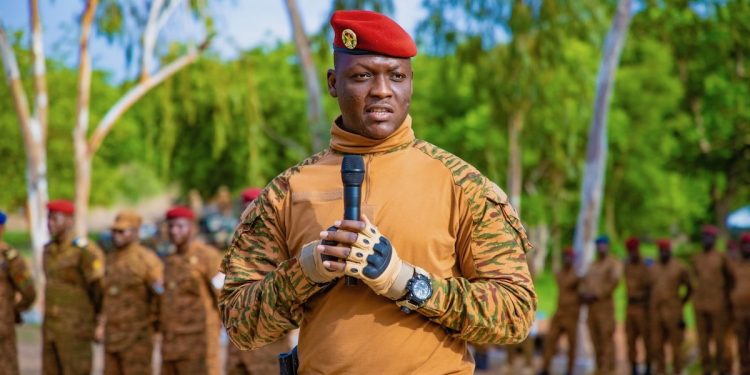
Burkina Faso’s military leader, Ibrahim Traoré, has sparked controversy after calling on citizens to abandon democracy, insisting that the system is not suitable for the country.
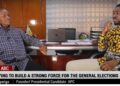
Speaking in an interview aired on state television on Thursday, the 38-year-old leader said, “People need to forget about the issue of democracy. Democracy is not for us.”
Traoré, who came to power following a coup in 2022, argued that democratic governance has often led to instability and violence, particularly when influenced by foreign powers. “Wherever they [Western powers] try to establish democracy in the world, it’s always accompanied by bloodshed,” he said.
Citing Libya as an example, he pointed to the country’s turbulent history following the fall of longtime ruler Muammar Gaddafi. “Look at Libya, this is an example close to us,” Traoré added, referencing the prolonged instability that followed Gaddafi’s overthrow.
Although Traoré initially pledged to restore civilian rule by July 2024, his administration later postponed the transition, extending military rule by five years. In January, authorities also imposed a ban on all political parties, describing the move as part of efforts to “rebuild the state.”
Defending the decision, Traoré criticised political actors, claiming they undermine national unity. “The truth is, politics in Africa – or at least what we’ve experienced in Burkina – is that a real politician is someone who embodies every vice: a liar, a sycophant, a smooth-talker,” he said.
While he did not outline a clear alternative system, Traoré emphasised that his government is pursuing a distinct path rooted in national sovereignty and grassroots mobilisation. “We have our own approach. We’re not even trying to copy anyone else. We’re here to completely change the way things are done,” he stated.
He added that traditional authorities and community-based structures would play a key role in shaping the country’s governance model, alongside a focus on self-reliance in both economic and military sectors.
Despite his strong rhetoric, Traoré’s leadership has drawn criticism from international observers and human rights groups. Human Rights Watch recently reported that more than 1,800 civilians have been killed in Burkina Faso since he assumed power, with a significant number of deaths attributed to government forces and allied militias.
The country continues to grapple with a worsening insurgency by Islamist militant groups, a crisis that has also affected neighbouring Mali and Niger. In response, the three junta-led nations have distanced themselves from Western allies, particularly France, and strengthened ties with Russia for military support.
Even as security challenges persist and political freedoms remain restricted, Traoré continues to attract support across parts of Africa, particularly among those who back his anti-Western stance and pan-African vision.


Source: BBC