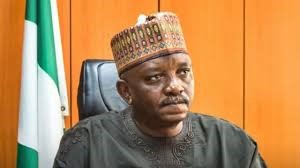







A Nigerian court has sentenced former Minister of Power, Saleh Mamman, to 75 years in prison after finding him guilty of laundering 33.8 billion naira (about $24.7 million), in one of the country’s most significant corruption convictions involving a former cabinet official.
The ruling, delivered after Mamman was convicted on 12 counts, found that he diverted public funds through private companies linked to government-funded power projects. The court also ordered him to refund 22 billion naira ($16 million) to the state.
The Economic and Financial Crimes Commission (Economic and Financial Crimes Commission) confirmed that Mamman was sentenced in absentia, noting that he has been “out of circulation” and “without trace” since the judgment. Authorities say an arrest warrant was issued earlier in the week after he failed to appear before the court.
Mamman, who served as Minister of Power between 2015 and 2021 under former President Muhammadu Buhari, has not publicly responded to the conviction. He was dismissed during a cabinet reshuffle described by the president as an “independent and critical self-review”.
Interestingly, just weeks before the ruling, Mamman had announced intentions to contest the 2027 governorship election in Taraba State under the ruling All Progressives Congress (APC). In a public statement, he declared: “Today marks a defining moment in my journey of service to our dear state. With a deep sense of responsibility and unwavering commitment, I have officially obtained the Expression of Interest and Nomination Forms under the All Progressives Congress (APC) to contest for the governorship of Taraba State.”


The conviction adds to a growing list of high-profile corruption investigations pursued by the EFCC, including cases involving former Justice Minister Abubakar Malami and former Humanitarian Affairs Minister Sadiya Umar Farouq, both of whom have denied wrongdoing.
Mamman’s sentencing has also reignited public frustration over Nigeria’s persistent electricity challenges. Despite being one of Africa’s largest energy producers, the country continues to experience frequent power outages, forcing many households and businesses to depend on costly fuel-powered generators amid rising fuel prices.