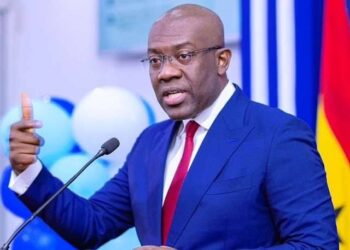







President John Dramani Mahama has announced that Cabinet has directed the Attorney-General to begin drafting legislation aimed at tightening controls over the disposal of state assets, in a renewed push to strengthen accountability in public resource management.
The proposed State Assets Protection Bill will establish clear legal conditions under which public properties — including lands, buildings, factories and other state-owned facilities — may be sold or transferred. The move, according to the President, is intended to prevent arbitrary or poorly regulated disposal of national assets by future governments.
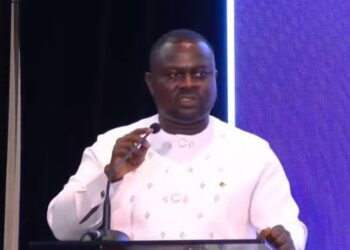
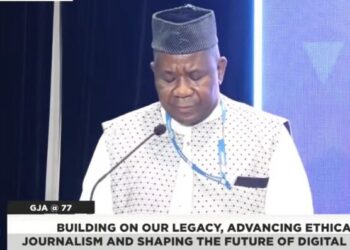
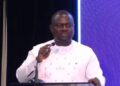
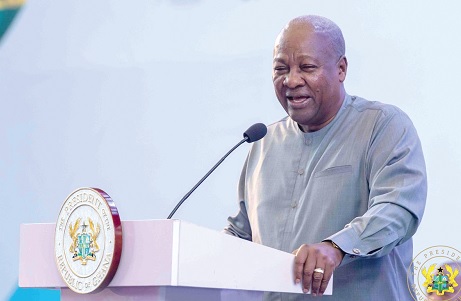
Speaking at the fourth Annual Convening of the Ghana Civil Society Forum in Accra on Thursday, June 25, 2026, President Mahama stressed the need for stronger safeguards in managing public property.
“It shows the guidelines under which any state assets can be disposed of, including lands, buildings, state assets, factories, industries, so that no government just capriciously disposes of state assets,” President Mahama said.
He disclosed that Cabinet reached the decision during its sitting on Wednesday, June 24, 2026.
Alongside the proposed asset protection law, Cabinet has also approved the National Ethics and Anti-Corruption Action Plan (2026–2030) for onward submission to Parliament. The plan is expected to guide Ghana’s anti-corruption efforts over the next five years, building on earlier frameworks introduced in the past decade.
President Mahama noted that he first presented Ghana’s inaugural 10-year National Anti-Corruption Action Plan in 2015, describing the new strategy as a continuation of that reform agenda.
The President further indicated that ongoing constitutional review proposals are now before Cabinet for consideration. Among the key recommendations are reforms to Article 71 to create an independent emoluments commission, changes to ministerial appointments to reduce the requirement for MPs in Cabinet, and proposals to extend the tenure of key public offices from four to five years. The review also includes suggestions for fixed terms for heads of independent constitutional bodies, including the Chief Justice and Electoral Commissioner.


“Once Cabinet concludes its deliberations, the government’s position will be presented to the Constitutional Review Implementation Committee for onward processing and presentation to Parliament,” he said.
On governance and civil society engagement, President Mahama emphasized that civil society organisations remain key partners in shaping national development policy rather than adversaries. He added that recent legal reforms, including the Governance Advisory Council Act, were influenced by inputs from civil society groups and would ensure their participation once the council is formally inaugurated.
The latest announcements form part of a broader government effort to reinforce institutional accountability, strengthen transparency, and modernize Ghana’s governance architecture.