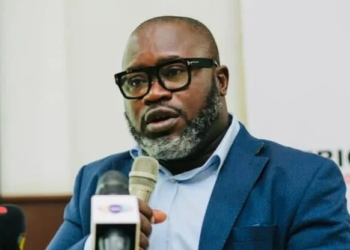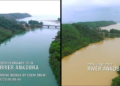







The Executive Director of Eco-Conscious Citizens, Awula Serwah, has warned that Ghana is edging dangerously close to an ecological catastrophe if decisive and coordinated action is not taken to curb illegal mining.
Interviewed on ABC In The Morning, Awula Serwah painted a grim picture of the state of the country’s environment, blaming weak enforcement, poor resourcing of key state institutions and lack of accountability at the local political level for the continued destruction of forests and water bodies.
According to her, institutions mandated to protect the environment are struggling to perform their duties effectively due to severe resource constraints. She stressed that the Forestry Commission, which is responsible for safeguarding forest reserves, must be adequately resourced to confront the growing threat posed by illegal miners operating within protected areas.
“Forest reserves are being invaded daily, yet the Forestry Commission does not have the logistics and manpower to deal with the situation effectively,” she said, warning that continued neglect could lead to irreversible environmental damage.
Awula Serwah also expressed disappointment with the Environmental Protection Agency (EPA), noting that civil society organisations fighting galamsey are receiving little support from the regulator. “We are not getting much help from the Environmental Protection Agency,” she stated, adding that the lack of strong collaboration weakens the overall fight against illegal mining.


She further described the National Anti-Illegal Mining Operations Secretariat (NAIMOS) as “woefully under-resourced,” arguing that without adequate funding, personnel and logistics, the secretariat cannot make meaningful impact on the ground.
On accountability, the Eco-Conscious Citizens boss insisted that Metropolitan, Municipal and District Chief Executives (MMDCEs), as well as political appointees in areas where illegal mining thrives, must be held responsible. “We need to hold the MCEs and political appointees of where illegal mining is taking place accountable,” she said, stressing that galamsey often flourishes with the tacit support or silence of local authorities.
She also called for greater accountability within the Ghana Police Service, noting that law enforcement plays a critical role in combating environmental crimes. “We need to hold the Ghana Police Service accountable,” she added.
Touching on recent policy developments, Awula Serwah welcomed the revocation of Legislative Instrument (L.I.) 2462, describing it as a positive step in the right direction. “We are grateful L.I. 2462 has been revoked,” she said, noting that the repeal removes legal ambiguities that had been exploited to justify mining in sensitive forest areas.
However, she raised concerns about the launch of the third cohort of the Blue Water Guards, questioning their preparedness to deal with the scale and sophistication of illegal mining operations. “I’m not sure they are adequately trained to deal with environmental terrorists,” she remarked, calling for comprehensive training and strong institutional backing if the initiative is to succeed.
Awula Serwah concluded by reiterating that without proper resourcing of institutions, strict enforcement of laws and real accountability for political and security actors, Ghana risks losing its forests and water bodies to illegal mining, with devastating consequences for future generations.