






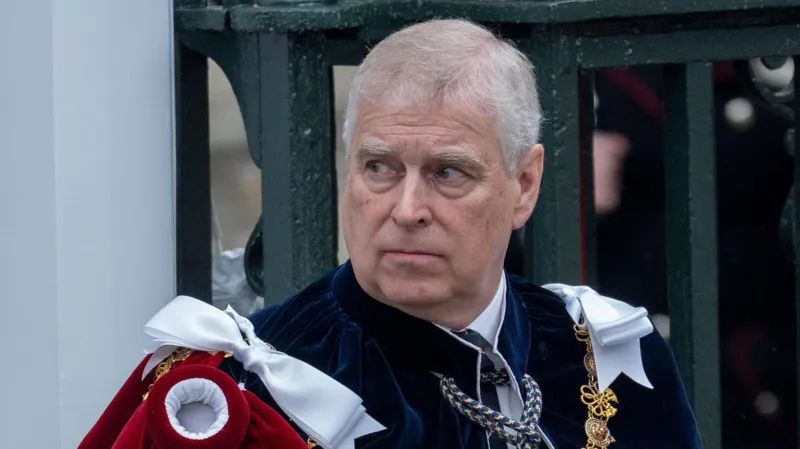
The British Government is considering introducing legislation to remove Ex – Prince Andrew Mountbatten-Windsor from the line of royal succession once an ongoing police investigation concerning him concludes.
If passed, the proposed law would permanently bar the Duke of York, currently eighth in line to the British throne, from ever becoming monarch. The development marks a rare but constitutionally possible step within the framework of Britain’s parliamentary monarchy.
Speaking on Friday, Defence Minister Luke Pollard confirmed that discussions have been underway between the government and Buckingham Palace regarding the potential move.
He said the government had “absolutely” been working in conjunction with Buckingham Palace to bring about the measure, describing it as the “right thing to do to stop someone potentially being a heartbeat away from the throne.”
“It’s right that people know that there are consequences to behavior, and that should apply to everyone, no matter what station in life you’re born into,” Pollard added.
Although uncommon, removing a royal from the line of succession is not without precedent. Such action would require legislation passed by the UK Parliament. Under long-standing constitutional convention—enshrined in the Statute of Westminster 1931, any change to succession rules must also receive the consent of the 14 other Commonwealth realms, including Australia and Canada.
The likely model for the process would mirror events following the abdication of King Edward VIII in 1936. After stepping down from the throne, Edward—later known as the Duke of Windsor—was formally removed from the line of succession through parliamentary legislation.
Under current procedures, a senior minister or the prime minister would introduce a bill in Parliament. The proposed law would undergo multiple readings, committee reviews, and debates in both the House of Commons and the House of Lords. If approved, it would be sent to the reigning monarch for royal assent before being circulated to Commonwealth partners for ratification.
Beyond succession, there have also been calls to address Andrew’s status as a Counsellor of State. Labour MP Rachael Maskell told the BBC that Andrew’s honorary positions should also be reconsidered.
“All of these titles and positions need to be addressed, so we are just left with Andrew the citizen, and a citizen that is fully accountable,” she said.


Counsellors of State are senior royals authorised to act on behalf of the monarch should the sovereign be temporarily unable to perform official duties. Among those currently eligible to serve are Queen Camilla, Prince William, Princess Anne, Prince Edward and Princess Beatrice.
Although Andrew and Prince Harry remain technically within that pool, both are no longer working members of the royal family and are unlikely to be called upon.
Legal experts note that removing Andrew from the line of succession would automatically disqualify him from serving as a Counsellor of State, thereby resolving any ambiguity about his constitutional standing.
The government has indicated that no formal bill will be introduced until the police investigation concludes. However, the mere prospect of such legislation underscores the seriousness of the situation and signals Parliament’s willingness to take extraordinary constitutional steps if deemed necessary.