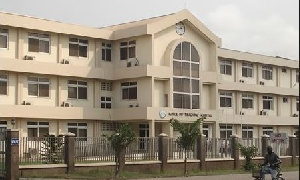







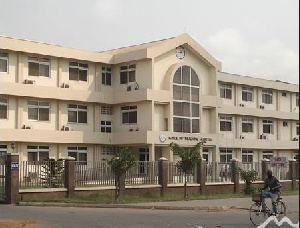
Emergency Medicine Residents at Korle Bu Teaching Hospital (KBTH) have pushed back against claims by the hospital’s Chief Executive Officer, insisting that a widely circulated video showing patients being treated on the floor of the facility’s Accident and Emergency Unit is real.
The response follows remarks by the CEO, Dr Seidu Yakubu Adam, who reportedly suggested the footage could have been artificially generated.
In a press release dated March 23, 2026, the residents dismissed that assertion and defended the authenticity of the footage, stating that it reflects the harsh realities of care delivery at the facility.
“We, the Emergency Medicine Residents of Korle Bu Teaching Hospital (KBTH), respond to management’s News Release of March 21, 2026. We write to ensure the public record accurately reflects the conditions under which care is being delivered and the systemic failures that made them inevitable,” the statement said.
Addressing the viral footage directly, the residents maintained that what was captured in the video aligns with their daily experiences in the unit.
“The video footage is authentic. When the surge in patients exhausted all available beds, chairs were provided. When those chairs were also exhausted, patients had no option but to receive care on the floor. This sequence was witnessed by every member of our clinical team. Characterising this documentation as ‘AI-generated’ or ‘media slander’ is factually inaccurate and an affront to both patients and staff,” they stated.
The group also argued that recent efforts to procure additional beds, though acknowledged, fall short of resolving the deeper challenges confronting the emergency unit.


“The procurement of 200 beds, while noted, does not address the crisis. Beds without functional oxygen points, airway equipment, monitoring tools, adequate floor space, and sufficient nursing and physician staffing ratios do not improve care. They congest an already overwhelmed space. A comprehensive, resourced solution is required, not headline figures,” the residents noted.
According to them, the situation at KBTH reflects broader structural weaknesses within Ghana’s healthcare system. They pointed to multiple systemic failures contributing to the crisis.
“This crisis is a symptom of a fractured national emergency response system driven by: 1. Dysfunctional referral pathways: Patients are dumped at tertiary centres because primary and secondary facilities cannot hold them. 2. Absent pre-hospital coordination: Patients arrive critically ill with no advance notice and no basic interventions initiated. 3. No national bed-tracking system making real-time patient redistribution impossible. We do not call for more beds in hallways. We call for a strengthened national healthcare grid,” the statement explained.
The residents further urged hospital management and the Ministry of Health Ghana to prioritise transparency and long-term reforms over what they described as public relations-driven responses.
“The evidence is real. The crisis is real. And the response must be equally real,” they stressed.