







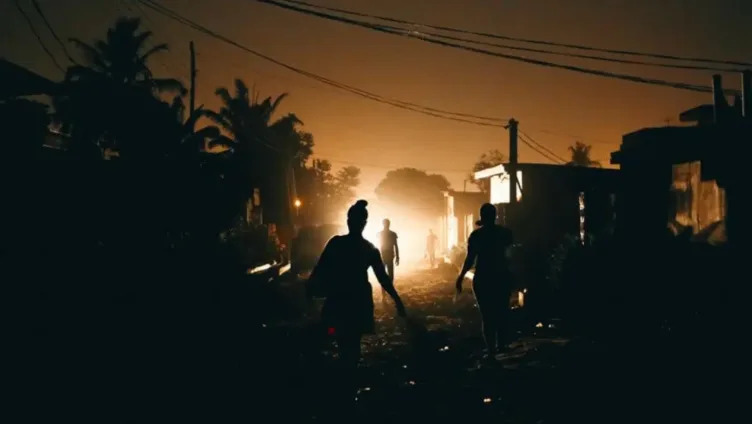
A significant power outage has swept across the Ashanti Region following a fire outbreak at the Ghana Grid Company (GRIDCo) substation in Akosombo, disrupting electricity supply to several communities and key economic zones.
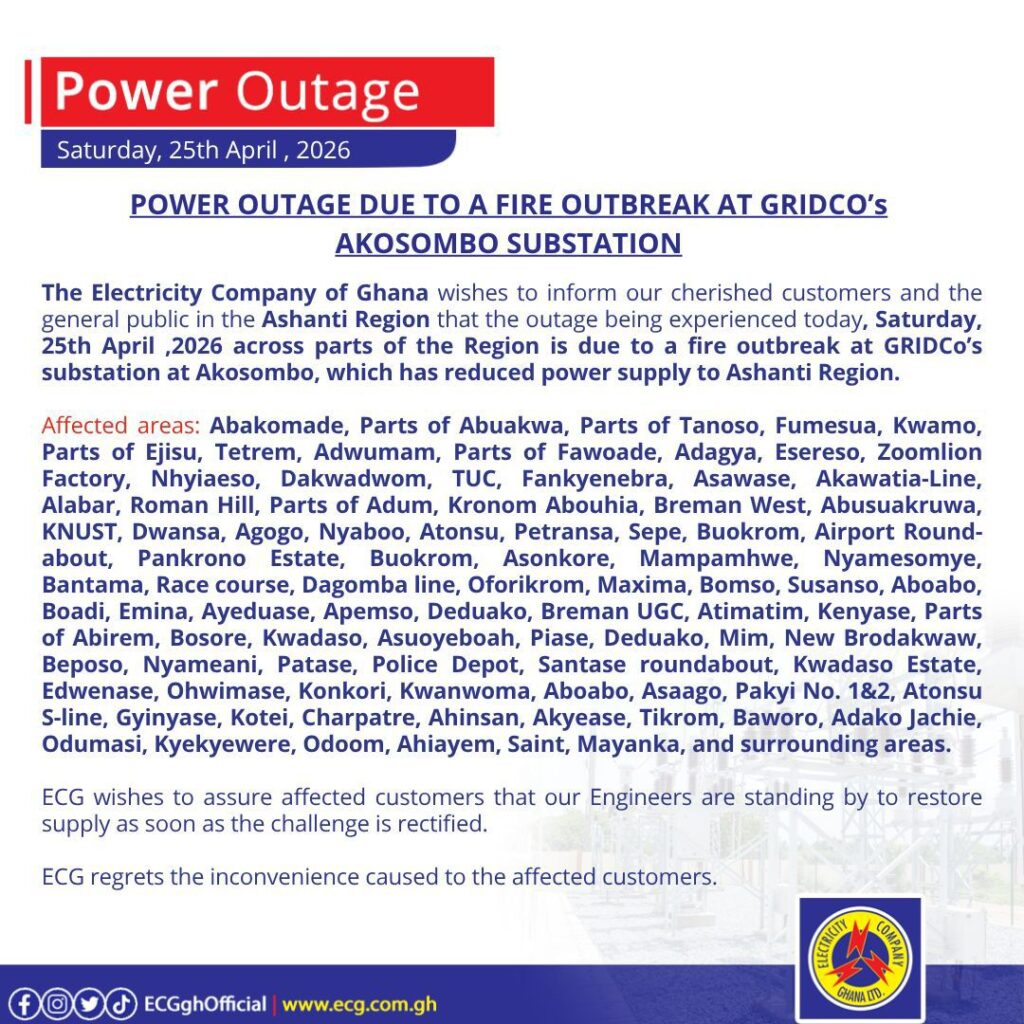
In a statement issued on Saturday, April 25, 2026, the Electricity Company of Ghana (ECG) confirmed that the incident has severely affected the amount of power available for distribution across the region.
According to the power distributor, the blaze has impacted operations at the facility, forcing an immediate reduction in supply and the introduction of load management measures in multiple areas.
Although authorities are yet to determine the full extent of damage caused by the fire, the disruption has already affected a broad stretch of the Ashanti Region, cutting across residential neighborhoods, commercial centres, and industrial zones.
Among the hardest-hit locations are major academic institutions and surrounding communities such as KNUST, Boadi, Ayeduase, and Kotei. Busy commercial districts including Adum, Bantama, Nhyiaeso, Airport Roundabout, Roman Hill, and the TUC enclave have also experienced outages.
Industrial operations and transport-related hubs have not been spared, with facilities like the Zoomlion Factory, Race Course, Maxima, and the Police Depot reporting power cuts. Several suburban areas—including Abuakwa, Tanoso, Ejisu, Kwadaso, Atimatim, Kenyase, and Santase—are also affected.


The ECG indicated that it is working in close coordination with GRIDCo engineers to stabilise the system and restore supply as quickly as possible. Technical teams have been deployed and are on standby to resume distribution once conditions at the substation improve.
“ECG wishes to assure affected customers that our Engineers are standing by to restore supply as soon as the challenge is rectified,” the statement read.
The company apologised for the disruption caused to households and businesses, noting that further updates will be communicated as restoration efforts progress.
The outage is expected to have short-term implications for commercial activity in the region, particularly in areas heavily reliant on uninterrupted power supply.