







President John Dramani Mahama has officially unveiled Ghana’s National Artificial Intelligence Strategy, marking a decisive step toward positioning the country as a leading artificial intelligence hub in West Africa and beyond.
The launch, held in Accra on Friday, April 24, brought together policymakers, academics, and industry stakeholders as the government outlined its long-term roadmap for integrating AI into national development.
Describing the initiative as a turning point in Ghana’s digital transformation agenda, the President said the strategy signals the country’s intent to actively shape the future of emerging technologies rather than remain on the sidelines.
“This is a significant milestone in our national journey towards a digitally empowered, innovation-driven and globally competitive Ghana. It is also a statement of intent that Ghana will not be just a passive consumer of technologies shaping the future but that we are going to be an active participant in designing, governing and deploying them for our national transformation,” he said.
President Mahama stressed that the ultimate goal is to harness artificial intelligence to accelerate economic growth, expand job opportunities, strengthen public institutions, and ensure inclusive national development. He added that Ghana’s ambition is to emerge as a regional leader in AI innovation.
“Our vision is therefore clear to position Ghana as a leading AI hub in West Africa and the wider continental region, driving innovation, creating jobs and strengthening institutions and delivering inclusive national development,” he stated.
He further underscored the importance of leadership in driving the digital agenda, revealing that members of his government, including ministers and senior officials, had recently participated in a National AI bootcamp to deepen their understanding of the technology.
“This vision requires leadership from the top and that is why I recently packed all my ministers and senior government officials into the National AI bootcamp. That decision was deliberate. Leadership must understand the tools that will define our future,” he added.


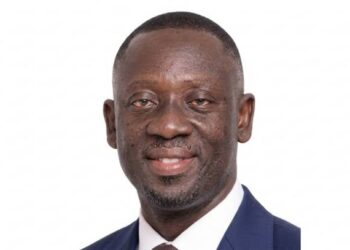
At the same event, the Director of Grants and Research at the Kwame Nkrumah University of Science and Technology (Kwame Nkrumah University of Science and Technology), Prof. Jerry John Kponyo, provided further details on institutional frameworks embedded in the strategy.
He announced plans for the creation of an independent Responsible AI Authority within the first year of implementation to oversee ethical standards, monitor developments, and coordinate AI-related activities across sectors. Additionally, a national AI office under the Ministry of Communication, Digital Technology and Innovation is expected to facilitate coordination between ministries.
Prof. Kponyo also disclosed proposals for a dedicated National AI Fund to support innovation, research, and long-term execution of the strategy.
The National AI Strategy is expected to serve as Ghana’s guiding framework for artificial intelligence development, focusing on governance, innovation, capacity building, and responsible deployment as the country positions itself within the rapidly evolving global digital economy.